Family matters dominate legal aid requests

17 Sep 2013
Family matters make up the largest group of applications for legal aid received during the pilot project, says the Attorney General, Dr Atalia Molokomme.
Addressing journalists about the mandate of government law firm, Dr Molokomme said the matters included divorce, maintenance, domestic violence and custody which accounted to 47.5 per cent followed by labour disputes with 10.6 per cent.
Third were contractual disputes with 8.5 per cent and delictual damages with 8.5 per cent while land dispute accounted for 7.7 per cent with wills and estate accounting to two per cent. The remaining others contributed to 15 per cent.
Dr Molokomme said the intention was for government’s legal aid to spread wings and cover areas such as Ghanzi, Tsabong and Kasane in addition to the already existing offices in Gaborone, Francistown and Maun.
The decision to make this project a permanent one has already been made by government. The project will be implemented as an independent entity and that its operations model is going to be a mixed model.
She explained that this would be achieved in 2013/14 financial year following the recent enactment of the Legal Aid and the Legal Practitioners (Amendment) Act.
Dr Molokomme said between September 2011 and March this year, 2 767 applications for legal aid were received and were handled through three possible service delivery mechanisms. She added that 1 239 applicants were received by the four non-governmental organisations: Ditshwanelo, Emang Basadi, BONELA and Women Against Rape with which Legal Aid Botswana had cooperation agreement.
Seven Hundred and fifty-five applicants were dealt with by salaried legal practitioners employed by Legal Aid Botswana with effect from October 1, 2012 while 773 applicants were referred to legal practitioners in private practice either in terms of the pro bono agreement with the Law Society of Botswana or in terms of the Judicare Scheme.
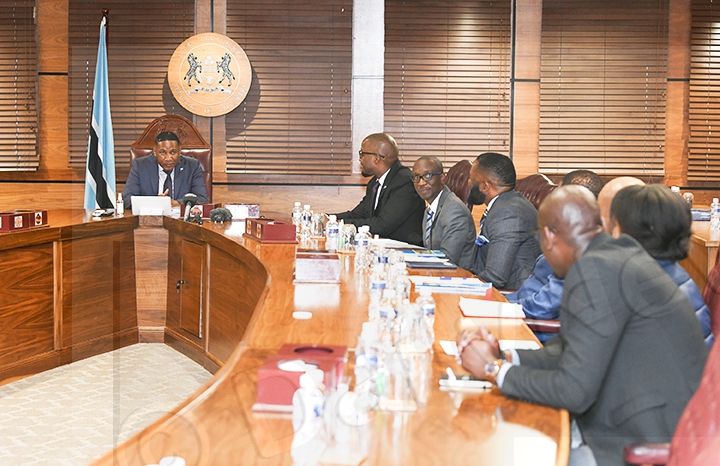
On other issues, Dr Molokomme distinguished the mandate of the Attorney Generals Chamber (AGCs) and that of the Directorate of Public Prosecutions (DPP), saying AGC is a service department to government ministries while DPP is the prosecuting authority.
She explained that DPP is a functional independent directorate that has a the final word in its prosecutorial function even though it falls under the supervision of the AGCs and that AGC cannot interfere with its work no matter what happens.
Dr Molokomme said AGCs success rate both in criminal and civil cases has been more than 90 per cent for the past three years. The Attorney General’s Chambers has set a target of concluding cases within 18 months. Ends
Source : BOPA
Author : Thamani Shabani
Location : GABORONE
Event : Press conference
Date : 17 Sep 2013
Related News
09 Jun 2026

09 Jun 2026
SARS cautions foreign motorists against scammers

09 Jun 2026
Labour agreement to strengthen workplace harmony
09 Jun 2026
Motsamai hails Werda for role in FMD fight
09 Jun 2026