COVID-19 survivor shared his experience
21 Jul 2020
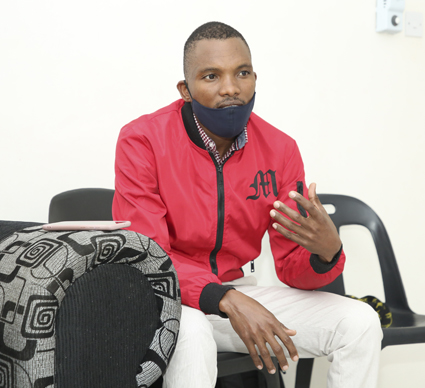
Mr Babonye Mmoulo (34) of Sesung is a living testimony that one can survive COVID – 19.
He is one of the locals and millions across the world that have since recovered after testing positive for coronavirus.
Narrating his journey that has led to him contracting the coronavirus, Mr Mmoulo said he had travelled from the United Kingdom (UK) on March 20, at a time when the world was battling with controlling the pandemic.
Botswana was no exception, as measures were put in place to guard against possible spread of the virus into the country, as other African countries including neighbouring South Africa already had cases of COVID-19.
As such, Botswana had no option, but to emulate what other nations were doing, by putting measures in place to arrest the pandemic.
One such precautionary measures was on restricting movement.
The residents were under lockdown, while travel ban was also imposed, and therefore border posts were closed.
The move also meant that all locals who were returning home from countries labelled as high risk areas since they were already affected by the pandemic would be subjected to a 14-day mandatory quarantine.
When Mr Mmoulo returned home, he was placed on quarantine and later tested positive for coronavirus.
Mr Mmoulo, known to many as Boxa, said when he boarded a flight he did not anticipate that he would be one of those who would test positive to the corona virus and in the long run spending a month in isolation at hospital.
Boxa described the process as a gruelling experience to deal with, especially that when he arrived he looked fit and fine and only to experience some symptoms a few days later while in quarantine.
Today Boxa is counted among the survivors of the COVID-19 ordeal.
In an interview, Boxa said that he felt like sharing the exprerience everywhere he went that he survived and bounced back to his normal life, considering that the pandemic is deadly.
“Counselling sessions and adhering to the medical procedures while in isolation helped me bounce back to my normal life.”
Boxa said it all started with a minor headache, sore throat, chest pains some few days after his arrival from the UK and his first test became negative despite the symptoms.
“My first tests came out negative. However, medical officers advised that I remained in quarantine and repeat tests after 14 days. While I was waiting for second tests the pains became unbearable, I experienced difficulties in breathing, I couldn’t wait for the stipulated days so I was examined,” he said.
Boxa shared how he lost all hope when the medical officers broke the news that he had tested positive.
He said that he had a feeling that he would not make it any further because millions of people, the world over, succumbed to the pandemic.
He said he could not hide the depression he was trapped in. Fortunate enough medical officers quickly put him under counselling sessions, which helped him view his condition in a positive perspective.
He was transferred to Sir Ketumile Masire Teaching Hospital for isolation.
“Life in quarantine and being isolated was unbearable, I was sick and I needed my family the most, but due to the prevention measures, they were not allowed to visit, I felt like a heavy object was shoved down my throat,” he said.
Through his mobile phones he managed to keep a constant communication with his family. Seeing their faces on skype gave him the courage that he would emerge victorious.
“Coronavirus is deadly and honestly there is no cure to date, rather we were encouraged to engage in minor exercises, drink plenty water and take food rich in vitamin C to boost the immune system,” he said.
He also shared that while there is no treatment that could cure the deadly disease, at hospital he was treated for minor ailments such as headache and high temperatures that came along.
Boxa said back at his home village, when his parents received the news about his condition; they got shaken because all they knew and had heard of was that COVID -19wais a deadly disease that only left a trail of death.
Consequently, social workers visited his family often and kept them on the hook so as to instill a sense of hope in them.
After a month at the hospital and undergoing a series of tests, he finally tested negative and that gave him a ticket to be discharged.
He said when he arrived home, life was not easy; first he had to isolate again for 14 days in case ‘something came up’.
He said he was brought down to tears when his two-year-old son wanted his attention.
“When I got home I could feel the low-spirited mood from those I stayed with, clearly they felt for me, it teared me apart most when my son cried for my attention,” he said.
Finally, the 14 days came to an end and things returned to normalcy. Now he can sit with his family while practicing social distancing protocols.
In most cases whenever one is diagnosed with a scary condition, issues of discrimination fuel up.
However, with Boxa it was a different case, he never experienced such challenges,“I think opening up with my condition to those close to me while at the hospital made them understand and be in a position to accept me again,” he said.
The other challenge was that whoever met him wanted to embrace him through hugs, but he turned them down so as to observe social distancing.
Boxa further advised Batswana that COVID-19 was real and the only way to ensure safety was through adhering to the set health regulations. ENDS
Source : BOPA
Author : Kesentseng Manyepedza
Location : GABORONE
Event : Interview
Date : 21 Jul 2020
Related News
11 Aug 2026
Boko calls for radical reforms in public service
11 Aug 2026
Botswana and US commit to global peace

11 Aug 2026
Chobe district receives malaria drugs
11 Aug 2026