Court of Appeal to localise bench - Motlhabi
16 Jul 2020
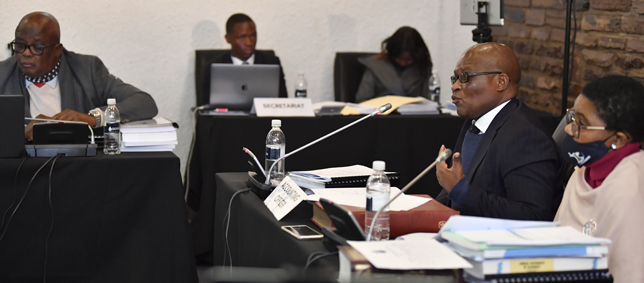
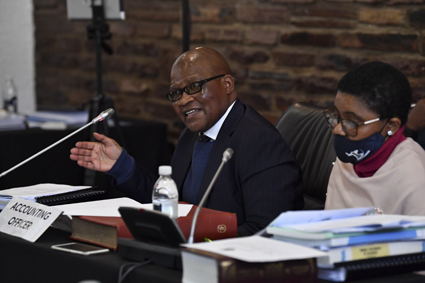
Parliament Accounts Committee has learnt that the Court of Appeal bench would soon be entirely occupied by local judges.
Appearing before the committee, Registrar and Master of the High Court, Mr Michael Motlhabi said the Court of Appeal bench currently had six local judges, with only three expatriate judges, who only presided when the need arose.
He said two of the three expatriates on the Court of Appeal bench were on their third term of the three-year contract, adding that the local legal personnel had over recent years demonstrated the full capacity to sit on the Court of Appeal bench.
He said the Administration of Justice had an array of local High Court judges who would occasionally be deployed to the Court of Appeal bench on phases as a way of fully localising the bench and in line with the citizen empowerment drive.
“The Administration of Justice has in recent years developed enough pool of legal talent to render a once expatriate-dominated bench needless as the bench was at some point occupied by a total of seven expatriates,” he said.
Mr Motlhabi stated that the localisation of the Court of Appeal bench thus remained a top priority for the Judicial Service Commission.
He indicated that even though High Court judges were appointed by the President, he was bound to follow the advice of the Judicial Service Commission (JSC) and had limited discretion to decline candidates recommended by the commission.
Despite being appointed by the President, Mr Motlhabi emphasised the independence of the Judiciary, saying it was established by the constitution as one of the three arms of government.
“Its pivotal role in the governance of the country is defined in the constitution as the adjudication of both civil and criminal cases involving citizens and the state, therefore the Judiciary is independent from the two other arms of government,” he said.
He said the JSC composition was entrenched in Section 103 of the Constitution, which determines the composition and appointment of the commission.
With regards to under staffing in the judicial system, Mr Motlhabi admitted shortage of staff in the registry unit, highlighting that it currently operated at 60 per cent of its staffing capacity.
He said one judicial officer should be managed by four registry personnel, a ration which he said hindered adequate service delivery and backlog of cases.
To resolve the backlog in the judiciary, Mr Motlhabi indicated that there would be the introduction of the alternative dispute resolution reforms, which would encourage the mediation process between the plaintiff and defendant.
He said studies had revealed that the alternative dispute resolution reforms had an 80 per cent success rate outside the courts of law.
Furthermore, Mr Motlhabi stated that the bail-granting conditions were under review, adding that one of the reforms would restrict the bail-granting to murder accused by the magistrate courts and only be granted by the high courts. ENDS
Source : BOPA
Author : Thato Mosinyi
Location : GABORONE
Event : committee appearance
Date : 16 Jul 2020
Related News

11 Aug 2026
Boko calls for radical reforms in public service
11 Aug 2026
Botswana and US commit to global peace

11 Aug 2026
Chobe district receives malaria drugs
11 Aug 2026