SADC region has high malnutrition levels
15 Sep 2013
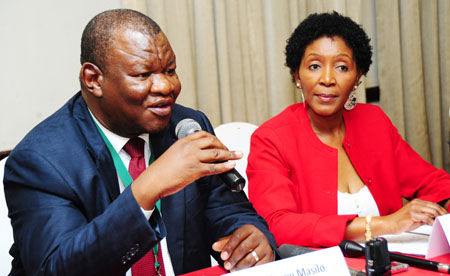
The Southern African Development Community region has relatively high levels of chronic malnutrition, New Partnership for Africa Development (NEPAD) Food and Nutrition senior adviser, Ms Bibi Giyose said.
Briefing members of the press about the objectives and achievements of the five-day workshop on building capacity to mainstreaming nutrition in national agriculture and food security investment plans in Africa that ended on Septemver 13, she said the workshop was convened after the realisation that in terms of food and nutrition security, nutrition always falls through the cracks because nutrition is not the purview of any sector.
She said the workshop was also meant to share knowledge, information and review the national agriculture investment plans for the countries that had them.
Through the workshop themed: Nutrition capacity development, Ms Giyose said it became evident that in terms of capacities required to implement activities on the ground, the nutrition capacities were weak.
Ms Giyose further said in terms of the policies, it was also realised that many countries did not have comprehensive policies for food and nutrition security.
Countries that did not have national agriculture investment plans, Ms Giyose said, were immediately expected to come up with nutrition elements to go into the plans as they were developed and to also use the process to support their policy and programme design and implementation.
This, she said, was one area that had to be addressed by the different member states and Botswana in particular.
“I believe the challenges of addressing food and nutrition security across the different countries and across the different districts within Botswana lies in the importance of better management, coordination and investments to put our money where our mouths are,” she added.
Ms Giyose said nutrition was a multi-sectoral issue ‘demanding that across the different sectors there should be identification of the roles and responsibilities and coordination and management with very clear indicators and targets to deliver on food and nutrition security.’
Responding to a question on what was achieved by the workshop, the NEPAD senior adviser said a lot was achieved in terms of the workshop objectives that were set out at the beginning.
From a multi-sectoral perspective, Ms Giyose said countries managed to come up with draft national country nutrition papers, which they were able to revise and add more information into as it emerged.
“We were able to get countries to design a road map which is actually an action plan that they would be following and we would be monitoring those action plans implementation thereof,” she said.
Furthermore, Ms Giyose said countries had also been able to understand what it meant to have or to design a programme that was multi-sectoral and to tap into the different competitive advantages of the different ministries and different sectors.
She said countries would have better clarity on what nutrition meant and how it stood to really contribute to their national socio-economic development. Ends
Source : BOPA
Author : Lorato Gaofise
Location : GABORONE
Event : Workshop
Date : 15 Sep 2013
Related News
09 Jun 2026

09 Jun 2026
SARS cautions foreign motorists against scammers

09 Jun 2026
Labour agreement to strengthen workplace harmony
09 Jun 2026
Motsamai hails Werda for role in FMD fight
09 Jun 2026