Media responsible for shaping our future
22 Jun 2020
Local media has been urged to be thorough in carrying out its mandate as well as engage more in traditional principles guiding the profession to guide the public accordingly.
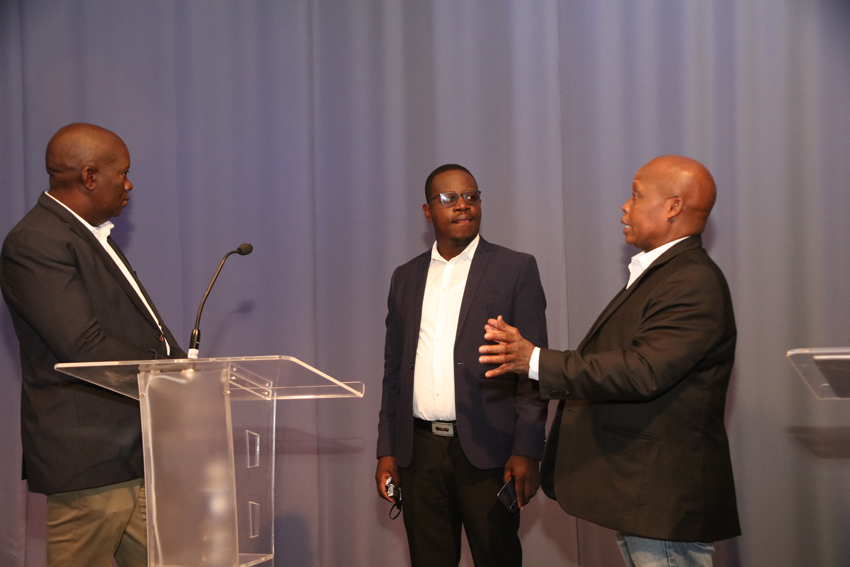
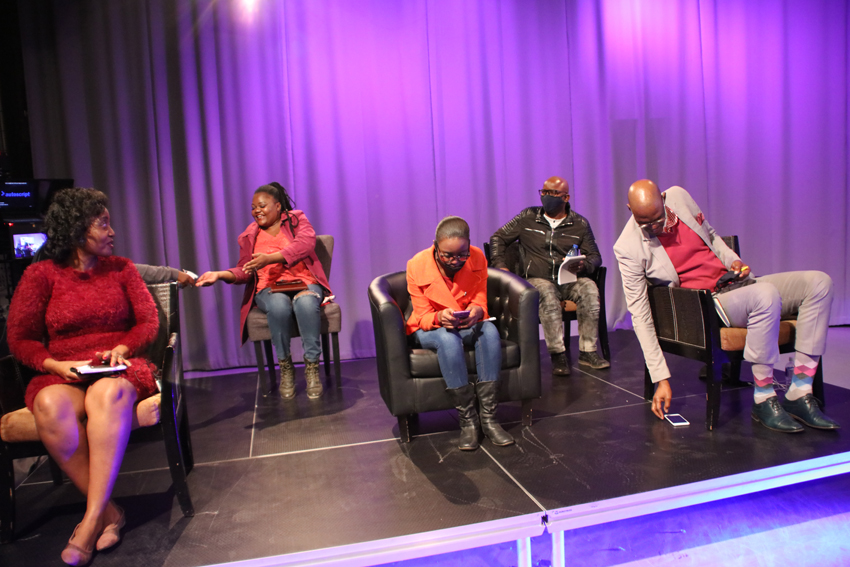
Deliberating at a live televised programme that gave media personnel a platform to share their experiences with the COVID-19 pandemic on Sunday, Deputy Permanent Secretary for Departments of Information and Broadcasting Services, Mr Oshinka Tsiang said local journalists must not titillate the people, but rather engage in thorough research for them to publicise balanced and informative news.
“Our media has grown tremendously, it is a real industry,” he said, adding that the COVID-19 pandemic struck without warning and both private and public media were forced to be at the forefront and inform the public of the pandemic as it unfolded. As a result, Mr Tsiang said accessing information was a ‘battle ground’.
In an endeavour to respond promptly, he said an open microphone platform was created, giving all stakeholders at the forefront of fighting COVID-19 an opportunity to come out and engage with the people through various media platforms. He emphasised that access to information was a determinant factor in fighting the pandemic.
Mr Tsiang said as a new phenomenon, COVID-19 did not only halt the normal lifestyle, but prompted changes, giving birth to the new normal. He said despite being a health challenge, the pandemic had drawn the masses closer to the media and therefore relied on them for concrete information.
“Our people were well informed through our various media of communication,” he said.
He further observed that journalists were working as front liners, as they were also deemed an essential service in fighting COVID-19. He therefore described journalism as a calling, where one devotes to willingly serve the people.
He said despite committing to feeding the nation with prompt and accurate information, there was a time when some members of the media directly felt the impact of the pandemic, when their colleagues in media houses in other countries such as ENCA, SABC and CNN became casualties of COVID-19.
“It was an unfortunate turn of events, and therefore some were subjected to some form of counselling as they were now fearful of catching the virus,” said Mr Tsiang. “Our newsrooms were engulfed with fear as some of our colleagues were quarantined after an encounter with an officer who tested positive for the coronavirus,” he said.
As conveyors of information, Mr Tsiang said the media was the first to know about COVID-19 protocols. “We must know that information will help us survive the pandemic.
Therefore as journalists, you must help the public to differentiate between myth and the truth,” he said. “We were aware that our health comes first, and therefore as media practitioners, we took into account all precautionary measures to achieve our primary focus of telling the COVID-19 story,” he said. As such, he encouraged the reporters to abide by their principles in order to fully execute their mandate.
Mr Tsiang said some changes that were brought about by the advent of COVID-19 would be adopted as the new norm, therefore the media must be ready for such changes and establish how to operate amidst them.
For his part, the chairperson of Editors Forum, Mr Spencer Mogapi told journalists that it would be difficult to work under the changing environment, where technology and the use of the new media were the norm, hence the need for them to continually renew their knowledge through training. Mr Mogapi said one of the lessons learnt from COVID-19 was that for a journalist to stay afloat they needed to stay important, helpful and always closer to facts.
He said social media platforms must be used as tools to enhance the work of journalists, advising fellow scribes to show their mettle and differentiate their professional from fake and misleading information.
“As Editors Forum, we had invited all legit media houses to register their social media platforms with us in order to help their readers and viewers to identify fake news,” said Mr Mogapi, adding that not everything that you come across is news. He said journalism was not gossip and therefore media practitioners must defend what they publish.
He has also revealed that the private media was greatly affected by the COVID-19 pandemic, which rendered their future bleak. Mr Mogapi explained that their primary source of revenue was advertising and under the COVID-19 era, cash flow was greatly affected.
He observed that the community was equally affected and that assessment for those eligible to receive rations was also a challenge. “During the first month of lockdown, people were greatly affected by shortage of food and some were not assisted as the system was not executed accordingly,” he said. Mr Mogapi said it therefore was not surprising for some people to be of the view that activities aimed at fighting COVID-19 were marred by corrupt practices.
He stressed that private media houses were struggling to resurrect from the negative impacts of COVID-19, adding, ‘I wonder if we will be able to afford this month’s salaries’.
“Some of the journalists are likely to start getting half salaries, some will lose their jobs. It is an issue that we cannot avoid. Advertising is the backbone of our livelihoods,” said Mr Mogapi. He said due to the drying coffers at private media houses, some newspapers were not yet available on the shelves as they cannot print, others had opted to go online while others were contemplating closure.
Despite the challenges, Mr Mogapi’s spirits are not dampened. “We are like soldiers, when they go to war, chances of making it back alive are slim, only the lucky ones will survive,” he said. He said media houses were however doing their best to provide for their employees despite the challenging environment.
The President of Botswana Media Allied Workers Union (BOMAWU), Mr Phillimon Mmeso said the current situation was an appeal to the media to introspect and create an environment that would enable them to continue with its principal mandate of information dissemination.
Mr Mmeso appreciated that communication structures that were created to convey COVID-19 information had brought together the public and private media. He said in the past, public officers were reluctant to share information with private media houses, who resorted to speculation as a result of lack of authoritative confirmation. “Since COVID-19, our sources were closer to us and we were exposed to firsthand information. Our news items we no longer based on speculation,” said Mr Mmeso.
He commended the media for standing tall despite challenges resulting from COVID-19 and fully carrying out their mandate. “As for now, we are happy with what the platform that was created for sharing information has achieved,” he said. Despite the pain and suffering of working out of the norm, with some subjected to quarantine, Mr Mmeso said good lessons were learnt from the pandemic.
Mr Mmeso said in an effort to enforce adherence to COVID-19 protocols that forced people to stay and work from home, employers in the media industry provided a conducive environment for their employees to perform their jobs.
He recalled that the HIV and AIDS pandemic started as a challenging situation, but eventually, with the media at the forefront of information sharing, the public was well informed and took necessary steps to safeguard their lives.
He however regretted that freelance journalists were greatly affected by the pandemic. “As a result of the pandemic, most activities were at a standstill and therefore freelancers in sports and entertainment were greatly affected as they are paid for published material,” said Mr Mmeso. “As their colleagues, we have joined hands to assist them with funds to pay for accommodation rentals and buying food,” he said.
Mr Mmeso also appreciated feedback that the media was getting from the community. “An unexamined life is not worth living. I believe we shall learn and grow from the people’s feedback,” he said.
He further appealed to veteran players in the industry to guide upcoming journalists accordingly, adding that a journalist must never wear a celebrity tag as he/she was a servant of the people.
Mr Mmeso further emphasised on positive use of the fifth estate being new media. All in all, media representatives who made it to the studio and those that commented telephonically and through skype agreed that the advent of COVID-19 brought the industry practitioners together and made them realise that for their media houses to survive and for the benefit of the entire populace, they needed one another. ENDS
Source : BOPA
Author : Moshe Galeragwe
Location : GABORONE
Event : INTERVIEW
Date : 22 Jun 2020
Related News

11 Aug 2026
Boko calls for radical reforms in public service
11 Aug 2026
Botswana and US commit to global peace

11 Aug 2026
Chobe district receives malaria drugs
11 Aug 2026