Decor industry suffers during Covid-19 era

18 Jun 2020
The white flag on a roof-top, ululations, singing and dancing, loud music, food and everybody dressed to the nighs to celebrate a wedding is what some Batswana miss most during this COVID-19 era.
The virus has devastated many would be happy families and couples as they cannot celebrate as they wished and flount their wealth.
For those in the wedding industry, including photographers and caterers, the devastation is the same as they cannot now make money and feed their families because of all the restrictions in place to prevent the spread of the deadly virus.
Wedding vendors are also struggling to keep their businesses afloat.
A wedding planner, Ms Tshepiso Nkwe-Mndzebele said being in the industry in the COVID-19 era was a bitter pill to swallow.
She said they would now be forced to take into consideration a multitude of safety measures and precautions because of the pandemic, adding that it all came with financial implications.
She noted that well-off couples and families could decide to stream their weddings live via video rather than wait for the pandemic to subside or for a vaccine to be found.
She also said the months of March, April and May were traditionally busy for her as couples were in a rush to marry before the winter season. This year she said coronavirus halted all the plans and that they were not busy because of the disease.
Ms Nkwe-Mndzebele said her business ran at a loose since the lockdown since celebrations were cancelled, and that to them no celebrations meant no income.
She said all her clients have postponed their weddings, noting that she had lots of enquiries before the pandemic and was just about to sign deals when everything came to a halt due to COVID-19.
“The lockdown started during the peak season for weddings, and this virus has hit us right at the time when we usually get busy” she said.
Ms Nkwe-Mndzebele said this year she planned only one wedding in February.
She, however, said COVID-19 taught her not to depend on one business, pointing out that she usually made around P100 000 between February and June.
Ms Nkwe-Mndzebele also noted that she had clients who wanted different packages at different prices, including wedding gowns, suits and bridesmaids’ dresses.
“Others wanted me to design traditional attire for their weddings, so I lost a lot,” she said.
She said she had a few couples who had paid for their wedding planning services, but that they had to put everything on hold with the hope that the epidemic would pass and they would continue.
Ms Nkwe-Mndzebele pleaded with couples who were in the process to tie knot not to despair as they would, together with their wedding planners, work towards making their day special and beautiful once everything settled.
“I know how painful it is to postpone a wedding that you were looking forward to, but it is for your own good and the country that we abide by the protocols to avoid the spread of this virus,” she said.
Ms Nkwe-Mndzebele explained that both the couples and wedding planners were inconvenienced, but was optimistic that once everything settled they would start where they had left off.
She said some couples had already paid for services such as tents and decorations, adding that it was going to be difficult to refund people.
“My plea is for clients to be merciful and not request for refund, but rather to look for an amicable way of working together going forward,” she pleaded.
“It’s unprecedented, this has never happened before and the uncertainty of the future is causing anxiety,” she said.
Ms Nkwe-Mndzebele nevertheless said COVID-19 would make private and intimate weddings fashionable, saying when the COVID-19 era ends, most people might be accustomed to small wedding ceremonies.
“I am hopeful that after lockdown when everything has gone back to normal, we will rise again and get back to business,” she said.
Ms Nkwe-Mndzebele, also known as the ‘Helper’ or ‘Wedding Planner’ in the industry, also runs a sewing business and an online boutique selling a wide range of wedding attire from clothes, shoes and jewelry.
Her journey of being a wedding planner started in 2014 when her wedding was a near disaster. She was disappointed by the tent and deco lady she had hired. “She messed up my day, and from that day I told myself that I will do everything in my power to protect each and every bride from being disappointed on their wedding day.”
The wedding industry has been greatly affected by the outbreak, including decorators, bridal fashion designers, choreographers, cake bakers, make-up artists, florists, musicians and photographers.
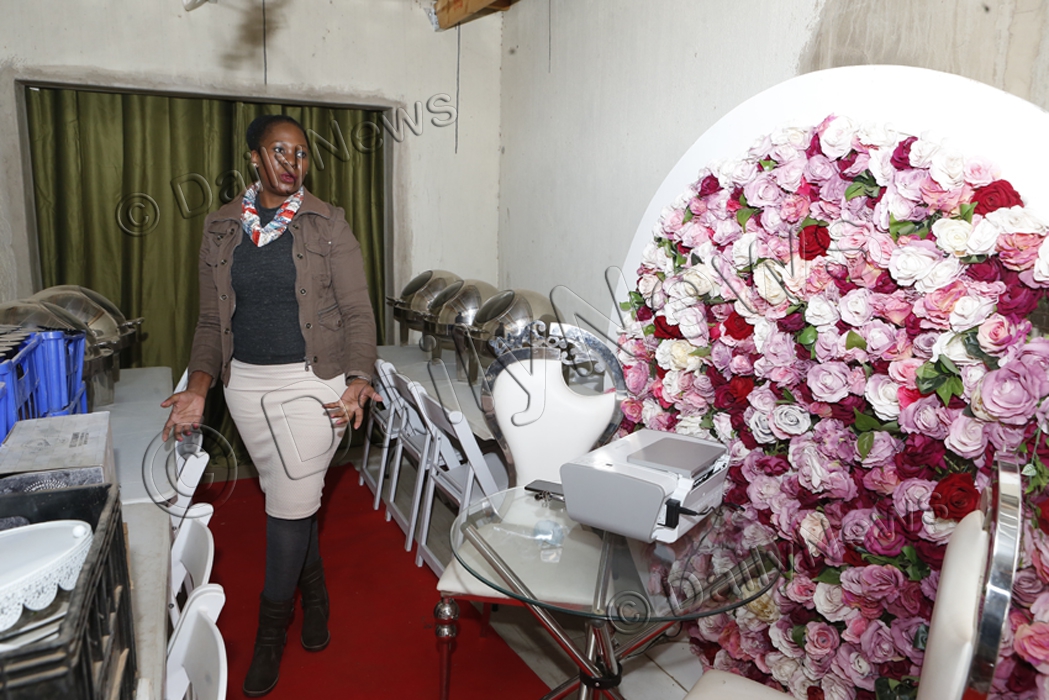
For her part, the director of Divine Talent T/A La`Trear Decor and Catering Services, Ms Kago Moesi-Kumile said the non-existence of large celebrations was a disaster.
Ms Moesi-Kumile pointed out that in a normal year families would be getting ready to attend weddings, bridal and baby showers, birthday celebrations, anniversaries, homecomings and stag parties.
Having worked in the decor industry since 2016, Ms Moesi-Kumile stated that the COVID-19 pandemic had had a bad impact not only on her business, but the rest of those who did decor. She added that it was even more painful on those who relied only on the decor industry to put food on the table.
Ms Moesi-Kumile said she worked with florist, tent drapers and those who helped them to set-up.
She pointed out that she roughly managed 10 weddings in a year, indicating that she was mostly engaged with birthday parties, bridal showers, pholoso and graduation parties.
“Some of the big industry players have even rented warehouses to keep their equipment whose rent is serviced by events. Paying rental for those and salaries to those we work with is really a challenge,” she highlighted.
She nevertheless thanked government for subsidising their business although she said it was not enough.
Ms Moesi-Kumile noted that in 2018/19 she managed to raise P120 000 through her decor business, adding that the business was not only about the setup for an event. “There are times when one won’t have a booking but still get to loan equipment at a price.”
She said she had to refund two customers who had booked.
For his part, Mr Emmah Segopotso, a professional wedding photographer. said it was difficult to make ends meet during COVID-19.
Mr Segopotso said in his fifth year photographing weddings, he has never felt useless until now.
He said it was supposed to be the busiest part of the season, as they were booked about twice a month for wedding ceremonies.
He is of the view that big wedding celebrations must continue because it was where family and relatives bonded, and that as photographers, they were there to capture good memories.
“There isn’t one vendor category that is struggling more than the other, everyone is feeling the impact,” sighed Mr Segopotso.
Another, Ms Sheris Moyo, who is yet to celebrate her wedding day, said small, low-key ceremonies might seem appealing now because they could be adapted with or without COVID-19.
Ms Moyo said that would be enough to push some couples towards a simpler, more scaled-back, easier-to-plan wedding day instead of the celebration that encompassed lots of work, deco, dancing and music “costing an arm and leg.”
Ms Moyo is of the view that economic hardship after COVID-19 would compel some couples to consider small wedding ceremonies.
She said some people might consider getting married at the district commissioner’s office and then going for a honeymoon.
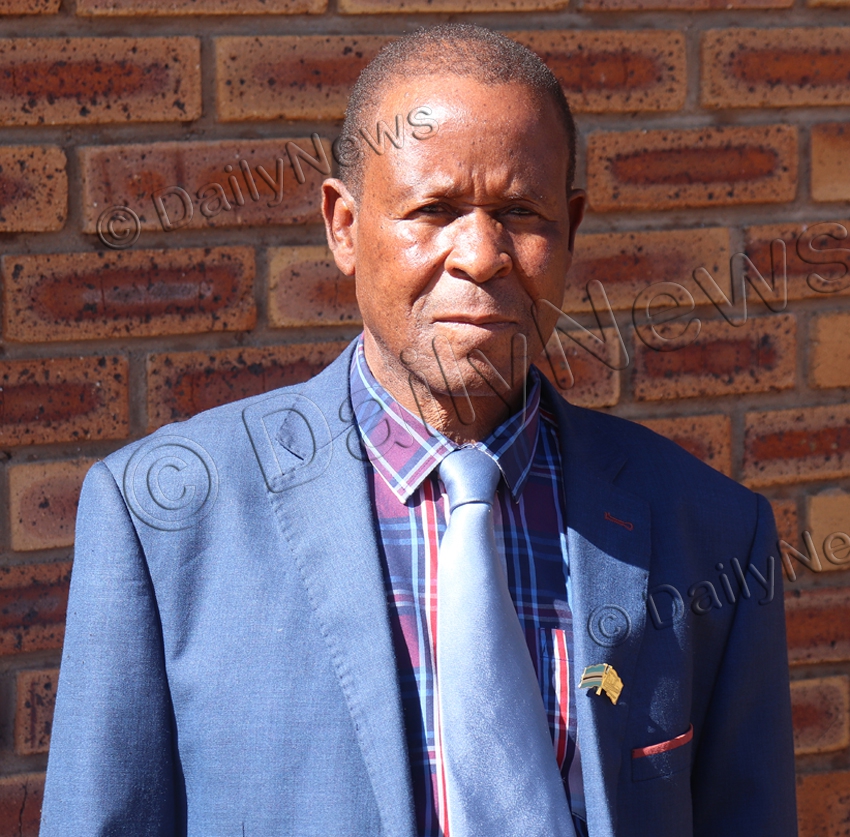
Meanwhile a marriage officer, Bishop Morategi Selapa, encouraged couples to get married regardless of the 10 people allowed for celebrations.
The director at Boela Gae Marriage seminar, Bishop Selapa said people should understand that weddings were a matter between two people and their immediate families and not friends or acquaintances.
He said as only four people were allowed before marriage officers, it would be desirable if couples brought in their parents as witnesses.
He said the parents and close relatives such as uncles and aunts would also be able to stand with the couples during trying times.
He stressed that a celebration could be arranged later, adding that marriage was recognised as a union between people that established rights and obligations between them, their children and between them and their in-laws, and urged people to continue getting married even in this era.
Bishop Selapa also stressed the importance of counselling sessions before tying the knot, and continuous counselling sessions for guidance.
He said that would help them in building desirable outcomes from their union.
For her part, assistant district commissioner in Ramotswa, Ms Kushatha Tsokedi said marriage was not all about celebration but life after solemnising.
Ms Tsokedi said the importance of marriage was that two people would be able to do things together lawfully as husband and wife.
She said many people tended to think that weddings were marriage and forgetting the life-long commitment that came after celebrating.
She urged people to look beyond wedding celebrations, the deco, the attire and tent, but to get married because they were ready to face life together.
“People need to celebrate to show happiness, but what matters is that people should look marriage beyond the wedding celebration,” said Ms Tsokedi.
In all, it is time to embrace the Fourth Industrial revolution where usage of technological innovation is the in thing because COVID-19 has infiltrated many aspects of our lives, as the number of cases increase globally, so do the number of cancelled birthdays, weddings and big gatherings.
Maybe it is time people considered online wedding. People should find innovative ways to be together such as holding ceremonies by video conference.
The white flag, ululations, song and dance and music will aways be part of the Setswana wedding ceremony, coronavirus or no coronavirus. ENDS
Source : BOPA
Author : Lesedi Thatayamodimo
Location : GABORONE
Event : FEATURE
Date : 18 Jun 2020
Related News

11 Aug 2026
Boko calls for radical reforms in public service
11 Aug 2026
Botswana and US commit to global peace

11 Aug 2026
Chobe district receives malaria drugs
11 Aug 2026