


Basic Education for all - Makwinja
05 Mar 2020
Government is committed to ensuring inclusive and equitable education and providing lifelong learning for all, Assistant Minister of Basic Education has said.
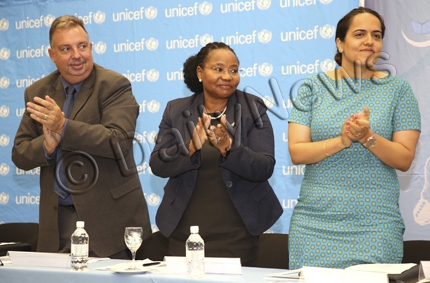
Ms Nnaniki Makwinja was speaking at the Out of School Education for Children (OSEC) launch in Gaborone on Tuesday.
Ms Makwinja said government intended that all children should complete basic education as the ministry implemented the 2030 Sustainable Development Goals (SDGs) through the Education and Training sector Strategic Plan (ETSSP).
She pointed out that education was the key component of human capital development crucial for sustainable economic development.
“No country in the world has succeeded without educating its people,” she said.
Out of school education, she said played a pivotal role, not only in the provision of educational opportunities, but also in the quality of life for those who could not access formal education.
On the theme of the launch; Every Child is a Winner’, Ms Makwinja said it was a reminder that every child had an innate ability to learn, but could only reach their full potential if provided with the necessary stimulation, opportunities and support creating that conducive and child friendly environment for learners to create, innovate, explore and discover.
She further stated that OSEC programme provided an opportunity for children who may otherwise miss out to access education a chance as education remained a basic human right.
Meanwhile, Ms Makwinja pointed out that it was saddening that around six per cent of children who commenced primary school did not complete their schooling, saying in that way they failed to reach their full potential.
She indicated that some of such children were living in remote areas with farm and domestic worker parents, some being orphans, destitute from dysfunctional families.
Again, she said other reasons were due to the fact that mobile communities and religious groups, whose cultural practices were in contradiction with formal education policies and practices.
The ministry, she said, yearned to cater for all learners in different settings regardless of their traditional, cultural, religious or any form of background.
She pointed out that the OSEC programme was designed to identify learners in those categories to see how education could be provided outside the formal school environment.
“Government has acceded to the fundamental human right policies espoused in global agreements such as Education For All and the Sustainable Development Goals (SGDs) that advocate for universal access to free basic education,” she said.
She highlighted that universal access to primary education had been achieved in Botswana, standing at 95 per cent, adding that although retention rates were high for a developing country, it was important that every child had access to and completed their basic education.
Meanwhile, Ms Makwinja thanked different stakeholders, saying the OSEC programme was developed in close collaboration with UNICEF.
She commended UNICEF for funding the OSEC project, saying they had helped to move Botswana to a knowledge-based economy and high-income economy.
She also commended individuals for their input to the success of the programme and urged all regional directors to ensure that every child accessed education and completed the course in their regions.
On the other hand, UNICEF deputy country representative, Ms Sarah Nginja applauded Botswana for the launch of the programme, saying it would contribute to inclusive and equitable education for all children in the country, irrespective of age, location, gender, ethnicity, language or social status.
Ms Nginja said there were some children who were out of school due to circumstances out of their control, and therefore there was need for an alternative programme to meet educational needs of such children.
She pointed out that in Botswana, an estimated 10 per cent of children who should be in primary school were out of school.
She nevertheless highlighted that Botswana had made great efforts to address the issue of out of school children, hence the OSEC programme.
“In fact, it is an effort to achieve the fourth SDG of ensuring inclusive and equitable education and to promote lifelong learning for all, that the government with the support of UNICEF embarked on developing the programme in 2013,” she said.
Ms Nginja said the OSEC programme was an outcome based, flexible, cultural sensitive and relevant 21st century programme, adding that it provided learners with the flexibility to pursue multiple pathways in terms of their career and education pursuits.
She added that the design of the programme fostered partnerships, including public-private partnerships critical for sustainability of the programme and ultimately to Botswana’s knowledge-based economy.
She further said the programme provided opportunities for teachers who were currently unemployed to be up-skilled to effectively implement it. ENDS
Source : BOPA
Author : Lesedi Thatayamodimo
Location : GABORONE
Event : OSEC launch
Date : 05 Mar 2020
Related News
12 Aug 2026
12 Aug 2026
Adopt modern and flexible public service
12 Aug 2026
Ministry and De Beers partnership yields fruit

12 Aug 2026
Tsabong adopts China model to fight poverty
12 Aug 2026