


Councils introspect on projects implementation
27 Feb 2020
A total of nine councils met in Jwaneng on February 25 for a workshop to appreciate projects implementation progress, especially on provision of primary infrastructure.
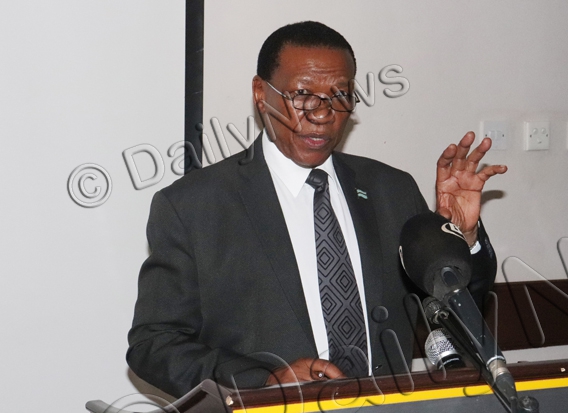
Officially opening the workshop, the Assistant Minister of Local Government and Rural Development, Mr Kgotla Autlwetse, said provision of appropriate infrastructure could aid government’s transformation dream.
However, he said one of the concerns was the councils’ low expenditure, which he said stood at only 42 per cent for the Economic Stimulus Programme (ESP) as of September last year.
“This is abysmal and we surely need a rebirth,” he said.
Mr Autlwetse said as custodians of rural livelihoods, the ministry had a responsibility of ensuring local economic empowerment, yet they were committing the greatest injustice of failing to spend the money that could improve livelihoods i.
“How many youth in our localities do we deny employment as a result of our inefficiency and ineffectiveness. How many percentages do we contribute directly to and already worrisome unemployment rate of 17.6 per cent,” he wondered. Mr Autlwetse also warned the councils to ensure they closed all the loopholes that could allow corruption to creep in now that the procurement process had been decentralised to local government level.
In their various presentations, councils’ representatives indicated that one of the major delays in completion of projects was tardiness of service providers such as Botswana Power Corporation and Water Utilities Corporation, which often took long to connect utilities.
The councils also complained of too much babysitting of local contractors even when they delayed in delivering projects, saying that more stern measures needed to be taken against them.
Another challenge that was a cause for delay was that the projects were community based, which meant that members of the community expected to be consulted, and sometimes even on decisions that should be made by the office.
In an interview, director of the department of community development, Mr Steven Ludick, indicated that the procedure for community based projects was that councils had to first consult the community, then councillors and MP for the area before making a project memorandum, which he admitted was a long process.
He, therefore, advised councils to always ensure that pre-tender process such as seeking of land and project designs were done in time such that when the financial year started, they would go straight into awarding the tenders.
Deputy council secretary for Kweneng District, Mr Eric Puskas indicated that they had a challenge of doing pre-tender process because of shortage of human resource, saying in most instances they even went to the extent of requesting assistance of human resource from other councils or engaged temporary officers.
He said the other challenge was a tendency by the political leadership to change project memorandum to the extent that they were sometimes forced to go as far back as project design, a delay he said hampered the very aim of these projects that was to help Batswana through employment creation.
For his part, the senior assistant council secretary for Charleshill sub-district, Mr Christopher Maramba, advised his counterparts to establish project monitoring committee to keep an eye on their projects from start to finish, including monitoring during implementation.
He also said it was vital that projects were completed on time since Batswana, especially those in villages depended on them for empowerment.
Meanwhile Jwaneng mayor, Ms Olga Ditsie advised council heads to always be open about their challenges so that solutions could be found since government’s decisions were based on their professional advice and that councils should also use such forums to share ideas, especially on burning issues of monitoring and evaluation of projects. ends
Source : BOPA
Author : Olekantse Sennamose
Location : JWANENG
Event : workshop
Date : 27 Feb 2020
Related News

12 Aug 2026
12 Aug 2026
Adopt modern and flexible public service
12 Aug 2026
Ministry and De Beers partnership yields fruit


12 Aug 2026
Tsabong adopts China model to fight poverty

12 Aug 2026