


Few have access to child care education
13 Feb 2020
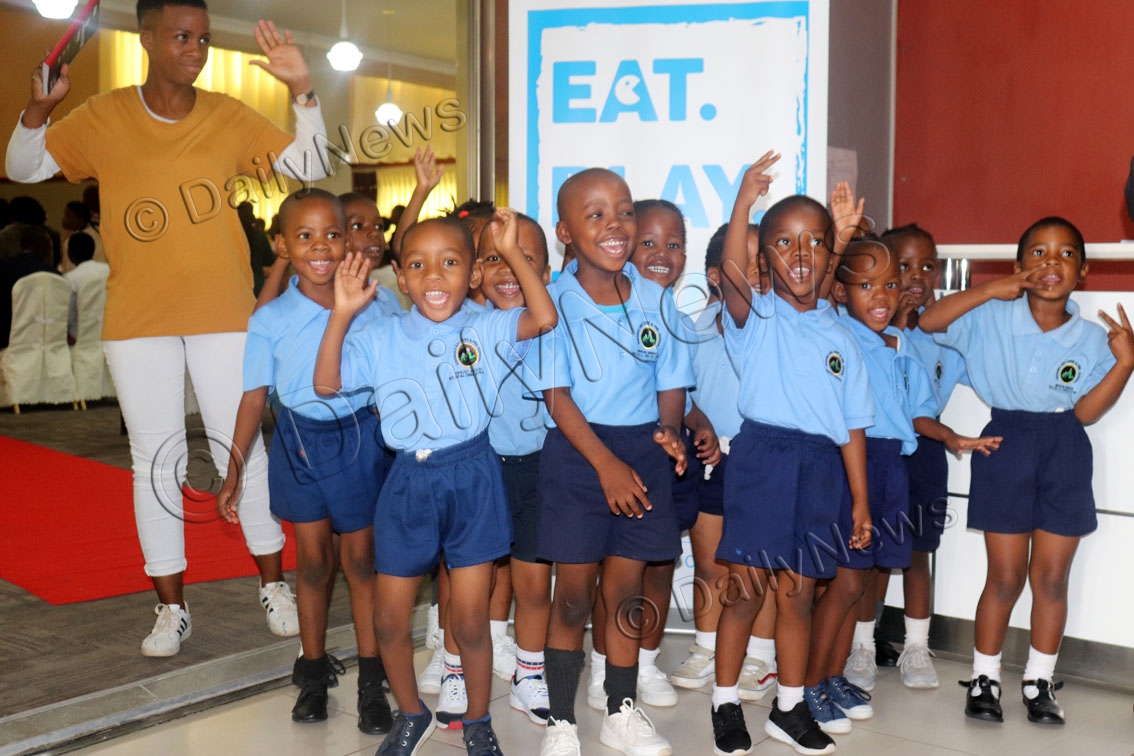
About 17 per cent of children have access to early childhood care and education, Assistant Minister of Local Government and Rural Development, Mr Setlhabelo Modukanele has said.
Speaking at the National Early Childhood Development (ECD) pitso in Molepolole on Tuesday, Mr Modukanele said, despite efforts towards early childhood development, only a small number had access to childcare and education.
The assistant minister, therefore, placed emphasis on the role played by parents in the implementation of quality early childhood care as well as education initiatives and strategies.
He said the recently introduced reception class initiative and the ongoing development of playgroups guidelines added to the numerous efforts towards early childhood development
Mr Modukanele urged stakeholders to always place parents at forefront in all collaborative efforts meant to improve child development.
For his part, the Assistant Minister of Health and Wellness Mr Setlhomo Lelatisitswe said children issues needed a multi-disciplinary approach.
For that reason, he said the three ministries of health basic education and local government should bear in mind the best interest of the child in everything they did.
He nevertheless assured the gathering that his ministry would provide family-friendly services as well as ensuring that programmes for young children were evidence-based and promoted child survival through high impact cost-effective interventions.
When giving a global perspective on ECD and comparing Botswana with other countries who moved a step further to attain the Sustainable Development Goal (SDG) target 4.2, UNICEF representative, Ms Julianna Lindsey said less than 50 per cent of children in Botswana had access to early childhood education.
Target 4.2 ensured that all children had access to quality early childhood development, care and pre-primary education, by the year 2030.
In Brazil, 92 per cent of children attended early childhood education while statistics for Romania and Thailand stood at 87 per cent and 68 per cent respectively.
She said by 2030 these countries would likely to reach the SDG target of 100 per cent.
She, however, expressed confidence that Botswana could do the same if a proper plan was created and implemented successfully.
University of Botswana lecturer and coordinator of Child Development Lab, Ms Marea Tsamaase, said while the country had experienced shortcomings in ECD, government had made visible strides in its commitment to promoting ECD.
She also noted that while the progress made was highly commendable, it was important for government to extend its focus to the quality of ECD programmes and services.
She said that could be achieved by establishing a regulatory body with a mandate to maintain quality in ECD programmes.
Further, Ms Tsamaase urged all to embrace the Setswana culture and its inherent practices that promoted ECD.
She said Batswana have a treasure of ideas and indigenous practices and approaches to children’s development.
One such wealth of cultural resources includes customs and practices such as botsetsi. Ends
Source : BOPA
Author : Lindi Morwaeng
Location : Molepolole
Event : Pitso
Date : 13 Feb 2020
Related News

13 Aug 2026
12 Aug 2026
Work hard and start now - Gaolathe
12 Aug 2026
Adopt modern and flexible public service
12 Aug 2026