

Lack of finance hinders SMMEs growth
28 Nov 2019
Despite the fact that the Small Medium and Micro Enterprises (SMME) sector has been identified as a fast growing sector which is key to accelerated economic development, lack of access to finance continues to be the biggest challenges hindering the growth of the businesses.
These businesses are said to have advantages over big businesses in that they are able to adapt more easily to market conditions, and are also able to withstand hostile economic conditions because of their flexible nature.
Due to their potential role in economic development, especially job creation, measures have been put in place to promote their development and make them more vibrant.
However, lack of access to finance for SMMEs dominated the two-day 23rd annual ASEA conference in Kasane.
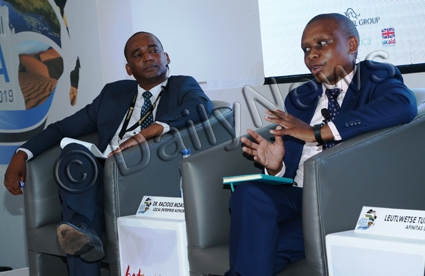
Contributing during a panel discussion on SMME financing through capital markets in Africa, the executive director at Afinitas Limited, Mr Leutlwetse Tumelo explained that one of the challenges facing SMMEs was non-existent governance structures, which included boards of directors and failure to conduct audits within the business.
These factors, he noted, impacted on their ability to raise funds on the capital markets and what was needed was for them to be guided on some of the requirements they had to meet before institutional investors could consider them for funding.
In addition, Mr Tumelo observed that the other impediment was that the size of funding required by the SMMEs was usually smaller than the threshold of funding set by institutional investors.
Furthermore, he asserted that institutional investors find those enterprises very risky to finance in that despite the fact that some might have a long history of operation, they were still too reliant on the promoters.
However, he explained that for SMME financing to succeed, there was need for convergence between SMMEs and institutional investors to structure the right deals that could cater for their needs.
Recounting his experience, Mr Tumelo explained that with SMMEs, they brought to the capital markets something new, despite the risks. He applauded the Botswana Stock Exchange for being helpful but highlighted that they still need to convince institutional investors to fund small businesses.
For his part, the chief operations officer at the Citizen Entrepreneurial Development Agency (CEDA), Mr Andrew Madeswi observed that the biggest hindrance to SMME financing was that they did not want to share management responsibilities and preferred to operate as sole owners of the business.
“They have this idea that if they share ideas, these will be stolen,” he noted. This, he explained, was self-defeating and gave the example of big companies which make their innovative ideas public before developing them.
Furthermore, he observed that most of those enterprises did not have the required security to access finance. As a development finance agency, Mr Madeswi explained that for SMMEs to access finance from them, they needed to have a bankable business idea.
Africa Lighthouse chief executive officer, Mr Bame Pule said that with regards to equity funding, they sought to partner with SMMEs, especially in assisting them to appoint boards, having proper and skilled management, seeking markets and business expansion.
He also urged banks to start looking more into financing those enterprises and coming up with facilities tailor-made for them.
One of the challenges with SMME financing through capital markets in Africa, he added, was lack of exposure and education by those businesses on the availability of equity funding.
Venture capital, he highlighted, was going to play a big role in financing SMMEs in Africa and said that in developed countries smaller companies needed a venture partner.
These venture partners, he highlighted, helped the companies grow and prepare them for listing in securities exchanges before they exited. However, he noted that in Africa there was little inflow of private equity funding.
Consequently, Local Enterprise Authority (LEA) chief executive officer, Mr Racious Moatshe mentioned that SMMEs were positioned to contribute economic development and called for the crafting of policies that support small businesses.
He also added there were innovative in terms of their business model and submitted 14 SMMEs to the Botswana Stock Exchange for the Tshipidi board listing mentorship. ENDS
Source : BOPA
Author : Puso Kedidimetse
Location : Kasane
Event : Panel discussion
Date : 28 Nov 2019
Related News

29 Jul 2026
29 Jul 2026
Modisaotsile on rise to the top
28 Jul 2026
Ross Breeders pioneers Botswana poultry exports

28 Jul 2026
Value chain key to industrial growth - Ntsima

28 Jul 2026
Africa SME body honours Boko

28 Jul 2026