


DHMT official shares Malaria precautions
11 Nov 2019
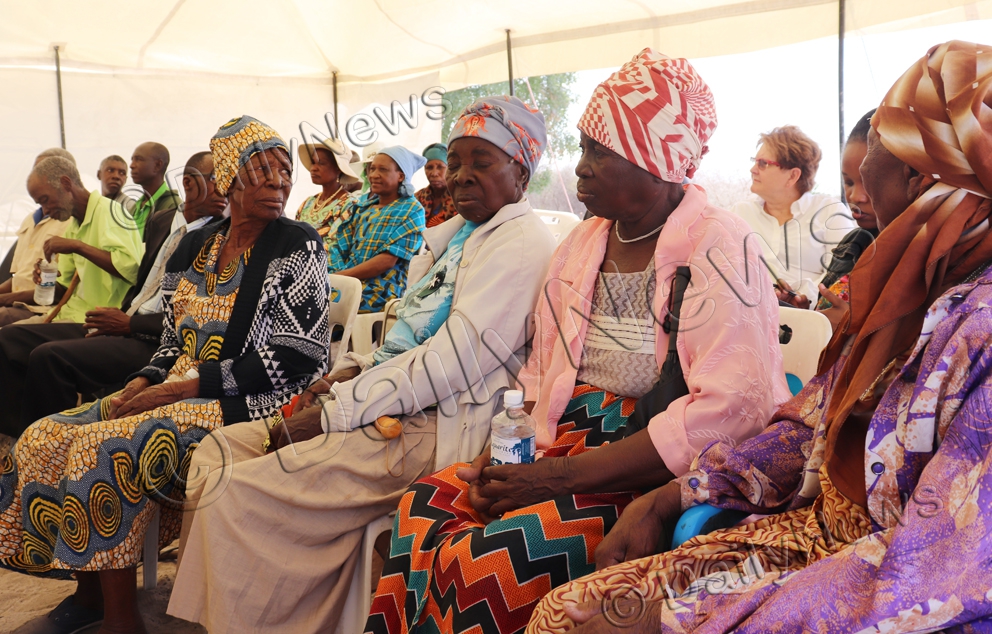
Residents of Ghabamochaa in the Ngamiland District have been urged to join hands with the District Health Management Team (DHMT) towards the fight against malaria disease.
An official from DHMT, Mr Kamogelo Thagame made the call during a meeting aimed at sensitising residents about the preparations for malaria season.
Mr Thagame said they had many programmes in place geared towards effectively controlling the spread of malaria.
He therefore appealed to the community to cooperate with team members in execution of such programmes.
He cited the indoor residual spraying (IRS) and the cleaning of surroundings to minimise the breeding spaces for the mosquitoes.
Malaria is a life-threatening disease caused by parasites that are transmitted to people through the bites of infected female Anopheles mosquitoes.
Residents were further informed that the disease was preventable and curable if only they could collaborate with health officials and do the right thing.
Mr Thagame explained that they had recruited local youths to sensitise the communities using different local languages about the upcoming IRS campaign.
He said the youths would sensitise them about the importance of IRS and ways of preventing malaria.
Mr Thagame pointed out that IRS exercise was faced with numerous challenges in the district as communities were still resisting spraying.
The exercise, he added, involved spraying the inside of housing structures with an insecticide.
The communities, he said, were reluctant to open doors for the spraying team and pleaded with residents to cooperate this time as they wanted to improve the spraying coverage.
Last year Mr Thagame said they managed 68 per cent coverage and that was not enough, adding that government was spending millions to buy IRS insecticides, hence the need for residents to cooperate and accept that IRS was paramount.
He said they would soon put up some boards in different villages with messages on prevention of malaria, adding that people should inform themselves and follow instructions to prevent deaths.
“We have all the resources to prevent malaria from multiplying and biting you and it is upon you to act responsibly and fight the disease,” he added.
The World Health Organization (WHO) recommends coverage of greater than 85 per cent of households in a community in order to have community-level protective effect.
The IRS is reported to be an effective strategy to control malaria transmission, but every year, health officials decried that there were often barriers to reaching the coverage necessary for attaining maximum community protective effect of IRS.
This year, Mr Thagame said they would be using stronger insecticides than the one used in previous years, noting that they had observed that mosquitoes could fly two kilometres to a place that had not been sprayed.
On others issues, he told residents that efforts would be made to visit their area once in three months to provide elders with a three-month supply of hypertension and sugar diabetes drugs.
He appreciated that elders had difficulty to travel long distances to access health service.
Meanwhile, in an interview with some residents on why they were not cooperating during IRS exercise, majority said that they were uncomfortable with the strong smell of the insecticide used while some said they were informed late about the exercise.
Residents said they preferred treated nets over IRS. ENDS
Source : BOPA
Author : Esther Mmolai
Location : GHABAMOCHAA
Event : INTERVIEW
Date : 11 Nov 2019
Related News
13 Aug 2026

13 Aug 2026
Botswana and South Africa reaffirm cooperation

13 Aug 2026
NHI requires legislative and governance reforms

13 Aug 2026