


Germany good land management impressive
26 Sep 2019
Germany’s land management practices, which entail optimal land utilisation, have been hailed for their ability to guarantee maximum returns from various production endeavours.
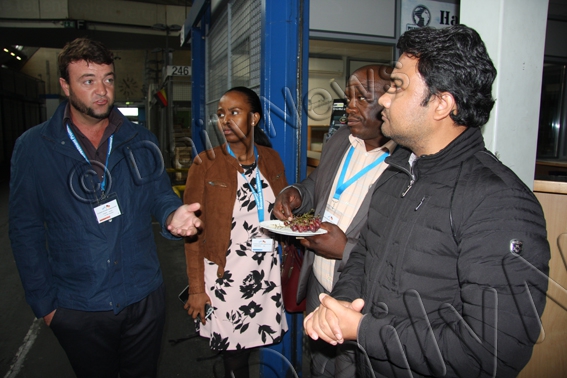
Commending the country’s land use and management practices, National Agricultural Research and Development Institute (NARDI) board member, Mr Rasebolai Kgamane noted that from observation, the manner in which land was being utilised in Germany could be among the many possible reasons why the country had attained its level of development.
In an interview, Wednesday, on the sidelines of week-long engagements between industry leaders from several sectors of Botswana’s economy and the German business community, Mr Kgamane said the apparent sound land management practices were some of the positives that Botswana could learn from Germany.
Mr Kgamane was also impressed with the exceptional quality of crops during the tour of Hamburg-based PilzSchindler, a six-decade old horticultural business.
He observed that while the quality was comparable to that of some businesses back home, it would take a while before Botswana could produce in quantities adequate enough to supply first world countries.
Mr Kgamane, who is also member of the Botswana Commercial Crop Producers Association, said he had further observed that in Germany associations were considered valuable to sound business practices.
He said it was clear from engagements with the business community in Germany that every industry had associations within it whose role was to facilitate the conduct of business in the respective sector.
The approach, he opined, had allowed for the orderly conduct of business and enabled businesses to attain high levels of consistency with regard to both production and supply to markets.
On the situation in Botswana, he called for government in particular to help strengthen associations so that they would become more effective.
He said it was disappointing that government had gone to great lengths to facilitate the establishment of associations only to abandon them later.
Reviving farmers associations, Mr Kgamane said would require training farmers on the running and management of their associations, and government on the other hand to learn what role it had to play to render support to such groupings to ensure they became effective.
Still from NARDI, Professor Hakgamalang Chepete described the set up at PilzSchindler as a good link between producers and the market.
He said had it worked the way it was envisioned when it was established, the Botswana horticultural market would have served the same purpose as PilzSchindler, which collected produce from different sources and distributed to retailers.
Prof. Chepete, who is also an official of the Botswana University of Agriculture and Natural Resources (BUAN), said having in place a facility operating the way PilzSchindler did afforded farmers the opportunity to focus on production and not on trying to secure markets.
“This means that when they produce, farmers would be guaranteed markets for their crops,” he said.
Moreover, he said it ensured maintenance of high standards and quality of produce as, if run properly, such a facility would source only produce of unquestionable quality.
Industry leaders in different sectors of the economy, together with individual business owners, are in Germany on an excursion to lure foreign investors to Botswana. Ends
Source : BOPA
Author : Keonee Kealeboga
Location : Hamburg
Event : Interview
Date : 26 Sep 2019
Related News


13 Aug 2026
Six decades of judicial growth


13 Aug 2026