Sustainable pasture management needs grazing plan - farmer
11 Sep 2019
Namibia’s Rangeland management policy and strategy coordinator, Mr Colin Nott has appealed to farmers to have a grazing plan for sustainable pasture management.
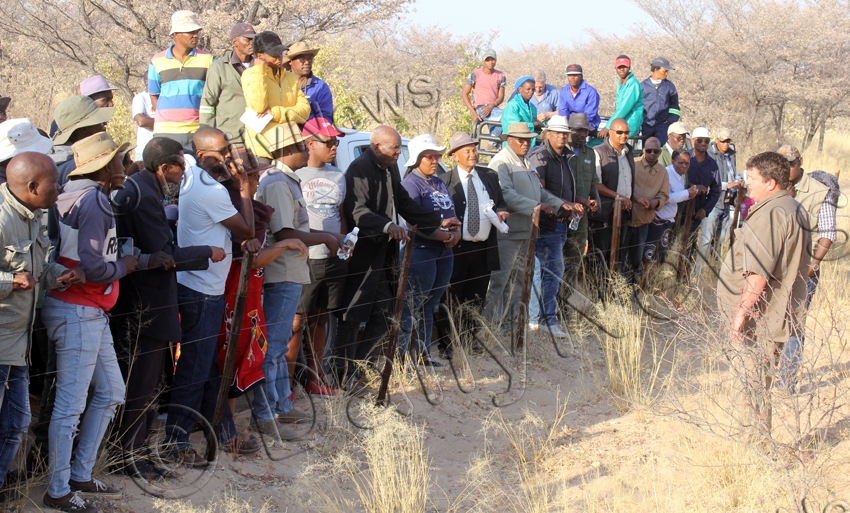
Speaking during the Ghanzi Beef Producers’ Association field day on September 7, Mr Nott said effective grazing plan should protect grassland and enhance a balanced pasture ecosystem.
He explained that it should also improve production as well as conserve the grassland, saying if the grass was given enough time to recover, it would grow stronger and would be able to support more livestock.
Mr Nott, who noted that Botswana and Namibia experienced the same challenges in the livestock production industry, attributed land degradation to lack of grazing plan.
“The number of livestock is not the problem, the problem is lack of a grazing plan,” he said
He said communal farmers should implement their grazing plan by group herding, while those who own ranches should make many paddocks.
He said that government should create incentives to help farmers to move from bad to good management practices or the industry should subsidise good management practices.
“In Namibia if you implement good animal husbandry practices, market reimburses you for additional costs.”
Good management practices, he said, increased production per hectare and decreases farming costs and choosing the right animals would be an advantage.
Mr Sheldon Barnes of Oasis Brahman farm observed that holistic land management concept, which they had been practicing for many years, was the way to go.
He said that the holistic land management concept was discovered by one Zimbabwean farmers and ecologist, Mr Allan Savory after witnessing predators-prey relationship, and their habitant.
After observing that the condition of vegetation in the wildlife habitat was mostly healthier and dense, Mr Savory replicated the concept to livestock farming by tightly keeping a big herd on one area for a very short time to trample soil to prepare the land for the rain before moving them to another area and he would allow the land to recover.
Through this concept, he managed to restore grasslands and the vegetation was healthy and resilient to drought.
Thereafter, he started working with local farmers and later with South African farmers, moved to Australia and then to the US.
Mr Barnes said holistic land management improves the range land and enhances beef production.
This concept, he said, protected some grass species, advancing that if livestock was left to freely roam around, it would kill the best grasses because they would only choose palatable grass, which would be mostly perennial.
He and his brother, Mr Quinton Barnes concurred that thorough planning was needed to implement this concept.
They recommended that one should know how long to keep livestock in a certain paddock and how long to let it rest, citing that one should have growing season planning and non-growing season planning.
Dr Edwin Mudongo from CLAWS (Communities Living Among Wildlife Sustainably and Okavango Institute of research - University of Botswana attributed overgrazing to the duration of animals in an area as oppose to their numbers.
Dr Mudongo briefed the farmers about Eretsha communal area herding pilot project, where they used mobile kraals and technology to reduce carnivores.
He said their ultimate goal was to reduce livestock-carnivore conflict by enhancing coexistence.
He emphasised that effective kraalling and grazing management should go hand in hand with herding and said with a grazing plan, the result would be great.
Ghanzi principal veterinary officer, Dr Neverson Sithole, who briefed the attendants about the disease situation in the Ghanzi area, said the area had experienced four cases of rabies in cattle this year.
He advised farmers to be vigilant and report suspected cases of rabies to veterinary officers as soon as the symptoms show. ENDS
Source : BOPA
Author : Mothusi Galekhutle
Location : GHANZI
Event : Ghanzi Beef Producers’ Association field day
Date : 11 Sep 2019
Related News

15 Aug 2026
15 Aug 2026