Poulo finds niche in guinea fowls
15 Aug 2019
Government has put in place a number of initiatives to alleviate poverty.
Such initiatives include the Remote Area Dweller Programme (RADP), Ipelegeng, Poverty Eradication (Nyeletso Lehuma) and Livestock Management and Infrastructure Development (LIMID) among others.
The initiatives are also in accordance with Millennium Development Goal 1 geared at eradicating extreme hunger and poverty.
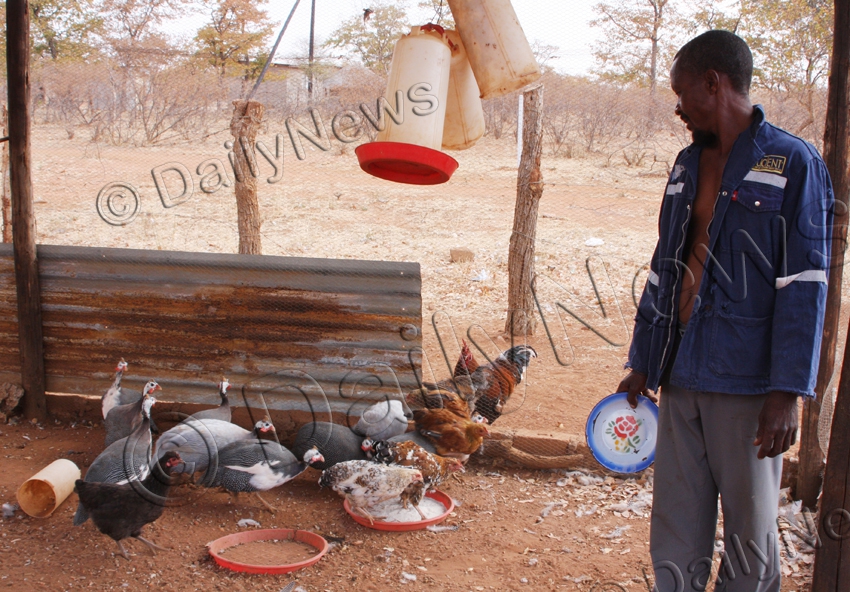
Mr Colin Poulo of Matopi in the North East District is one of the beneficiaries who has acquired 11 guinea fowls through the Poverty Eradication Programme.
Mr Poulo said rearing guinea fowls was not all bad.
He said one adores rather than detest the wacky birds as their squealing could be music to one’s ears.
He said their dissonant sounds lets one rest secure in the knowledge that the feathered watchdogs were hard at work alerting their keeper to any approaching intruders, be it humans, snakes or animals.
He said his guinea fowls were trained to the tune of his whistle and that when they were far and he blew his whistle, they came flying but did not respond to strangers’ whistles.
Mr Poulo said at night they acted as an alarm as they would beep-beep should a predator, snake or a person enter the yard, adding that recently he killed a snake that was approaching their coop.
He said around dawn they scour around for beetles, locusts, spiders, ticks, ants, cockroaches, flies, wasps, termites, cutworms and snails.
Guinea fowls are apparently relentless in their pursuit for something to satiate their appetite, just like any other living creature.
Unlike chickens, which are members of the pheasant family, guinea fowls have a family of their own. They are known for travelling in large, social groups.
Free ranging guinea fowls spend most of their time searching for food, and they work as a team devouring anything they score as they move through the grass in search of food.
When they come across rodents in the likes of rats and mice rabbits, not sparing small snakes and worms, they feast on them and they also consume mosquitoes, flies and grasshoppers.
All the while they keep a stable flow of beeps, hoots and ticks, which are a sign of complementing themselves for the day’s hunt and achievement.
In most cases, a guinea fowl does not scratch as eagerly as a chicken and is less likely to dig up garden seedlings, although they are attracted to freshly worked soil and will spend hours digging holes for luxurious dust baths. Mr Poulo said his major challenge was feed as he stayed at the cattle post and did not have enough funds to purchase in bulk. ENDS
Source : BOPA
Author : Goweditswe Kome
Location : MATOPI
Event : INTERVIEW
Date : 15 Aug 2019
Related News

15 Aug 2026
15 Aug 2026