

Botswana tackles money laundering risks
14 Aug 2019
The grey listing of Botswana as a result of risk identified with regards to money laundering has forced the country to come up with legal changes that will affect bank customers.
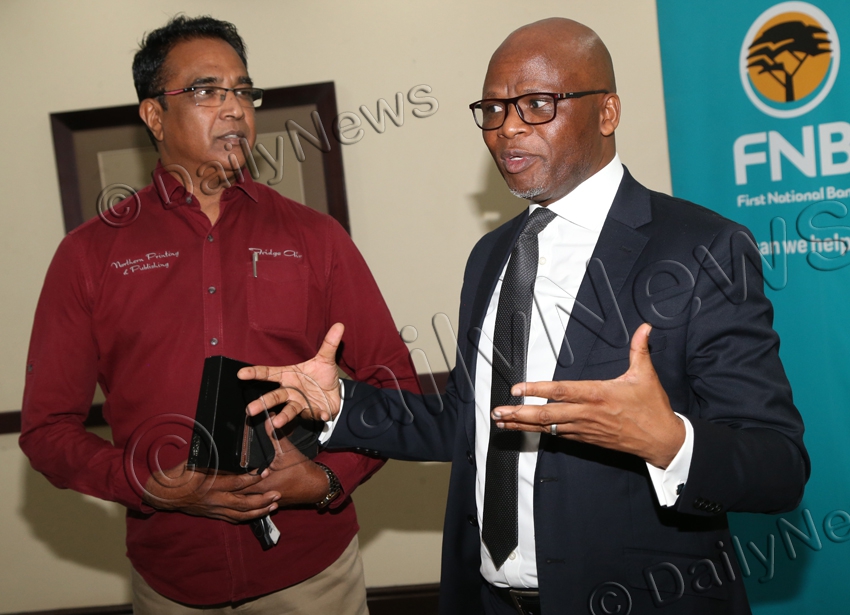
First National Bank Botswana, Head of Legal Department, Ms Gaone Setlhake said this during the bank’s fraud awareness seminar on Tuesday.
She explained that about 15 pieces of legislation relating to anti-money laundering had been passed since the country’s assessment which identified risks.
Some of the laws such as the Banking Act, had been amended to comply with anti-money laundering. Ms Setlhake noted that in the past, laws which regulated trusts were inadequate, therefore, the
Trust Property Control Act regulates trusts and control matters, the registration of trustees and other duties and responsibilities.
This, she said , meant that new customers would not be able to open trust accounts if they do not comply with the new legislation.
For existing customers, she highlighted that if they fail to comply, their trust accounts would be put on hold until they are compliant.
However, she said that evidence showed that customers were keen to comply with new or amended legislation.
For his part, the Manager, Financial Crime Risk Management, Mr Mothusi Obakeng observed that Batswana provided fraudsters with a conducive environment as they were too trusting and not cautious when engaging in financial transactions.
This, he noted, was risky as some people are engaged in money laundering.
Money laundering, he explained, is dealing in money from illicit activities and terrorism financing, the objective being to integrate it into the financial system through a web of complicated transactions.
This, Mr Obakeng said was done to deceive and hide the source of the money through layering. “This money is moved between different places, individuals and organizations, and is then integrated to be used to purchase luxury items,” he mentioned.
He implored FNBB customer to ask questions when someone wants to deposit money in their accounts, especially the source of such funds.
Local laws such as the Financial Intelligence Act, Financial Intelligence Regulations and Counter-Terrorism, he highlighted, supported anti-money laundering.
Regarding the Know Your Customer (KYC), Mr Obakeng explained that as a bank, FNBB had to know its customer, how much they earned and what to expect from them in terms of transactions.
This, he asserted, is why they demand customer identification cards, source of funds, the purpose of opening an account and beneficial ownership. “Batswana have a tendency to allow other people to use their alternative accounts, especially their children. This is risky as account holders need to be aware of activities in their accounts at all times,” he said.
One of the risks of doing so, he explained, included transacting with sanctioned individuals or entities which might result in the bank closing such accounts.
He said the bank was expected to rate their customers based on their risk profile. Therefore, he said prominent individuals fall in the auto high risk category as they have potential to be approached for favours or to be bribed, unlike medium and low risk customers.
High risk customers, he said, have to be asked questions on the source of their funds and the bank also does suspicious transaction reporting to detect when the transaction does not match the profile of the individual.
Mr Obakeng also noted that in 2007 a technical evaluation of the country found that the country did not have anti-money laundering legislation.
After this, he said the country established the Financial Intelligence Agency. However, he observed that after the second mutual evaluation in 2016 it was found that while the laws were in place, there was lack of compliance as they were not being implemented.
Weaknesses were identified, he said, especially in real estate and trust accounts which resulted in the country failing the evaluation.
The implications of Botswana’s grey listing on customers, he noted, was that the country was moving towards blacklisting, which would mean that clients would not transact outside the country.
As FNBB works with correspondent banks internationally, Mr Obakeng explained that the relationship was based on trust and if the country was blacklisted, the relationship would cease to exist.
An official from the forensics department, Ms Gorata Seboko said their department was the first point of contact with law enforcement officers in fraud investigations.
She explained that bank fraud had evolved over the years and cut across all sectors of the economy. Fraud, she highlighted, involved misrepresentation, unlawfulness, intention and potential losses.
Fraud, she noted, happens because of opportunity, rationalisation and pressure.ENDS
Source : BOPA
Author : Puso Kedidimetse
Location : FRANCISTOWN
Event : Bank’s fraud awareness seminar
Date : 14 Aug 2019
Related News

29 Jul 2026

29 Jul 2026
Poultry industry attains self-sufficiency
28 Jul 2026
Ross Breeders pioneers Botswana poultry exports
28 Jul 2026
Value chain key to industrial growth - Ntsima

28 Jul 2026
Africa SME body honours Boko
28 Jul 2026