Farmer pursues green innovation

29 Jul 2019
At independence in 1966, Botswana was mostly a rural, agrarian society of communal farmers and livestock herders.
Although the cattle industry remained a mainstay of the economy, agriculture in general declined sharply in its contribution to the gross domestic product.
This was partly a result of the sharp rise in other economic activities, particularly mining, as well as the agricultural sector’s own slow progress in adapting to modern commercial methods.
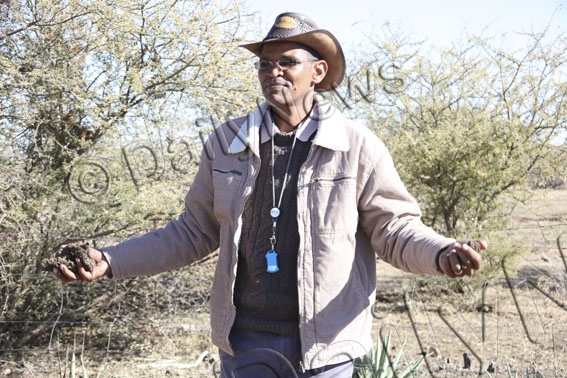
But Mr Richard Molosiwa, a Motswana who left the comfort of being a human resource practitioner in the corporate sector to pursue farming a decade ago, has been one of the Batswana farmers who have displayed the type of innovation needed to take agriculture forward.
The Palapye native, now based at Maisong farming land, between Mogonono and Suping just outside Molepolole, along the Lephephe road, runs Richlife Farms, which recently won the 2019 Energy Globe National Award.
“There is an international green energy NGO (non-governmental organization) that tries to encourage the preservation of the earth. They sent me a note to say they understood I have a biogas process at the farm, and asked me to submit an application to explain the details; including the objectives and how the process takes place.
These different projects are assessed and a national award given to the most impressive, and they then contend for the international award,” Mr Molosiwa says.
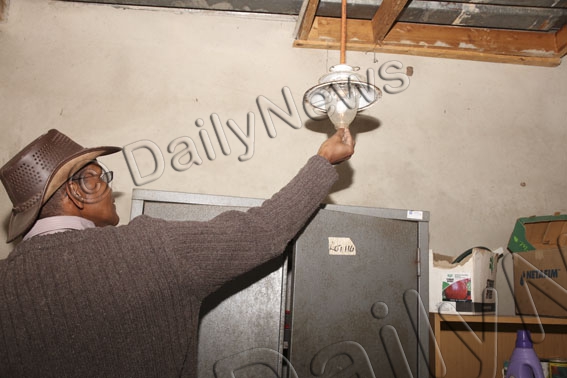
At the farm, Mr Molosiwa runs a home-made organic gas manufacturing operation, which processes cow dung in order to produce gas for cooking, lighting and heating.
In 2011, Botswana had an estimated cattle population herd of 2.5 million cattle, and each cow is scientifically said to produce about 500 litres of methane per day. A greenhouse gas like carbon dioxide, methane is scientifically proven to have a harmful effect on the environment.
“Methane has harmful effects on the ozone layer,” Mr Molosiwa explains. “As cattle release cow dung, it produces methane which is one of the gases that cause damage to the ozone layer, so our project was to try and capture it so it does not go into the atmosphere to cause harmful effect. We burn it an produce the biogas that powers the stove for cooking as well as produces light.”
The modest farming guru says this is a noble way of contributing towards a cleaner environment, and explains how the cow dung is deposited into the technology located at the farm produces energy.
“We have the biogas digester plant, which processes cow dung, some chemical activity takes place, with gas emitted which is trapped inside, and there is an outlet where we transport this gas into the kitchen to be utilized in the stove for cooking as well as for lights.
The unique thing is that we also use human waste flushed from the toilet; there is a pipe which deposits to the mini processing centre with water and the waste in a septic tank which then overflows into the digester,” Mr Molosiwa says.
He adds that human waste is only a small fraction of the process, with the cow dung being the biggest component of the biogas process.
The latest award comes barely two years after Mr Molosiwa scooped the Agrishop Integrated Exceptional Farmer of the Year Award at the inaugural Botswana Farming Awards held in 2017.
“I was not interested in farming until 2008, when I inherited farming land from my parents. Over the next couple of years I steadily developed a horticultural project at the farm, and left my day job to be a full time farmer,” Mr Molosiwa explains.
He started selling vegetables and explanded to lablab, maize and sunflower, and developed an orchard that produces a variety of fruits and vegetables.
“The problem we have encountered in the vegetable production market is that prices have largely stayed static over the past decade,” Mr Molosiwa reveals.
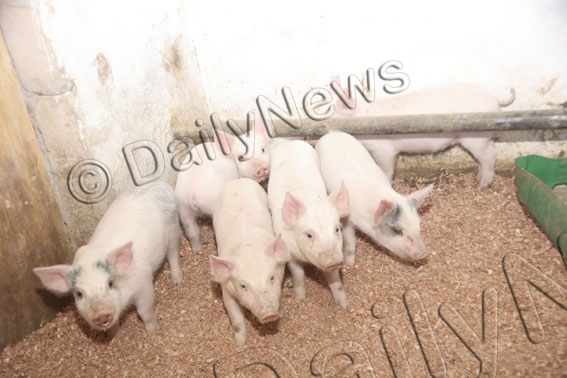
He then got into rearing small stock, and has also branched into pig farming, developing an impressive modern pig pen and is also developing a facility where other Batswana engaged in small stock will come for lessons and exchanging ideas.
Mr Molosiwa has hired an experienced farm manager, Mr Jacobus “Kobus” Minnaar, a South African émigré who lived with his family in New Zealand for about 25 years since 1994 until his recent move to Botswana to join Richlife Farms.
Armed with a BSc degree in Animal Science, Crop and Pasture Science from the University of Free State, Mr Minnaar has managed the Pig Research Unit at Massey University in New Zealand and has lectured at the Eastern Institute of Technology in New Zealand.
By roping in a professional farm manager with extensive agricultural science experience, Mr Molosiwa’s Richlife Farms which employs a total of six people looks to further modernise with Mr Minnaar bringing a modern scientific approach to the pig unit, which is being developed into the farm’s next major commercial activity.
Realising that Botswana has been heavily reliant pork imports from South Africa, a country whose pig meat industry has been severely affected by swine flu, which means they now are unable to export to Botswana, Mr Molosiwa has realised a new niche to build on- adding to his other award winning projects. Ends
Source : BOPA
Author : Pako Lebanna
Location : Gaborone
Event : Interview
Date : 29 Jul 2019
Related News

15 Aug 2026
15 Aug 2026