

Seed growers left in limbo as govt import seeds
03 Jul 2019
Commercial farmers based at Phuduhudu and Mmathethe are crying fowl after department of crops officials at Sebele backtracked on their agreement to procure seeds for ISPAAD programme from them.
After planting a combined hectarage of over 600, the farmers are now stuck with stashes of seeds and huge debts.
This is not withstanding an agreement entered into by department of crops and Mr Mokwapa Ramasu a commercial farmer based at Phuduhudu cluster as well as Kgosi Daniel Mathiba of Malor Pty Ltd in Mmathethe.
The department had given the two farmers a nod to plant open pollinated seeds, Kalahari early pear maize in particular.
The department had agreed with the farmers that it would source the seeds from them for the ISPAAD programme last year.
According to Mr Mokwapa, his company Sekaulengwe Pty Ltd together with Kgosi Mathiba’s company Malor Pty Ltd have been supplying Sebele with grains for many years.
In 2016 the pair approached the department of crops at Sebele with a proposal to plant open pollinated seeds since the department was buying grain from them and incurred costs turning it into seeds.
They too were finding it very expensive to buy hybrid seeds since they planted on a large scale.
The duo suggested to government that they could plant the grains and turn them into seeds.
The request was reportedly acceded to by the department.
The request, Mr Ramasu said was also done in earnest to preserve indigenous varieties of grain seeds since they were disappearing in favour of hybrid seeds.
They planted Kalahari early pearl maize and Sephala sorghum.
The department then monitored the seeds and carried out all the necessary tests and certified them excellent. Mr Mathiba lamented that all along the department was supporting the whole process.
They ensured that the farmers acquired the right equipment for grading the seeds as well as the right chemicals needed to change the grains into seeds all of which were purchased in South Africa.
To their surprise, Mr Ramasu said during the 2018 ploughing season when they were ready to supply government with seeds, the ISPAAD director told them that they had enough seeds for the entire ploughing season and the tender was awarded to Groscon to supply open pollinated seeds.
They also learnt that those who won the tender to supply were buying the seeds in South Africa.
The duo then approached the then minister of agricultural development and food security to intervene in the matter.
Mr Ramasu said the minister told them to go ahead and package and take care of the seeds and assured them that his ministry would purchase them but to no avail.
They also had made attempts to lure the company that won the tender to purchase from them since according to procurement guidelines suppliers were encouraged to buy locally before they could consider to buy supplies from outside the country.
Those attempts Mr Ramasu said did not bear any fruits.
In pursuit of answers, the farmers stated that the ministry of agriculture sent them from pillar to post. They even went to the office of the president to state their plea, even up to today they still have not been addressed.
The farmers said that if their concerns are not addressed, they will head to court.
An attempt to get a comment from the ministry proved unsuccessful because the permanent secretary in the ministry said that the issue was at the office of the president therefore they could not comment on it.
When recollecting his losses, Mr Ramasu said he had produced 10 200 pockets of 10kg bags each of sorghum and maize.
He also spent P250 000 to purchase a machine that grades the seeds as well as over P300 000 on diesel. In total he said he has spent over P2.5 million. All this money, he said was borrowed from the local banks.
On the other hand Mr Mathiba said that he had already thrown away more than 2000 bags of treated seeds.
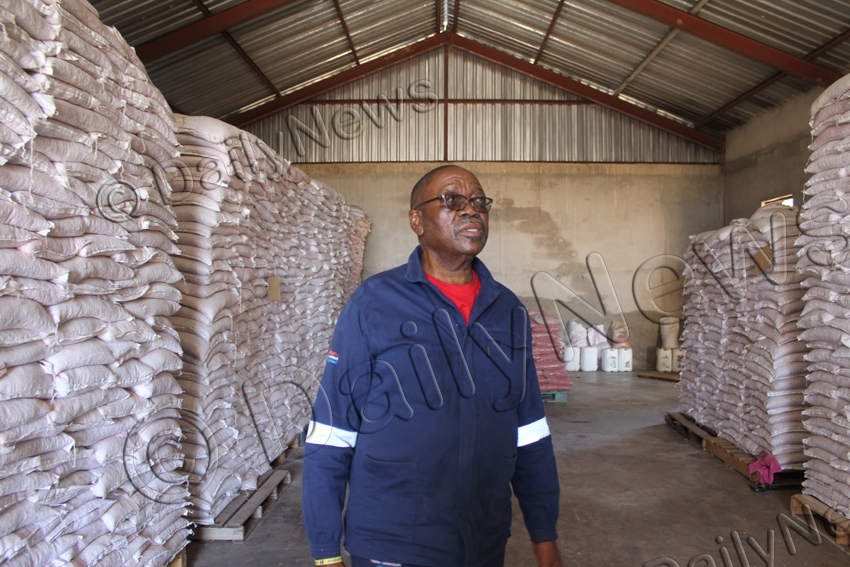
He has also spent P250 000 to purchase machinery. He is stuck with more than 10 000 bags of treated seeds and he does not know where to take them.
The seeds are now taking up storage space as he is not able to sell it even to individuals because they relied on government to supply them with free seeds.
In total Mr Mathiba had expected to make over P8 million from his produce.
The farmers also blamed government for speaking in favour of hybrid seeds over local open pollinated seeds.
They argued that local seeds have adapted to the climatic conditions of the country and were drought resistant.
They also stated that there was no difference between the two in terms of yield.
They all perform similarly except that open pollinated seeds have proved to be resilient in dry conditions such as this past ploughing season.
The duo also wondered why government was spending a lot of money purchasing seeds abroad.
They even went further to compare prices of locally produced seeds with those purchased abroad saying government was enriching other nations.
For instance they stated that government purchases open pollinated sorghum in Australia in particular Mr Baxter variety which costs around P 80 000 per tonne.
Locally open pollinated varieties of maize per 10kg costs P250 whereas hybrid will cost around P400.
Locally produced open pollinated variety of sorghum (10kg) costs P350 while a hybrid variety costs P1000.
Going forward, the farmers said they would not plant the seeds after what transpired.
This, they said would not only be a loss to them but to the government and Batswana at large because if local varieties were not promoted, they would surely disappear. Ends
Source : BOPA
Author : Lindi Morwaeng
Location : MOLEPOLOLE
Event : Interview
Date : 03 Jul 2019
Related News
29 Jul 2026
29 Jul 2026
Poultry industry attains self-sufficiency
28 Jul 2026
Ross Breeders pioneers Botswana poultry exports

28 Jul 2026
Value chain key to industrial growth - Ntsima
28 Jul 2026
Africa SME body honours Boko
28 Jul 2026