

Mmeke uses lights to fend off elephants
02 May 2019
The destruction caused by elephants has forced farmers to devise means of protecting their properties from elephants.
Three kilometers before reaching Nata from Maun, one is welcomed by beaming lights which could be confused for a holiday resort of some kind.
Getting closer, one finds that it is an open field.
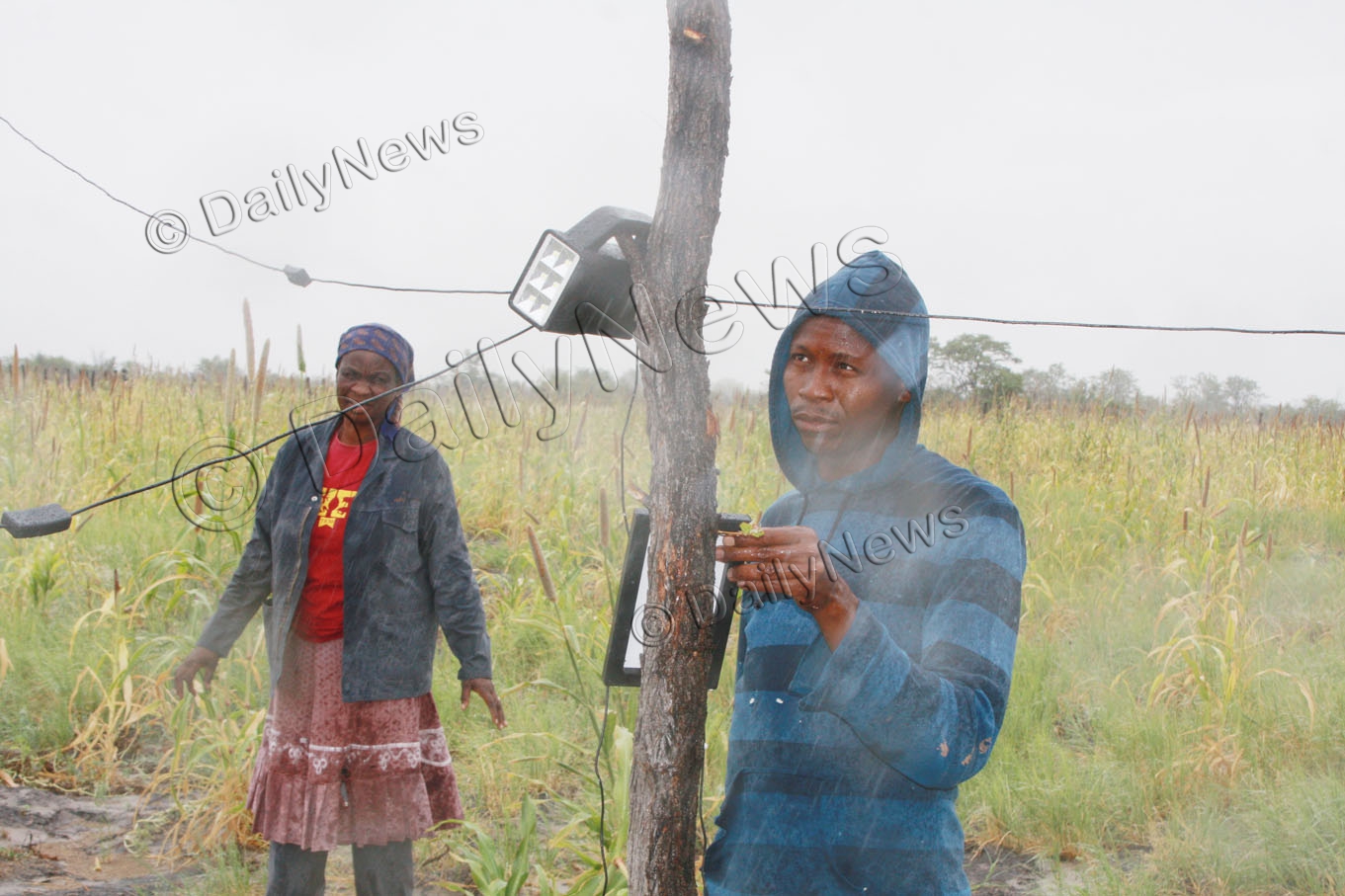
The farm belongs to Ms Lesetamang Mmeke who mooted the idea to chase away Africa’s jumbo from her farming field using lights.
The small experiment of low cost lighting system has shown initial signs of success by preventing elephants from destroying the farmer’s crops.
Connected to solar panels, the lights are placed at the level of the elephant’s eyes.
The LED bulbs are tied to wooden poles so that elephants can see them from a distance and this somehow keeps away jumbos from getting close to these powerful lights.
Each LED unit has a built-in solar charger thus making the lights maintenance low cost and can be setup with minimum support.
The light system has been designed based on the field experience Ms Mmeke had with elephants.
“I think this is a good system because some fields nearby have been ravaged by elephants and the owners have been using old systems such as chili pepper,” she said adding that in the past she would spend nights at the field to chase away the jumbos.
Growing up in a rural setting, farming has always been among the prime activities for 73-year-old Mmeke.
Passion drove her from being an average farmer to a farmer of note.
With a tale that signifies true calling, Ms Mmeke is among the best performing farmers in the country.
Ms Mmeke started ploughing in 2004 and elephants have been her tormentor ever since.
She has tried using various system such as red chill to scare away the jumbos but to no avail.
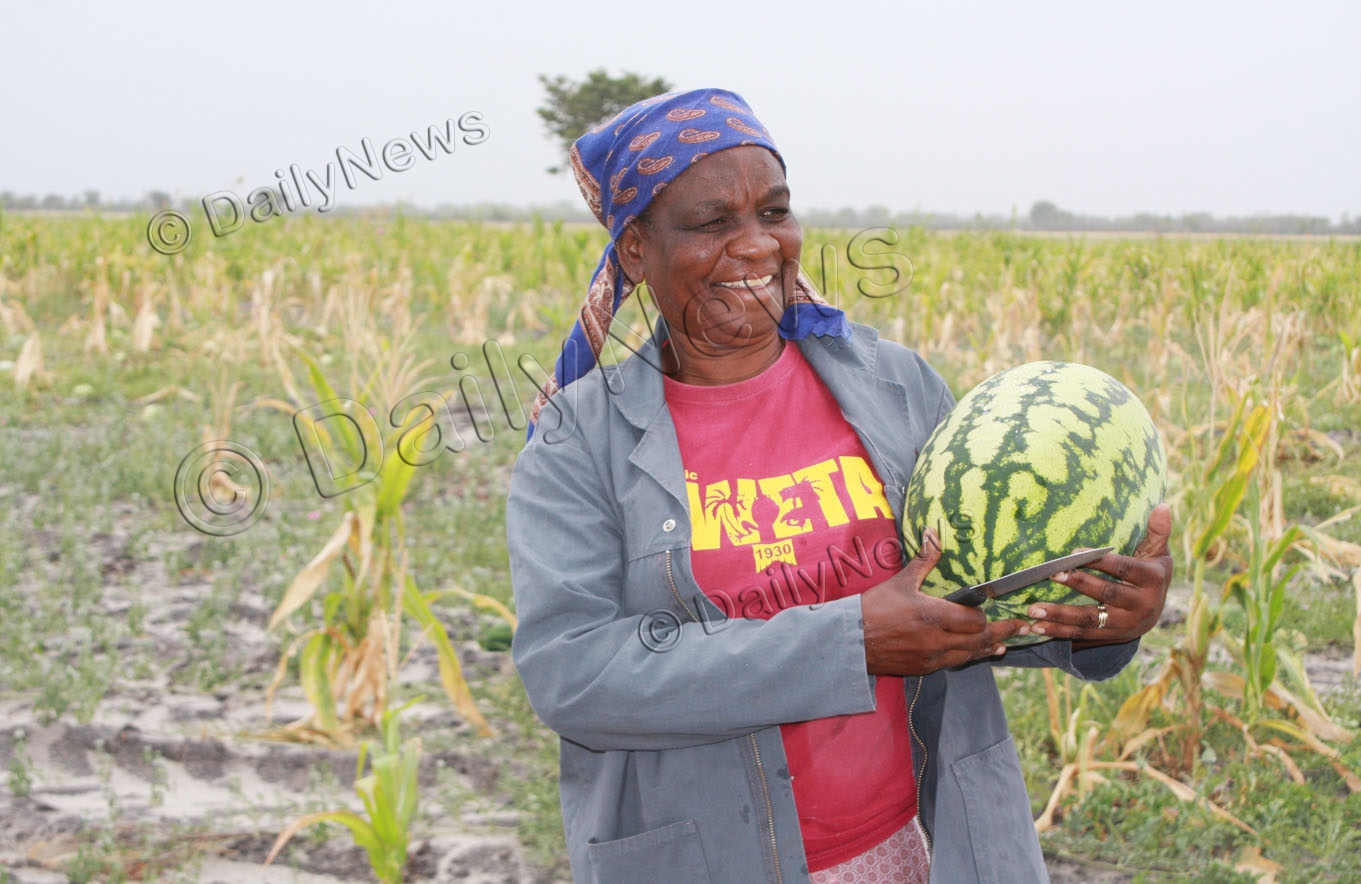
The strategy she has adopted has turned her fortunes and she sells watermelons, maize meal and beans.
She has reserved two hectares of her 40 hectares farm for small stock and poultry where she rears sheep, goats, chickens, and has drilled a borehole to augment her water supply in the field.
Ms Mmeke has been selling watermelons in Nata and surrounding villages since 2011.
Her long journey to success could be attributed to hard work and determination.
“As a married person I make enough profits to support myself and the rest of the family,” says Ms Mmeke, whose husband is a cattle baron.
She has never disposed the watermelons she produces or sold them at giveaway prices adding that her customers were government institutions such as primary schools, individuals and the business community.
She advertises herself through Facebook and testifies that having a Dyna Truck has helped her to easily access customers both pedestrians and motorists.
Ms Mmeke said watermelon business in Nata and surrounding areas is viable.
“It is very hot here and watermelons have a lot of water which people like to quench their thirst,” says Ms Mmeke.
She said a load of a Dyna truck would normally fetch P2 500.
Like any other crop selling business, watermelon has a low season.
“There are times when the supply is low. This makes profits low because I’m forced to sell the fruits at a higher price,” says Mmeke adding that she has not let it discourage her.
Regarding her choice to practice mixed farming Ms Mmeke explained that the good part of such farming is that there is continuous production.
“It enhances the productivity of the farm land, reduce dependency on external inputs and costs whilst at the same time components complement and support each other,” she added.
She explained that some of her animals were killed by predators, but that notwithstanding she still believes that the future is bright on this part of her business.
Ms Mmeke also harvests rainwater from gutters and downspouts that direct the rainwater collected by the roof to the storage reservoir.
The reservoir, typically located underground, has been constructed by herself using bricks and cement.
It supplies water to the household in the farm through a standard pressurized plumbing system.
She explained that rainwater containers could provide adequate water of quality if proper steps are taken in the planning and construction stages, and periodic maintenance is performed.
“I decided to build this reservoir to guarantee enough storage of clean water for both domestic use and animal use to get me through even the driest years,” she added.
Proud to be contributing to the country’s food security Ms Mmeke, she vows to continue with farming. ENDS
Source : BOPA
Author : Thamani Shabani
Location : FRANCISTOWN
Event : Interview
Date : 02 May 2019
Related News
29 Jul 2026
29 Jul 2026
Poultry industry attains self-sufficiency
28 Jul 2026
Ross Breeders pioneers Botswana poultry exports

28 Jul 2026
Value chain key to industrial growth - Ntsima

28 Jul 2026
Africa SME body honours Boko

28 Jul 2026