

Sexanana extermination on cards

23 Apr 2019
Plans are underway to exterminate Sexanana plant, which has over the years caused Kgalagadi residents sleepless nights.
The project has been sponsored by Forest Conservation Botswana (FCB) to the tune of P1 million.
In an interview, Kgalagadi District Council chairperson, Mr Meleko Thumpe, said the invasive Sexanana scientifically known as Mesquite (Prosopis species) was introduced in Kgalagadi in the 1980s to address soil erosion.
However, he said the invasive plant was now uncontrollable and it caused more harm than good to the environment.
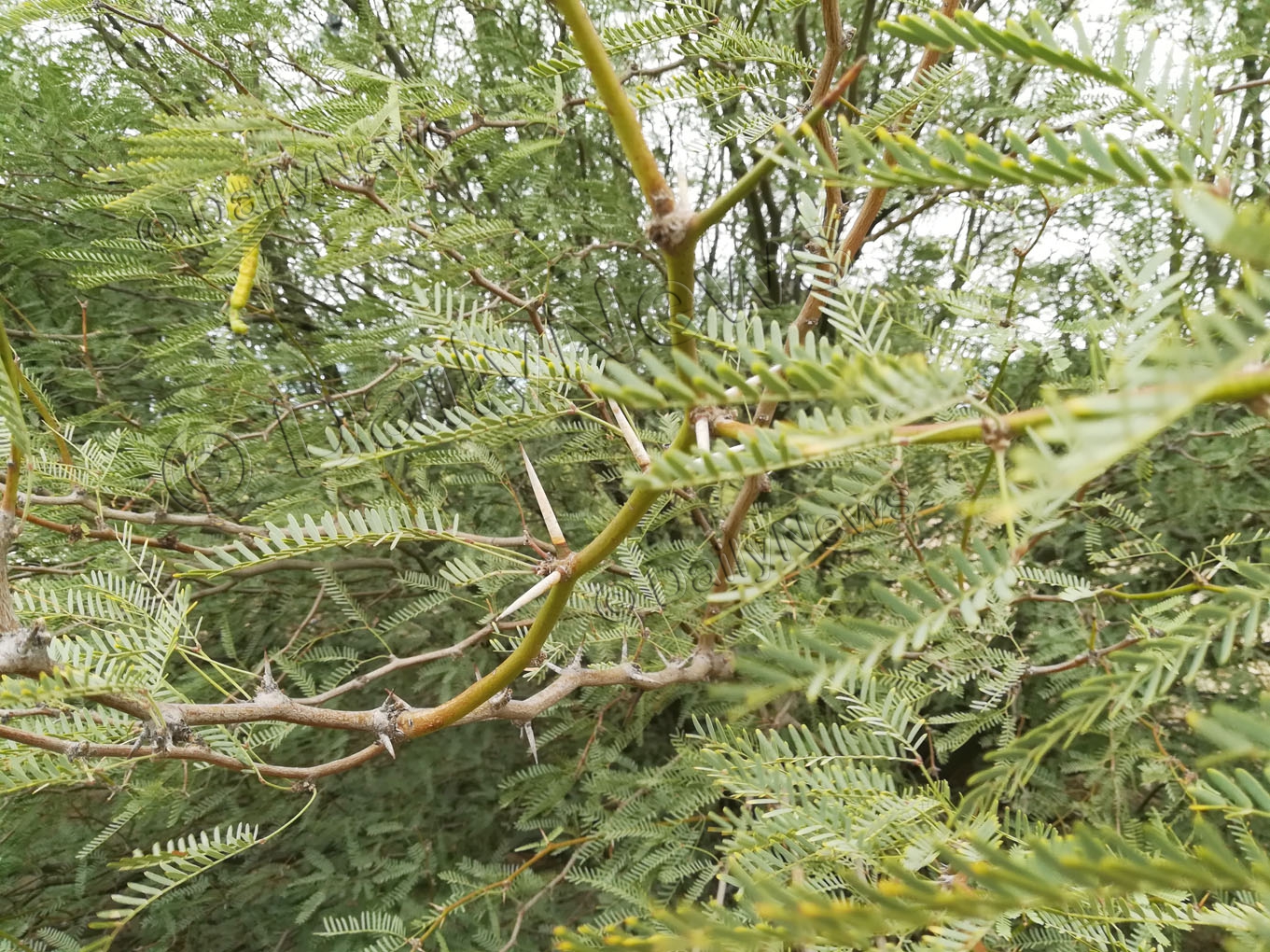
Sexanana is a dark green plant spread in most parts of Kgalagadi growing as multi-stemmed shrubby bushes or single stemmed trees with a spreading canopy which can be found with single branches extending outside the main canopy.
Mr Thumpe said the plant posed threat to the well being of the people.
Thus he said, it was against this background that Kokotsha Village Development Committee (VDC) lodged a proposal with FCB and was funded with P350 000 while Lokgwabe was funded with P550 000 to exterminate the plant.
Furthermore, Councillor Thumpe said sexanana rendered rangeland inaccessible thus reducing the available foraging area.
He said as the plant multiplied into uncontrollable numbers at an alarming rate, farmers complained that it drew large quantities of water from the ground leaving their boreholes without water.
He said some children had been admitted to hospitals due to allergic reaction.
Therefore, he said with the funds provided by FCB, they would begin exterminating sexanana in Kokotsha on April 25 though a project that shall run for nine months.
“When we remove it, we shall use the mechanical method where we will uproot it completely. We have done that before under Economic Stimulus Programme (ESP) in 2016/2017 which proved to have worked and therefore we shall continue with this method,” he said.
Councilor Thumpe said the project was targeted at completely removing sexanana and replacing it with other trees of varied species.
He said the exterminated trees should be used to produce green fodder by crushing it and mixing it with other indigenous trees such as motlopi, mongana, and mogonono that would be guided by Ministry of Agricultural Development and Food Security as well as other stakeholders such as BITRI.
Regarding the potential multiplication of the plant that could arise as a result of seeds that were not finely crushed in the production hence reversing the overall objective of the project, Mr Thumpe said they would seek advice and ensure that they bought the best machinery.
Furthermore, he said that the project which would be administered by the Kokotsha VDC would empower the women and the youth with specialised training on specific fields required for effective execution of the project.
For her part, the VDC vice chairperson Ms Mpelegang Mphuthele said they had already hit the ground running to meet the requirements of FCB so as to get the project well on track.
She said the project in Kokotsha would employ 30 casual labourers who would be divided into groups of 10 to uproot in each ward.
Tshane/Lokgwabe Councillor Mr Aidoo Leshope said in Kgalagadi North the project had been sponsored by FCB to the tune of P550 000 adding that it was the first project of its kind.
He said they would use exterminated Sexanana to make coal, and fodder which would be sold to livestock farmers.
He said sexanana had helped in curbing soil erosion but had now become a serious challenge hence the need to exterminate the plant. At the same time, he said the project would create employment opportunities for the people through production of various by-products.
The Department of Forestry and Range Resources Kgalagadi District Coordinator, Ms Naledi Batsima said the two projects had been funded primarily to conserve the environment and if successful could be implemented in other areas.
The project coordinators, she said, were urged to use the uprooted plant productively. She said the funds would be used to buy protective clothing and machinery that would be used to produce fodder and finance other administration duties.
Quizzed in an interview on how Sexanana arrived in the region, Kgalagadi South Kgosi David Toto II said the plant was spreading very fast in the region and it has now morphed into a different kind of species when compared to the past years.
According to research, in other countries Sexanana had also posed environmental threats.
The Australian Weed Management Guide, states that the Mesquite Prosopis (sexanana) is regarded as one of the worst weeds in Australia because of its invasiveness, potential for spread, and economic and environmental impacts.
Its economic impacts stem from its habit of forming dense, impenetrable thickets which, combined with its large thorns, prevent livestock from accessing watering holes and make mustering difficult. It also states that the plant reduces the productivity of pastoral country by taking over grass lands and using valuable water resources.
Further it cautions that the danger was that sexanana mainly reproduced through seeds, and produced one main crop per annum. “Each seed pod generally carries between 5 and 20 seeds, with potentially hundreds of thousands of seeds produced per mature plant,” it states.
In general, sexanana is well adapted to hot climates and a wide range of soil types and annual rainfall (150–1200 mm). They are often described as hardy because they can tolerate droughts and waterlogging, low nutrient soil and highly saline or alkaline soil.
Interestingly, closer to Botswana, Travel News Namibia reveals that sexanana is found in many parts of Southern Africa and it is not an African genus at all. “The trees originated in the arid regions of Mexico and the southern United States of America. The genus belongs to the leguminous (bean-pod-bearing) family and is classified as a hardwood tree.
Sexanana started to spread in the southern African region after pods were imported in the 1940s as a source of cattle fodder. Livestock ate them and the indigestible seeds were then distributed in the veld. Due to the easy propagation of the seeds, trees established themselves easily.
It increased by 400 percent within 17 years. The result was an impenetrable stand of trees bearing no pods. This has led South Africa to proclaim it an invader species in terms of the Conservation of Agricultural Resources Act (Act No 43 of 1983). ENDS
Source : BOPA
Author : Calviniah Kgautlhe
Location : TSABONG
Event : Interview
Date : 23 Apr 2019
Related News
29 Jul 2026
29 Jul 2026
Poultry industry attains self-sufficiency
28 Jul 2026
Ross Breeders pioneers Botswana poultry exports

28 Jul 2026
Value chain key to industrial growth - Ntsima

28 Jul 2026
Africa SME body honours Boko

28 Jul 2026