Ministry tackles human trafficking challenge
17 Apr 2019
The Ministry of Defense, Justice and Security has intensified efforts to train front-line officials in law enforcement, social welfare and the judiciary.
Such undertaking would bolster efforts to improve effectiveness in addressing human trafficking cases.
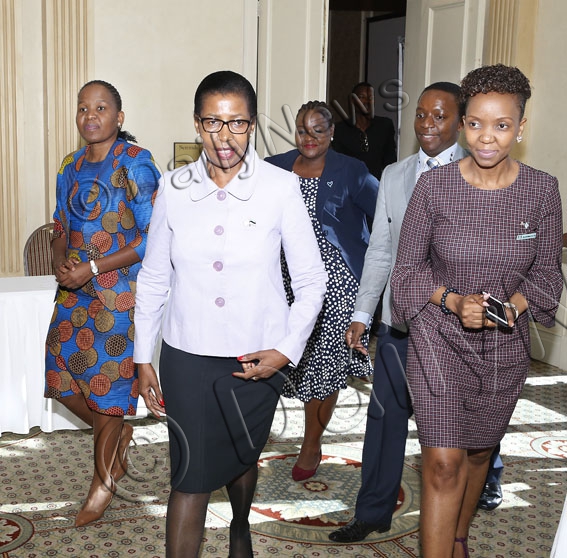
The ministry’s permanent, Ms Matshidiso Bokole, said this during a workshop on trafficking in persons in Gaborone on April 16.
She said human trafficking had in recent times become a global challenge.
“Botswana has so far detected and investigated 21 cases of human trafficking, out of which 16 were at various stages of prosecution before the courts while one case has been completed,” she said
Ms Bokole stated that human trafficking did not only violate human dignity but also inflicted untold mental and physical torment on the victim.
As such, she said, the 2010 United Nations Protocol to prevent, suppress and punish trafficking in persons, especially women and children, which supplemented that United Nations Convention against Transnational Organised Crime, underscored the seriousness which the international community attached to such crime.
She pointed out that Botswana, as a signatory to the Convention and its supplementing Protocol, was moved to enact the Anti- Human Trafficking Act of 2014, which was amended in 2018 to include offences such as smuggling of persons as well as prescribing commensurate punitive measures in the form of custodial sentences and fines.
For an example, she quoted Section 3 of the Anti-Human Trafficking Amendment Act, 2018 that provides, “any person who smuggles another person into or out of Botswana, whether or not the smuggling is to obtain, directly or indirectly, a financial or other material benefits commits an offence of smuggling and is liable to a fine not exceeding P200 00 or imprisonment for a term not exceeding 15 years or both”.
Ms Bokole, therefore, pointed out that the objective of the workshop on trafficking in persons was for the media to be facilitated to gain better appreciation in anti-human trafficking matters particularly the applicable law as well as enhance their understanding of the crime of human trafficking.
“This also includes equipping them with response mechanisms whenever they encounter cases on human trafficking and to build a partnership to strengthen collective action against the crime of trafficking in persons,” she said.
Ms Bokole urged the media practitioners to play a crucial role in preventing human trafficking saying the media had been tasked with the delivery of educational message.
Ms Bokole further pointed out that it was imperative to note that while Botswana was party to legally binding international instruments, many of which had been domesticated into national law, the media was mandated to take serious and tangible steps to build awareness among Batswana on what those laws were expected to achieve within the local context.
Furthermore, she cautioned media practitioners to recognize the obligations that they have in so far as the Anti- Human Trafficking is concerned, urging them to report in a balanced manner. ENDS
Source : BOPA
Author : Lesedi Thatayamodimo
Location : GABORONE
Event : Workshop
Date : 17 Apr 2019
Related News

15 Aug 2026
15 Aug 2026