Land use policies under review
14 Apr 2019
Several legal instruments guiding land use are currently under review to align them to President Dr Mokgweetsi Masisi’s transformational roadmap.
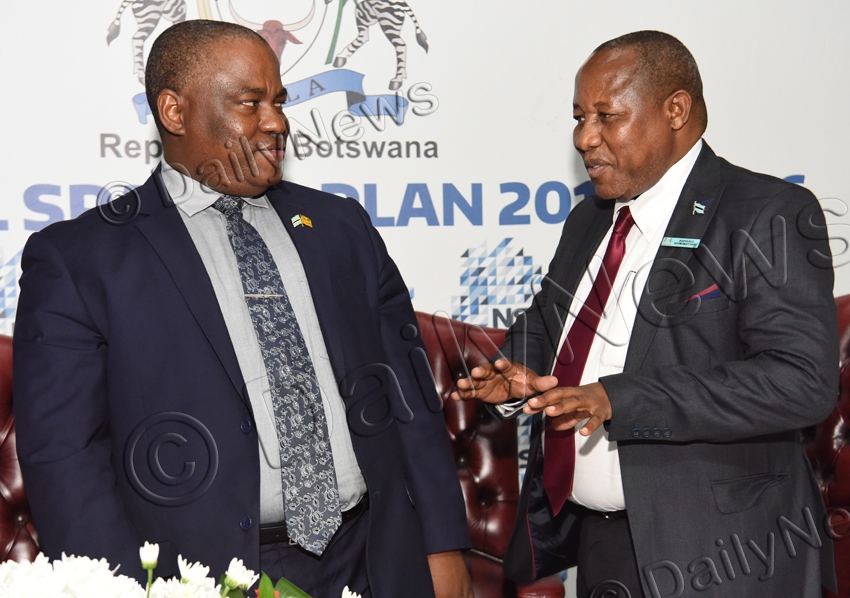
In light of this, the Ministry of Land Management, Water and Sanitation, on April 11, held consultations with stakeholders on expediting implementation of this review as part of the ongoing consultative process.
The minister, Mr Kefentse Mzwinila, noted that service users were complaining about lack of proper facilitation regarding issues of change of land use and thus emphasised the need for the ministry and stakeholders to be responsive to the concerns.
“We have since started the process of reviewing our legal instruments to facilitate a seamless process of making ourselves flexible and responsive with respect to change of land use,” he stated.
Minister Mzwinila further highlighted that everyone, especially implementers across all ministries, must be on board with the ministry’s vision.Some of the preliminary hindrances identified called for reviewing of existing land policies and regulating instruments which are seen to be restrictive to the land transformation agenda.
Permanent secretary in the Ministry of Land Management, Water and Sanitation, Mr Thatayaone Dedede in his presentation, identified guidelines for integrated farming as failing to allow for diversification and efficient use of land through its requirement of 85 per cent of the land being dedicated solely for principal use.
“This is not practical with the current unpredictable rainfall patterns where 85 per cent of the land can be left idle rather than allowing such land to be used for other income generating purposes,” he stated. In some cases, he noted that such land often sits on pristine areas suitable for agro-tourism. It was therefore proposed that the guidelines be reviewed to allow for inclusion of other innovative land uses.
Similarly, Botswana land policy was cited as restrictive through zoning and gazettement of ploughing fields whose land use cannot be changed thereafter. This policy compounds the same challenge of prohibition of venturing into alternative businesses and innovative land uses as mentioned above.
Other restrictive regulating instruments identified include land board local policies, agro-tourism guidelines and tourist related accommodation guidelines. Proposed interventions for these include removal of restrictive parking requirements for tourist related accommodation to make the requirement flexible as well as harmonising land board local policies to create a similar regulatory environment.
However, some stakeholders disagreed with proposals to have land board local policies standardised as they argued that Botswana’s geographical makeup was too diverse to operate on standardised policies.
Board secretary for Tawana Land board, Ms Neo Mothobi opined that some of the existing land use requirements were already impractical enough for certain areas and therefore needed to be customised to meet specific geographic and demographic landscapes.
“You cannot have an instrument demanding the same parking requirements suitable for urban areas in areas such as Seronga, as this might be impossible to fulfill in such a rural setup,” she said.
The one size fits all approach, she noted was prohibiting the growth of rural areas and needed to be looked into.
It is envisaged that stakeholders who consisted of local authorities from various districts such as district commissioners, council secretaries and land board secretaries, as well as physical planners and town clerks are expected to cascade proposed reviews in their localities and feed back to the overall national review proposals. ENDS
Source : BOPA
Author : Ludo Chube
Location : GABORONE
Event : Consultative meeting
Date : 14 Apr 2019
Related News

15 Aug 2026
15 Aug 2026