Participatory process key to success
28 Mar 2019
An inclusive, participatory process in which all stakeholders’ interests and concerns are analysed and addressed is necessary for having a successful decentralisation policy.
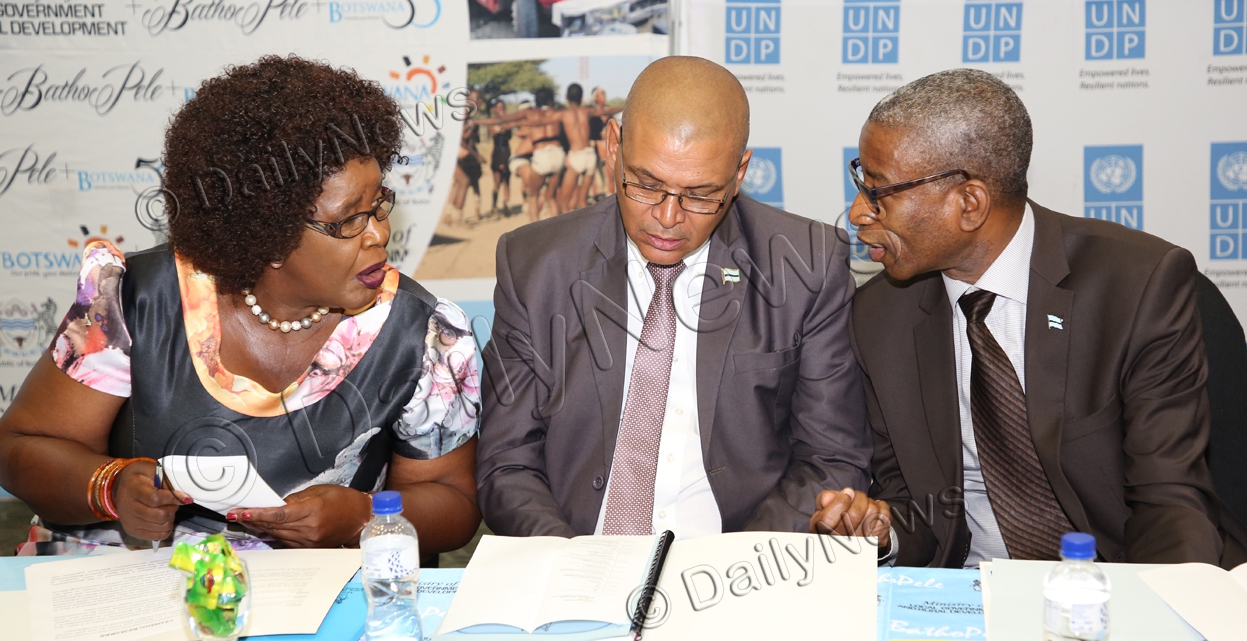
This was said by Minister for Presidential Affairs, Governance and Public Administration, Mr Nonofo Molefhi when officially opening a stakeholders workshop on the first draft of Botswana’s National Decentralisation Policy in Gaborone on March 26.
Giving the background, Minister Molefi said the 2001 local government structure commission noted that decentralisation efforts were frustrated because the country lacked an overall decentralisation policy.
The commission noted the existence of a 1993 Decentralisation Policy Paper and Action Plan developed as a requirement for a bilateral agreement between Botswana and Swedish International Development Agency, he explained.
Mr Molefhi said the commission noted that the vision for decentralisation had been expressed at independence in 1966 which was followed by the establishment of councils and land boards as statutory bodies.
The intensive deconcentration efforts by all ministries confirmed government’s intention to decentralise some of its functions, he said.
Minister Molefhi said the commission recommended the formulation of a clear decentralisation policy which would become a tool for guiding service delivery, coordinate and align decision making to enhance national and local level democracy and promote popular participation for sustainable development.
Mr Molefhi said Vision 2036 pledged that “the decentralisation of power, decision making, resource mobilisation and service delivery will underpin our government system”.
The vision espouses the empowerement of local authorities through devolution of political and administrative powers, mobilise own resources, promote local economic development and partner with other development actors such as the private sector and civil society in delivering quality services to their communities., he said.
He said it was against the background that government approved the recommendation of the commission and assigned the Ministry of Local Government and Rural Development to facilitate the formulation of the policy.
Mr Molefhi thanked the Commonwealth Local Government Forum and the United Nations Development Programme for partnering with government to fund the project, which he said was a sign of good working relationships for the betterment of Botswana.
He said the assistance would go a long way in ensuring the success of the project.
In her closing remarks, the assistant minister in the Ministry of Local Government and Rural Development Ms Botlogile Tshireletso said decentralisation policy was a major issue across many emerging African democracies.
Decentralisation, she said, had been acknowledged as a good model for prioritising government’s development agenda.
She said decentralisation remained a corner stone in nation building and development.
Ms Tshireletso said decentralisation was achieved through improving the quality and quantity of participation as well as delivering services that met the expectations of citizens. ENDS
Source : BOPA
Author : Lesedi Thatayamodimo
Location : GABORONE
Event : Workshop
Date : 28 Mar 2019
Related News

15 Aug 2026
15 Aug 2026