

How To Us soldiers on despite challenges
24 Mar 2019
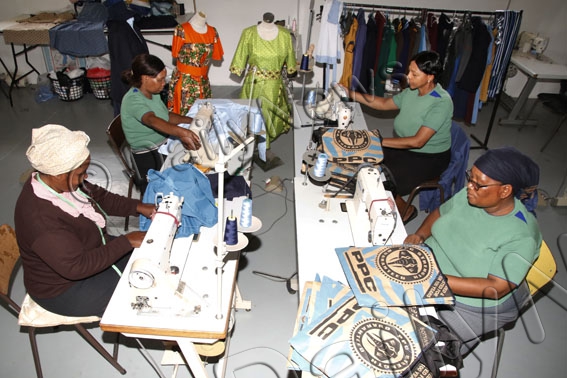
It may sound like a cliche, but unity is power as proven by 19 women who organised themselves in 2005 and started a sewing project.
The project was later turned into a business entity with a registered company named How To Us Investment.
To make sure that the company took off effortlessly, each member brought a sewing machine.
Some of the women were supported by Integrated Field Services through Financial Assistance Policy (FAP) to acquire basic equipment such as sewing machines.
However, those who did not have any sort of support grant, sourced funds, bought machines and joined How To Us Investment.
They also rented a factory at Teba situated in the Native Recruiting Corporation (NRC) in Molepolole.
One of the directors of the company, Ms Baakanyang Leshona said they lost a lot of members over the years due to personal challenges, seven remained behind to date.
She reiterated that those who left the company took with them their machines, but they soldiered on and worked with what they had.
Through UNDP, the company received a boost of eight special machines while the Department of Industrial Affairs donated cutting tables and chairs.
On top of that, Gender Affairs department funded the women with P250 000 for stock in 2010.
PPC Cement also helped with the plan of the current factory, which is situated in the industrial area.
PPC Cement further injected P850 000 towards the construction of the factory shop with the Department of Gender Affairs contributing a further P650 000.
To show commitment the women used their own money to connect water and fenced the factory plot.
How To Us trades in school and choir uniforms, protective clothing, bedding and various fashion items. The business survives primarily on local government tenders.
However, just like any other business, How To Us faces challenges such competition.
Ms Leshona pointed out that they lose a lot of business to Chinese stores because they are cheap.
Another challenge they have to deal with is lack of transport to their new factory as they are located a bit further from the centre of the village, where there is a lot of business activity.
Another challenge to the company is sourcing of raw materials, which has proven to be quite expensive as they are imported.
Ms Leshona commended Local Enterprise Authority (LEA) for mentoring them in general business management to ensure that they do not make losses.
They also expressed their gratitude to Kweneng District Council for engaging them in training beneficiaries of Poverty Eradication Programme as well as attaching students to do on job training.
The company is enjoying a lot of support from government departments and the private sector alike.
Ms Leshona however said since the dressmaking business is seasonal, more money flows when schools open, especially that they are engaged by the council to tailor for orphans and less privileged children.
Challenges as there may be, the company is embarking on recycling waste materials.
Through the assistance of PPC Cement, the women have started producing hand crafted hand bags made out of cement bags.
The cement packs can be used to make laptop, shopping and hand bags, thus they encourage builders to handle cement bags with care so that they can recycle the bags.
The company has 17 sewing machines being straight, over-lock, double stitch, lactic, button and hemming machine.
They have designed uniforms for the Institute Health Sciences in Molepolole and various cleaning companies.
They have also graduated from Gender Affairs expo and sometimes they partake in market day organised by LEA.
Business adviser at LEA Ms Lame Motsumi explained that they help How To Us with interventions such as monitoring and coaching.
She also said they helped them draw the business plan, which helped them access funds at the Department of Gender Affairs.
In addition, LEA helped them acquire documents that assist in tendering such as Economic Diversification Drive certificate, PPADB and tax clearance certificates.
Since the company does not have any symbolic feature, LEA took them through training on essentials of branding, packaging and labelling.
Ms Motsumi said they also assisted them with the development of a logo, business cards, flyers, a letter head and company profile drafting. ENDS
Source : BOPA
Author : Sylvia Ditsele
Location : MOLEPOLOLE
Event : Interview
Date : 24 Mar 2019
Related News
29 Jul 2026
29 Jul 2026
Poultry industry attains self-sufficiency
28 Jul 2026
Ross Breeders pioneers Botswana poultry exports
28 Jul 2026
Value chain key to industrial growth - Ntsima
28 Jul 2026
Africa SME body honours Boko
28 Jul 2026