

Ploughing maize earlier ideal
15 Jan 2019
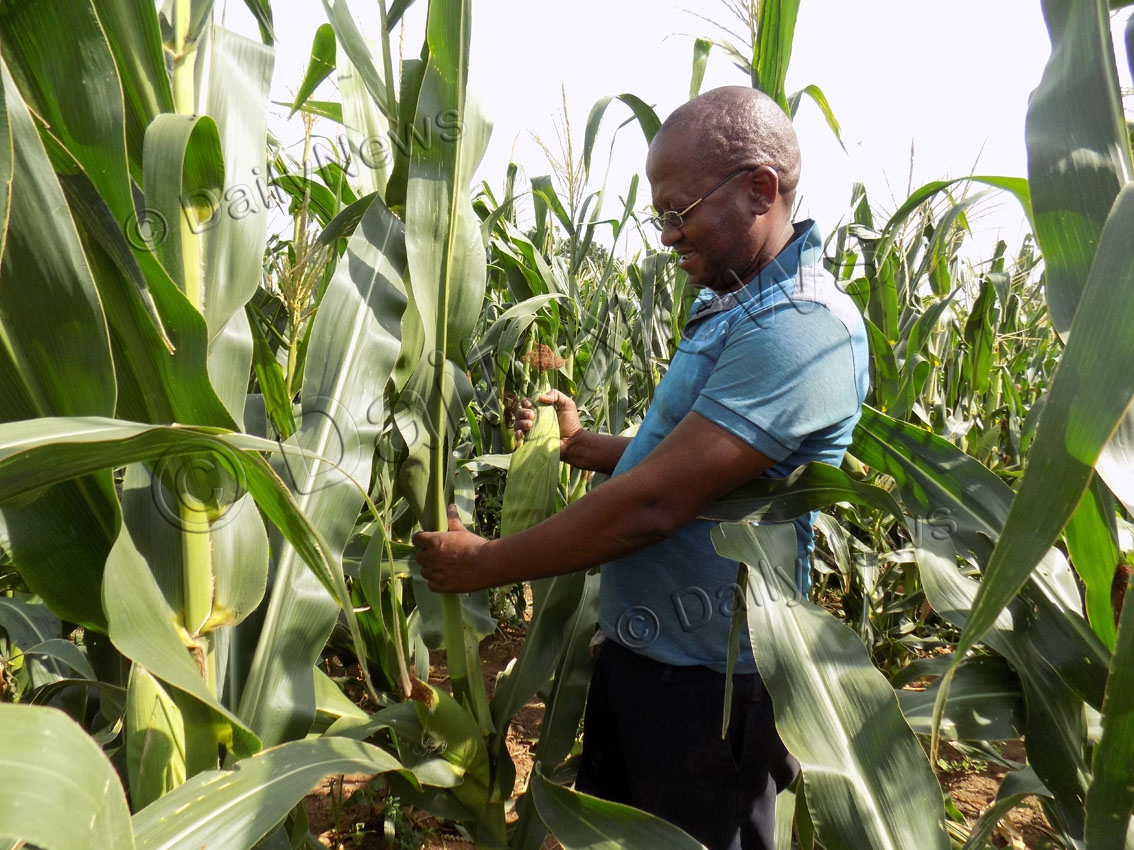
Ploughing maize ahead of ploughing season has brought decent profits for a small scale horticulture farmer in Semotswane.
Mr Moreetsi Letsididi, who owns five acres of horticulture farm along Shashe River, had been supplying the local market around Francistown with green millies from his farm.
As a horticulture farmer, Mr Letsididi’s mainly produces such vegetables as green pepper, leafy vegetables, tomatoes and cabbage.
Speaking to BOPA recently, Mr Letsididi revealed that he simply capitalised on a gap that existed in the market.
“Farmers at the fields wait for rainy season before ploughing their crops, I then saw an opportunity to plant ahead, hence around this time my maize is already ripe and ready to sell,” revealed Mr Letsididi.
His farm is just a stone throw away from the river with access to a basin of unlimited water supply to his farm, the sole advantage he stated he had over dry planting farmers.
According to Mr Letsididi, since water was not a problem for him he used the advantage by planting his crops early.
He said usually his production starts around September after the winter season.
He explained that it takes about three months for his produce to be ready for harvest.
Since the demand would be high, due to unavailability of the crop produce in the market the prices are reasonably fair for him.
“I supply hawkers in Francistown who buy to resell and since by the time my produce is ready for selling, dry planting farmers at the fields will only be starting to plant their crops around rainy season therefore the demand will be higher at very good prices,” stated Mr Letsididi.
Although he appreciated the business of selling green millies he also pointed out that producing ahead of season can also be risky.
He noted issues of harsh weather conditions, which might leave a farmer with nothing to sell.
This year, he said he struggled with extreme hot temperatures, which required him to water his crops more often than usual.
Although he acknowledged the abundance of water, which he said was his lifeline, he said the constant watering of plants due to hot weather conditions meant he had to spend more than usual, especially on electricity.
Mr Letsididi said he intended to add watermelon to his produce.
Watermelons also have a lucrative market because most of those available before harvest season are imported.
Therefore in the next ploughing season, he said he would try his hand in producing watermelons, backed by being able to irrigate he reckoned the results would positive. Ends
Source : BOPA
Author : Bulukani Hubona
Location : SEMOTSWANE
Event : Interview
Date : 15 Jan 2019
Related News

30 Jul 2026

29 Jul 2026
Modisaotsile on rise to the top
29 Jul 2026
Poultry industry attains self-sufficiency
28 Jul 2026
Ross Breeders pioneers Botswana poultry exports

28 Jul 2026