


Traditional medicine important to society
09 Sep 2018
Acting director of public health Mr Samuel Kolane says it is important to advocate for the promotion of local production of traditional medicinal products and their assimilation into the health care delivery system.
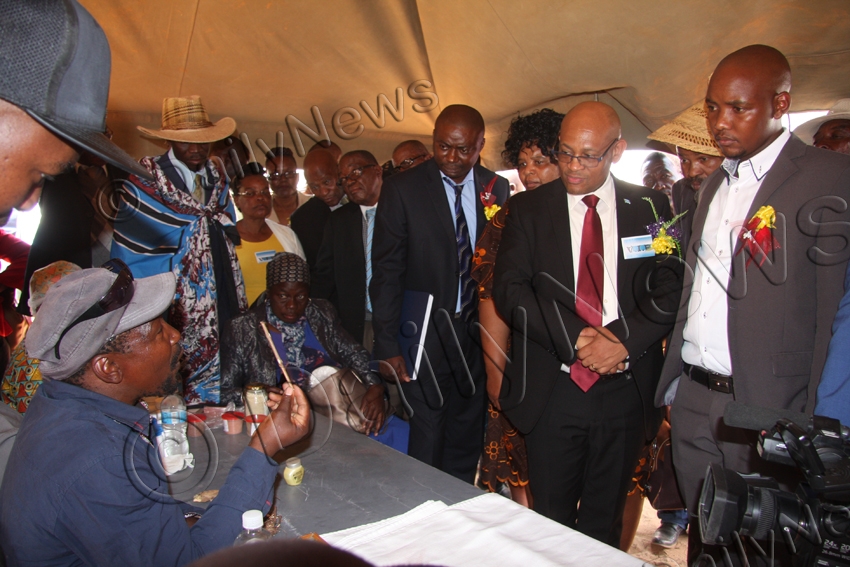
Officiating during the 16th commemoration of African Traditional Medicine Week in Hukuntsi recently, Mr Kolane said traditional medicine remained a critical component of the health care delivery system since it was beyond doubt that it played a pivotal role in alleviating pain and suffering by curing various ailments in society.
“The truth of the matter is traditional medicine has long been used by different communities and even by different traditional practitioners and the idea of manufacturing traditional medicine needs to be indoctrinated as key to sustainable health,” said Mr Kolane.
He said it was fundamental for the Ministry of Health and Wellness to partner with Botswana Dingaka Association (BDA) in order to integrate traditional medicine into the conventional health service systems.
Mr Kolane said it would go a long way in ensuring provision of cost effective medicines to populations who required them most since they were unable to afford the normal chain store medicines.
He also said the strategy on promoting the role of traditional medicine in health service systems was adopted by the World Health Organisation (WHO) which called for the development of local production and conservation of medicinal plants as well as the need for regulation of the practice of traditional medicine.
He said WHO statistics attested to the high usage of traditional medicine as 80 per cent of the population worldwide utilised traditional medicine for their health care needs, and that the remaining 20 per cent used modern health care medicines.
He said research also indicated that in some African countries they were overwhelmed with the number of traditional medicinal users mainly due to the fact that traditional medicine was accessible, available, affordable and in most cases the consultant would be a local person with better understanding of cultural norms of a community.
Moreover, he said the significance of traditional medicine in the health care delivery system had been acknowledged by the WHO and that member states had been urged to collaborate with traditional health practitioners and other people of similar interests.
Mr Kolane acknowledged that there was progress on the recommendations passed by WHO as member states had developed national policies and regulations on traditional medicine.
In compliance to the World Health Assembly, Mr Kolane said Botswana was currently under the process of drafting the traditional health practice bill.
He said the envisaged law would enable the recognition of traditional health practitioners and would define “areas of practice, state rights, privileges and responsibilities of traditional health practitioners as well as provide a basis for their registration.”
In addition, he said the involvement of practitioners themselves should provide the basis of ordinances and standards of reference to determine malpractice.
He said the country was grappling with conservation of natural plants and that on the other hand the demand for complementary medication had reached its peak, as people were now seeking health care remedies at an alarming rate.
He urged societies to work towards ensuring that regulating instruments were in place that would protect the public against potential harmful practices.
He cautioned the public against the “mushrooming of traditional health practitioners” together with their “miracle cures as well as complementary health remedies.”
He cautioned that the people took advantage of sick people because the products that they prescribed lacked scientific evidence for their quality and safety.
However, he encouraged community members to always seek advice from the Ministry of Health and Wellness for assistance.
In his opening remarks, head of the District Health Management Team (DHMT), Dr Kwiratwitwe Kutungu said the proposed integration of traditional medicine into the national health care services would mark a significant milestone in addressing health issues prevailing in the health care sector.
Giving objectives of the day, traditional health practitioner, Mr Onneile Nti said the main aim was to attract traditional practitioners from all regions and encourage them to work cordially with health workers, and also to sensitise communities’ about locally manufactured traditional medicinal products as well as to teach them about natural herbs conservation.
For his part, interim chairperson of Traditional Health Practitioners, Mr Sefemo said collaboration between traditional health practitioners and Ministry of Health was a welcome development as it would promote utilisation of traditional medicines in an appropriate manner.
He urged traditional practitioners to register with BDA for licensing so that they could be able to work collectively and perform their duties diligently and in a transparent manner.
He also said it would build a concrete relationship that would make it possible for ministry personnel to refer patients to them without the fear of jeopardising the patient’s health. Ends
Source : BOPA
Author : Malebogo Lekula
Location : HUKUNTSI
Event : 16th commemoration of African Traditional Medicine Week
Date : 09 Sep 2018
Related News

18 Aug 2026
Men lead conversation on GBV root cause

18 Aug 2026
Botswana and US conclude Southern Accord 2026
18 Aug 2026