UB benefits from consortium membership
25 Jun 2018
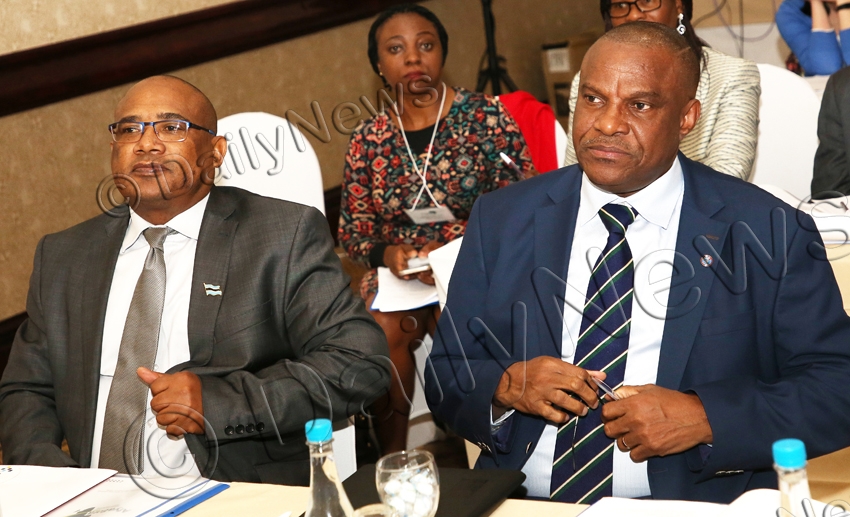
Afya Bora Consortium has in its six years of existence graduated 139 fellows, 24 of them Batswana, UB Vice Chancellor, Professor David Norris has said.
Speaking during the consortium’s final meeting in Gaborone on June 25, he said the alumni included doctors, nurses and public health specialists.
He said UB was proud that it was an active participant in the noble contribution to building the human resource capacity for health knowledge and leadership skills.
The consortium is a partnership of five African and four US universities formed to provide future global health leaders with practical skills that are currently not part of traditional training in the health professions.
Prof Norris said UB cherished the balance of research and education and endeavoured to promote open and critical thinking.
“Locally and regionally, we collaborate extensively with educational and research institutions. We strive to turn research into practical applications. We also value internationalisation and engagement, therefore, Afya Bora initiatives fit very well with our mission as an institution,” he said.
WHO representative to Botswana, Dr Martins Ovberedjo said UB was well positioned to be a leading centre of academic excellence in Africa.
He congratulated the institution for hosting the WHO-accredited collaborative centre for middle level human resources for Anglophone Africa.
He said WHO had an institutional partnership with the Ministry of Health and Wellness on health and development.
About the implementation of Universal Health Coverage (UHC) in Botswana, he said it was aimed at ensuring that all people and communities used the promotive, preventive, curative, rehabilitative and palliative health services they needed.
He said the aim was also to ensure that the use of the mentioned services did not expose users to financial hardship.
Dr Ovberedjo said the WHO constitution recognised health as a human right and that the Alma-Ata Declaration also viewed it as an important economic and social development issue.
“In 2005, the WHO assembly, through Resolution 58.33, all member states were urged to promote UHC as a fundamental element to achieve health development in different countries,” he said.
He said the consortium played a critical role in the health landscape by responding to the call to bridge the knowledge divide in the southern part of the globe and fostering collaboration. ENDS
Source : BOPA
Author : Anastacia Sibanda
Location : GABORONE
Event : Afya Bora Consortium
Date : 25 Jun 2018
Related News


19 Aug 2026
Honoring a Promise Carries the Weight of Gold
19 Aug 2026
Summit Designates BVI Vaccine Bank
19 Aug 2026