

First Lady hails efforts in womens health
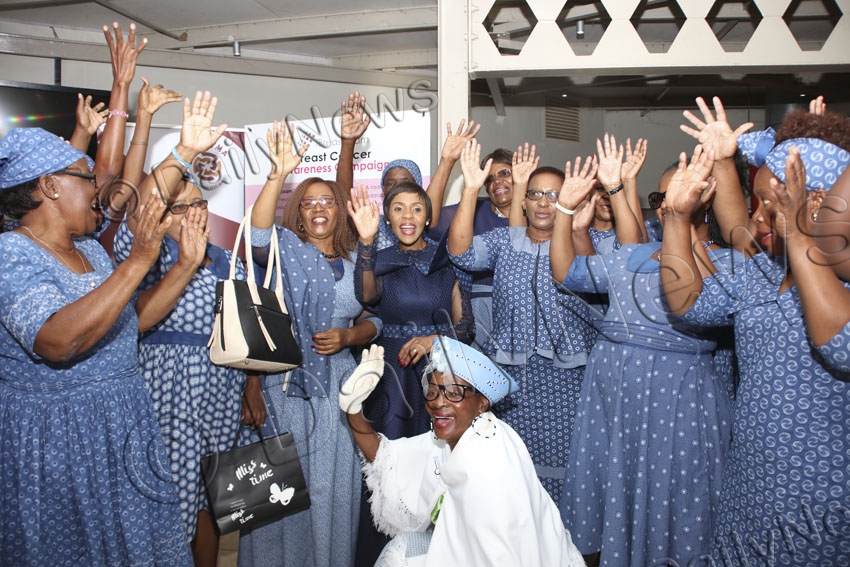
17 May 2018
First Lady, Ms Neo Masisi has commended Botswana for the many strides made over the years to promote and improve the health of its people.
Delivering a keynote address at the start of a two-day international women’s health conference yesterday, Ms Masisi cited the commencement of the country’s national HIV treatment in 2002, and the 2015 roll-out of the national HPV vaccine for the prevention of cervical cancer in adolescent girls as being among the significant decisions that had been taken whose impact would be felt for generations to come.
“As a result, for the first time in many years we can now look forward with real optimism to significant reduction in, if not complete eradication, of both the aforementioned medical conditions in our country,” she said.
That notwithstanding, Ms Masisi noted that much progress still needed to be made towards efforts to achieve the 17 Sustainable Development Goals (SDGs) by the year 2030.
She said because the SGDs were a universal call to end poverty, protect the planet, ensure that all the people of the world enjoyed peace and prosperity, they at the same time enjoined all countries to ensure that the world’s population enjoyed good health and wellbeing.
Zeroing in on the subject of the conference, the First Lady said it was critical to note that the health and well-being of women was basically the health and well-being of the nation.
“Women are healthy when they feel valued, acknowledged, appreciated and empowered. In turn, healthy women contribute to healthy families, leading to healthy communities and ultimately healthy societies,” she emphasised.
Ms Masisi further pointed out that in order to advance issues of women’s health, it was important to identify barriers such as the lack of a coherent policy framework for women’s health, as well as the narrow focus on the clinical aspects of health, to the exclusion of social and economic determinants.
She said it was also vital to address gender inequalities, observing that it was only then that women could truly attain economic security, which she said was one of the major determinants of good health.
“Of great concern are the incidences of sexual abuse against women and children as well as domestic violence, which severely compromise their health and wellbeing,” she said.
Ms Masisi however, noted that it was important for men not to be left behind as they too had a huge influence on women’s health initiatives and interventions.
She observed that very often, the role of men in promoting women’s health was minimised while the focus was put on the empowerment and autonomy of women.
In the end, Ms Masisi affirmed how women’s health was indeed a major determinant of any nation’s health, adding that if societies of the world were to advance, there was need for women to be educated and empowered so as to increase their impact on social and economic development.
Another speaker at the conference, Professor Kgomotso Moahi of the University of Botswana (UB) also emphasised the importance of women’s health issues.
She similarly noted that a healthy woman made a healthy and productive family, a scenario that could add to efforts to achieve economic growth.
Prof Moahi in addition, highlighted it was important to desist from looking at issues of women’s health only from the perspective of sexual and reproductive health.
She said time had come for other aspects of women’s health such as mental health to be also looked into.
An obstetrician and gynaecologist, Dr Doreen Ramogola-Masire, when outlining the objectives of the conference, pointed out that it aimed to among others, provide a platform for a constructive dialogue of issues of women’s health.
She said the conference, in its inaugural year, would be held again next year and would thereafter come after two-year intervals.
The conference will address sub-topics such as social determinants of women’s health, functional health and well-being in midlife and older women, prevention and early intervention initiatives for women’s health and optimising care in the clinical setting. ENDS
Source : BOPA
Author : Keonee Kealeboga
Location : GABORONE
Event : Women’s health conference
Date : 17 May 2018
Related News


30 Jul 2026
BMC eyes new export deals

29 Jul 2026
Modisaotsile on rise to the top
29 Jul 2026
Poultry industry attains self-sufficiency
28 Jul 2026
Ross Breeders pioneers Botswana poultry exports

28 Jul 2026