


Tsogwane opens climate change meet
10 Apr 2018
Vice President, Mr Slumber Tsogwane says the world is challenged with the task to mitigate climate change effects.
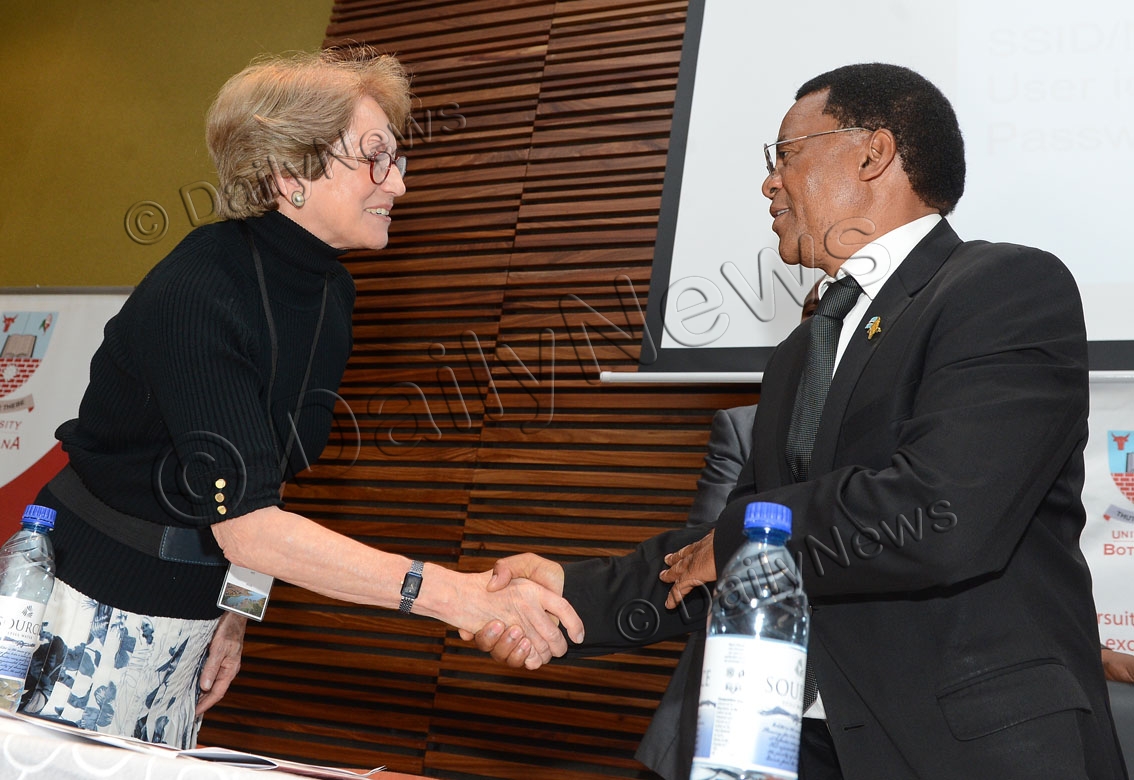
Officiating at the fourth Intergovernmental Panel on Climate Change (IPCC) Lead Author meeting on April 9 at the University of Botswana, Mr Tsogwane explained that climate change in Botswana was reflected by a number of changes.
These, he said, included longer drought episodes resulting in severe water shortages, changes in rainfall patterns resulting in destructive winds and hail storm and floods.
He said others were the extended spatial outbreaks of crop diseases that negate government’s effort to revamp the agricultural sector and fight poverty.
The Vice President further noted with concern the limited contribution of Africa in the IPCC process and emphasised that Africa like all other continents, needed to give due attention to issues of climate change.
Mr Tsogwane said it was this context that African countries needed to show more interest and participated fully in forums that were meant to deal with matters of climate change.
He said the meeting was important for Batswana to be acquainted with the work of the IPCC and to cultivate interest in climate change amongst scientists, research institutions and other segments of the society.
He said Botswana was located in a region where the rate of warming exceeds that of the global average.
Again, he said the vulnerability of the country to adverse effects of climate change needed to be better understood, as well as its implications on environmental and socio-economic sectors such as health, water, tourism, infrastructure, agriculture and overall development.
He said such information was critical for the development of relevant policies and infrastructure that would assist in dealing with the matter.
He said the role of the Department of Metrological Services as the national focal point for the IPCC was important as it connected Botswana with the international community on issues of climate change.
Mr Tsogwane further stated that the Department was also mandated to provide climate change data and information vital in the climate field.
He also said the department had hosted the now completed climate change linked Africa Union Commission projects namely; the African Monitoring of Environment for Sustainable Development (AMESD) and the Monitoring for Environment and Security in Africa (MESA).
University of Botswana Vice Chancellor, Professor David Norris said news headlines were no longer dominated by issues such as wars, but news attributed to global warming and its adverse effects.
He said it was under this background that the University of Botswana was very active on climate change research in order to come up with solutions to mitigate the effects of climate change.
The meeting which brought together over 100 high level climate change experts from nearly 40 countries is expected to come up with a special report on “The impacts of global warming of 1.5 degrees Celsius pre-industrial levels and related global greenhouse gas emissions pathways, in the context of strengthening the global response to the threat of climate change, sustainable development, and efforts to eradicate poverty.”
The IPCC was sanctioned by the United Nations Framework on Climate Change Convention (UNFCCC) following the historic 2015 Paris Agreement that was attended by 195 Heads of State including fourth president Lt Gen. Dr Seretse Khama Ian Khama.
IPCC is assessing the feasibility by the international community to meet the ambition of the Paris Agreement, which is to limit the increase in global average temperature to well below 2 degrees Celsius above pre-industrial levels and to pursue efforts to limit the temperature increase even further to 1.5 degrees Celsius. ENDS
Source : BOPA
Author : Thamani Shabani
Location : GABORONE
Event : Climate Change Conference
Date : 10 Apr 2018
Related News

21 Aug 2026

20 Aug 2026
Botswana Donates FMD Vaccines To Lesotho
20 Aug 2026