

Time to raise Value Added Tax - economist
23 Nov 2017
Faced with declining diamond revenues and limited sources of income, government should consider raising Value Added Tax (VAT), which at 12 per cent is among the lowest in the Southern African region and middle income countries.
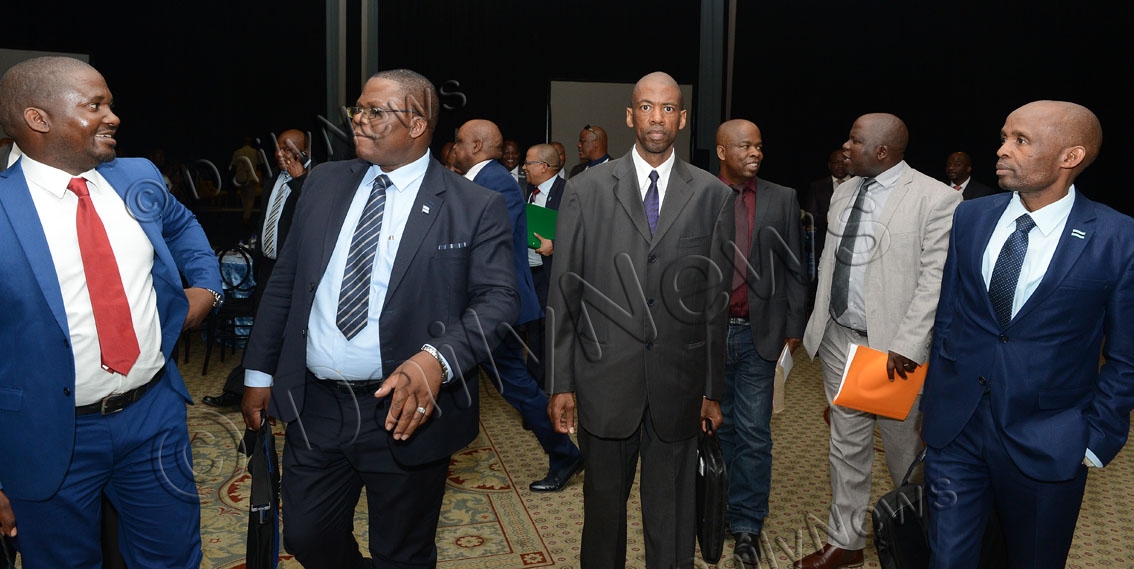
Speaking at Budget Pitso on November 21, Econsult managing director, Dr Keith Jeffries said the country was faced with challenges emanating from limited sources of revenues while demands were increasing.
He thus said expenditure had to be cut to avoid unsustainable deficits.
Government expects a budget deficit of P8.1 billion in the next financial year, faced with total expenditure of P66.9 billion against the revenue of P58.8 billion.
Dr Jeffries said diamond revenues have been declining as percentage of GDP and were expected to be around 30 per cent of GDP during National Development Plan (NDP) 11.
He explained that decline in mineral revenue had not been compensated by growth in other sectors.
There are two ways through which the country gets its revenue, these being external and domestic sources.
Talking about mineral revenue, he said Botswana already had taxed Debswana at 81 per cent emanating from taxes and royalties, therefore there was no further room for increment.
Other minerals are much less profitable, hence cannot be taxed at a high rate.
Despite the abundant coal reserves the country has, Dr Jeffries said it was relatively unprofitable.
The Southern African Customs Union (SACU) revenues are beyond government’s control and are dependent on the South African economy.
Revenue sharing formula is also unlikely to be reviewed in Botswana’s favour given its high income status.
Bank of Botswana revenues have been declining relative to inputs and GDP for many years.
Talking about the domestic sources, Dr Jeffries said the income tax paid by individuals was relatively low, pegged at 25 per cent and for people earning more than P3 000 per month.
He said roughly two thirds of employed adults do not pay tax.
The low rate is aimed at encouraging economic activity and entrepreneurship.
Companies pay profit tax rate of 22 per cent. Selected firms however, pay 15 per cent.
Dr Jeffries said VAT, which was a hot issue when it was increased by 2 per cent during economic recession, only contributed 1.1 per cent to GDP.
He said at 12 per cent, it was among the lowers in the world, adding that exemptions have been increased.
Dr Jeffries said VAT would have to be increased eventually, adding however that while this might be inflationary, it would be temporary.
Other than increasing VAT, he called for efficiency in the collection of tax, saying the infrastructure was poor, hence low tax compliance in the country.
Dr Jeffries said fuel tax was also low, adding that it could be used to maintain or build roads.
He was however against the introduction of road tolls otherwise known as toll gates, saying they would cost more money than they would raise while user fees were also expensive to collect and raise barriers to access of service.
Dr Jeffries said health income could be considered, but were unlikely to raise much.
He sad despite the P5 fee required at health facilities, it was seldom collected.
He said the country had a number of levies such as the Alcohol Levy, which however operated outside Consolidated Funds, therefore not subject to public scrutiny.
Government has about P9 billion, which Dr Jeffries said could be used to fund public projects.
Meanwhile, he decried poor public spending, saying despite the huge amounts given to education, schools yielded poor results.
In response, Shosong MP, Mr Dikgang Makgalemele said it was imperative for legislators to educate their constituents about the importance of tax and how it is used.
Francistown West MP, Mr Ignatious Moswaane opined that wastages resulted from poor prioritisation.
For his part, Selebi Phikwe West MP, Mr Dithapelo Keorapetse said Batswana were highly taxed, adding that the country did not cushion its citizens against economic pressures as the Old Age Pension was too little and there were no unemployment grants.
He said this meant the employed, with their ‘paltry salaries’, had to take ‘stingy’ with their salaries as the increment on taxes would be burdensome. BOPA
Source : BOPA
Author : Tebagano Ntshole
Location : GABORONE
Event : Budget Pitso
Date : 23 Nov 2017
Related News

30 Jul 2026
BMC eyes new export deals
29 Jul 2026
Modisaotsile on rise to the top
29 Jul 2026
Poultry industry attains self-sufficiency
28 Jul 2026
Ross Breeders pioneers Botswana poultry exports
28 Jul 2026