


Stakeholders get training in anti-human trafficking
30 Aug 2017
Stakeholders in the implementation of the Anti-Human Trafficking Act have been trained since the Act came into force in 2014.
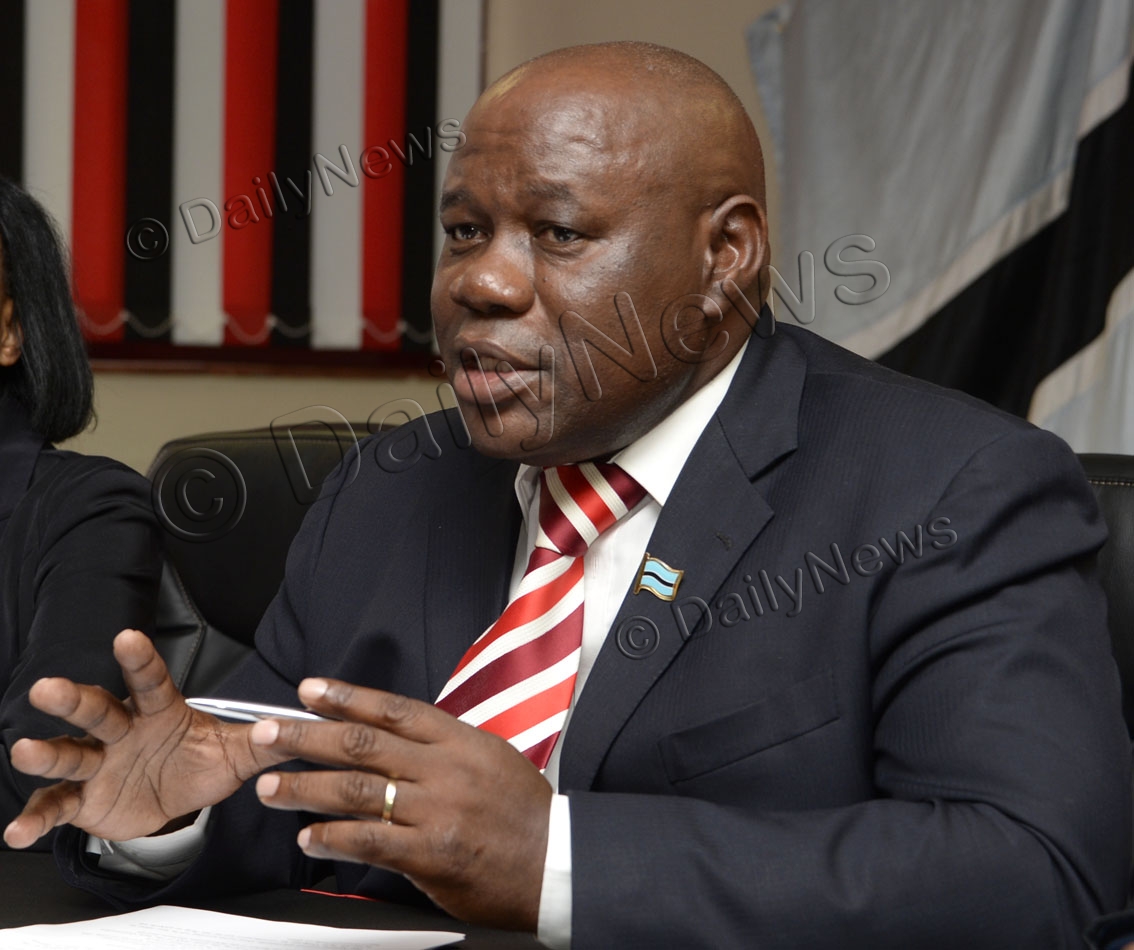
Minister of Defence, Justice and Security Mr Shaw Kgathi said in 2015 and 2016, training focused on police officers, social welfare officers, immigration officials, Non-Governmental Organisations and other key role players.
Minister Kgathi, who was briefing the parliamentary portfolio committee on Foreign Affairs, Justice, Defence, Security and Government Assurances on August 29, said this year focus was on training judicial officers, an exercise he said was achieved in partnership with the United Nations Office on Drugs and Crime (UNODC) and the Botswana Chapter of the International Association of Women Judges.
He said so far, 17 judges and 47 magistrates had been trained.
He explained that the primary objective of the training was to afford high level judicial officers knowledge pertaining to incidents and modalities of the crime of human trafficking.
In addition, he said the training also sought to make clear the role of judicial officers in the application of Anti-Human Trafficking Act, as well as to provide an opportunity for the sharing of experiences from other jurisdictions in judgements and case laws arising from human trafficking cases.
Minister Kgathi said currently there were 15 human trafficking cases registered before the High Courts, explaining that there were a total of 32 victims arising from the said cases.
“Eight out of the 15 cases require mutual legal assistance for the cases to proceed on set charges under Section 9 of the Anti-Human Trafficking Act,” he said, stating that the Directorate on Public Prosecutions was processing requests for assistance under the Mutual Assistance in Criminal Matters Act.
Giving a breakdown of the eight cases, Mr Kgathi said two involved citizens of South Africa and Malawi respectively, with one involving suspects from Ethiopia, Kenya, Zambia and Zimbabwe.
Minister Kgathi also briefed the committee of the Joint Permanent Commissions on Defence and Security meetings.
He said the bilateral JPCDSs were hosted annually on rotational basis between Botswana, Namibia, South Africa, Zimbabwe and Zambia respectively.
He noted that the 31st session of the Botswana-Zimbabwe session of the JPCDS was held in Gaborone in May.
He said the objective of the meeting was to conclude border affirmation, legal instruments, inter-state anti-poaching plan of action and Foot and Mouth Disease control activities as well as the repatriation of former Zimbabwean refugees.
He said the 21st session of the Botswana-Zambia JPCDS would be held in October in Selebi Phikwe, explaining that its objective would include among others, to conclude legal instruments and inter-state anti-poaching plan of action.
The Botswana-Namibia session, which will be the 26th, will be held in October in Kasane, he added; saying the objective of the meeting would be to conclude legal instruments, inter-state anti-poaching plan of action as well as dealing with the repatriation of Namibian refugees.
Regarding the Botswana-South Africa bi-national meeting due to be held in November, Mr Kgathi said the two countries hoped, through the session, to advance their border affirmation exercise, conclude legal instruments and collaborate further on inter state anti-poaching plan of action. ENDS
Source : BOPA
Author : Keonee Kealeboga
Location : GABORONE
Event : Parliamentary Portfolio Committee Meeting
Date : 30 Aug 2017
Related News

21 Aug 2026

20 Aug 2026
Botswana Donates FMD Vaccines To Lesotho
20 Aug 2026