Govt tightens programme delivery
05 Feb 2017
Lack of coordination in implementing government empowerment programmes creates greater challenge of achieving prosperity and dignity for all by providing the best opportunities to the most.
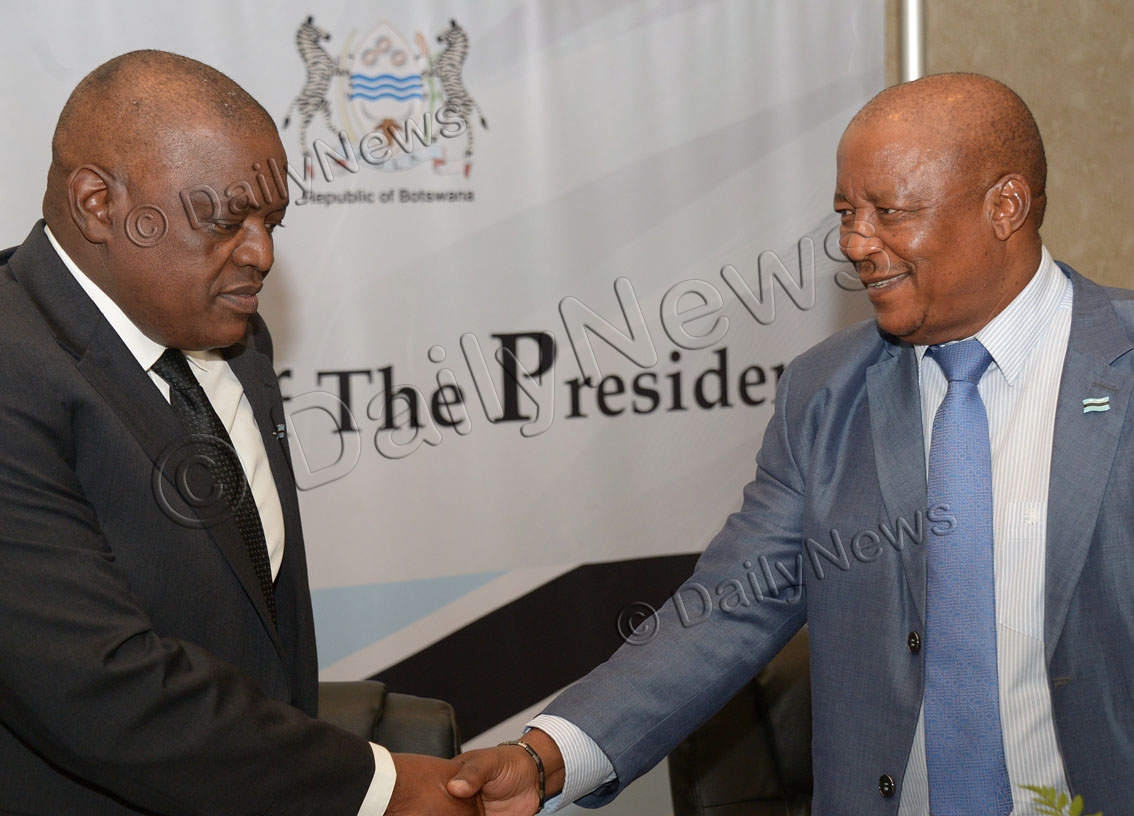
The Vice President, Mr Mokgweetsi Masisi said this on Thursday in his keynote address at the Special Meeting on Coordination and Implementation of Government Empowerment Programmes.
To achieve prosperity and dignity for all, over the years, government has come up with a variety of programmes that offer business start-up packages to various special need groups, including youth, women, remote area dwellers, People Living with Disabilities as well as the generally impoverished.
However, in its November 2016 report, Mr Masisi said Presidential Inspectorate Task Team (PITT) findings found too many examples of failed delivery of government empowerment programmes due to inadequate conceptualisation coordination at local level.
Additionally, Vice President Masisi said PITT report also highlighted inadequate project monitoring and evaluation as a key area of common concern.
“This is reflected in the fact that the intended beneficiaries of our various empowerment programmes do not always receive the level continuous mentorship and guidance that will ensure the success,” he said.
Failure in delivery of government empowerment programmes, he said resulted in; backlogs due to oversubscription of projects in some areas, inadequate mentoring and monitoring of beneficiaries, double dipping due to uncoordinated and unrestricted access to overlapping programmes.
“All this results in gross inefficiencies that are internally contrived and creates gaping opportunities for corruption,” he said.
For that reason, Vice President said there was need to address all existing challenges arising from the implementation of multiple empowerment differentiation programmes across government, which applied different and somewhat divergent standards and procedures in their delivery.
Despite the fact that objectives of government empowerment programmes are interrelated, Mr Masisi said it was clear that there was no commonalised understanding and appreciation of objectives and methods of realising them in their sequencing and delivery.
In addition, Mr Masisi encouraged participants to come up with practical recommendations, on how diverse empowerment programmes could be better administered by coming up with a robust action plan ‘to ensure that we become more coherent in our approach.’
In his welcome remarks, Minister for Presidential Affairs, Governance and Public Administration, Mr Eric Molale said he convened the meeting for senior government officials, district administration officers and stakeholders to deliberate on full range of government’s economic empowerment programmes to identify opportunities for greater synergy in their delivery.
He said concerns had been raised about poor implementation of government empowerment programmes and about their alignment, or lack thereof, in the context of such issues as; varying application, eligibility and assessment criteria- along with both overlaps and gaps in their outreach.
These challenges, he said had been amplified in PITT’s report, which underscored an ongoing lack of coordination in the assessment of applicants under different programmes, adding that, “it is only when we all start working together that we can come up with practical solutions and recommendations.”
The PITT report, Mr Molale said also “corroborated already existing concerns about the efficacy of our administration of empowerment programmes.”
Additional areas of concern that came about in the PITT report, he said included; human resource constraints in the management of programmes, management of beneficiaries resulting in inadequate monitoring and evaluation, as well as mentoring.
Furthermore, Minister Molale said there had also been a tendency to enroll people in the programmes ‘that are not suitable, either for them or their area, under the guides that we have been instructed to give them.’
The meeting, was therefore also meant to address all bottlenecks to optimal delivery of government empowerment programmes across government through common focus and collective effort for shared outcomes.
The coming on stream of the NDP 11 and Vision 2036, Mr Molale said were prove to government’s continued commitment to achieve prosperity for all.
“The desired result is economic and social development that is inclusive, as well as sustainable,” he added.
He stated that, “We shall therefore be amending the performance rating tool, so that it gives more rewards to share the outcomes.
This is to fight the silo syndrome that has bedeviled us.”
The workshop afforded participants a valuable opportunity to achieve a common framework to better assist Batswana through empowerment programmes.
This, the minister said was consistent with the government’s best governance practice of constantly reviewing its processes and systems to best serve the nation.
“This is also in line with our overarching Ten Point Agenda to at all times go the extra mile in ensuring the prompt and friendly delivery,” he added.
To improve delivery of all empowerment programmes, Mr Molale said there was need to find ways to better share, rather than compete over public resources.
He stressed that there shall be prompt and strict follow-ups with accompanying rewards for worse or for good. BOPA
Source : BOPA
Author : Lorato Gaofise
Location : Gaborone
Event : Meeting
Date : 05 Feb 2017
Related News
24 Aug 2026

24 Aug 2026