

Water management key to livelihoods
27 Oct 2016
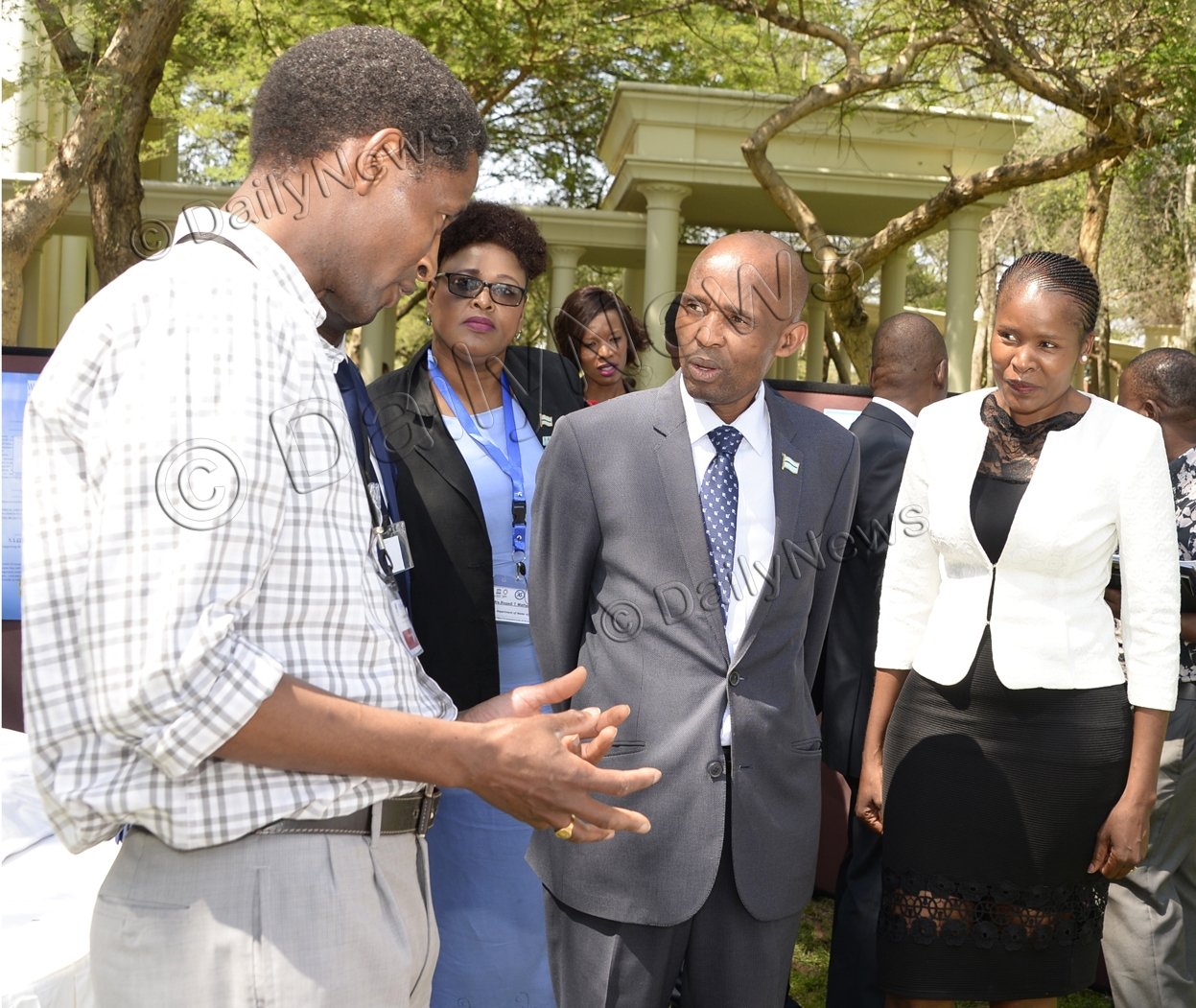
Minister of Land Management, Water and Sanitation Services Mr Prince Maele says land and water are a source of sustenance for livelihoods and the basis for socio- economic development.
Officiating at the 17th WaterNet Symposium in Gaborone on Wednesday, he stated that these two natural resources drive the activities that improve the industrial and wellbeing and grow the wealth of a country.
The symposium has attracted over 200 participants from the Eastern and Southern Africa being held under the theme ‘Integrated Water Resources Management: Water Security, Sustainability and Development in Eastern and Southern Africa.
The symposium discussed sub themes from Hydrology and Global change, Water and environment Water, Land and Agriculture, Water and Society, Sustainable Water Distribution and Sanitation; and Water Resources and Infrastructure Management.
Mr Maele noted that water security, sustainability and development underscores and supports the security and development of countries.
The minister highlighted that in recent years, the global water resources quantities and quality had been adversely affected by climate change.
He further noted that the population growth and the resultant growth in demand for land and water had also put immense pressure on these resources and the sanitation services.
He stated that the challenges facing land and water sector worldwide in this climate change era make the relevance of the theme of the symposium prominent because there was need for integrated water management strategies to ensure water security, sustainability and development in the SADC region.
Mr Maele said the symposium was a platform for water professionals to share advances in research and education related to integrated water resources management.
“Developing strategies for integrated water resources management calls for business people, civil society, government and academia to work together,” he noted.
He said it was through such collaboration that they could have a conversing reckoning for dealing with local and Trans- boundary water issues, surface and ground water on an integrated approach.
The minister stated that the symposium came at a better time for Botswana as the country and the region faced challenges in availability and sustainable use of fresh water resources.
He therefore noted that Botswana Parliament had recently approved a National Water and Waste Water Policy which provided direction for planning, development and management of water resources.
Mr Maele said the policy provided the guiding principles and policy direction for development of further National Development Plans.
He stated that since independence in 1966, Botswana recorded nearly nine per cent growth year on year for more than four decades.
The minister highlighted that his ministry was also implementing a project on Water Accounting under the Wealth Accounting and Valuation of Ecosystems Services called (WAVES).
With population growth increasing demand for water , there was need to account for every drop of water available in the country. He stated that he believed this symposium would deliver some meaningful and practical recommendation for consideration by relevant water sector institutions.
Deputy vice chancellor at University of Botswana, Professor Martin Mokgwathi said he wished to see the findings that would be presented in this symposium as well as challenges faced by the water resource managers, being published in peer review journals for wider dissemination to the managers and academics across the world.
He stated that water was a scarce resource in Botswana and indeed in most parts of Africa, hence it was vital that those involved in water resource management should share knowledge on how best water resources could be conserved and managed sustainably.
He said WaterNet was a regional network organisation with 72 members in 15 Southern and East African countries which aims to build regional institutional and human capacity in Integrated Water Resources Management (IWRM).
Professor Mokgwathi stated that the WaterNet programme conceptualised in 1997 and was endorsed by the then SADC Water Sector Coordination Unit and the Global Water Partnership and had since forged strong partnerships with the Water Research Fund for Southern Africa (WARFSA).
He said since its establishment in 1994, the Okavango Research Institute (ORI), the University of Botswana’s sole research institute, had played a key research role in the understanding of the dynamics of natural resources management, especially the Okavango delta.
Professor Mokgwathi highlighted that several hundred journal articles and books had since been published on the Okavango Delta by the Institute’s researchers thus playing an integral part to the University’s vision.ENDS
Source : BOPA
Author : Portia Ikgopoleng
Location : GABORONE
Event : WaterNet Symposium
Date : 27 Oct 2016
Related News
25 Aug 2026
Dibete police station future under review
25 Aug 2026
Gamalete Council hopeful amidst economic strains
25 Aug 2026
US-Botswana relations real and tested

25 Aug 2026