

Tertiary education financing topical issue
10 Oct 2016
As tertiary education becomes critical leverage for nations to switch from resource-based to knowledge-based economy, its financing has lately become a topical issue for many governments.
The search for better strategies for financing tertiary education has thus become subject of wide discussions at forums such as the Tertiary Financing Pitso that was held in Gaborone on Friday (October 7).
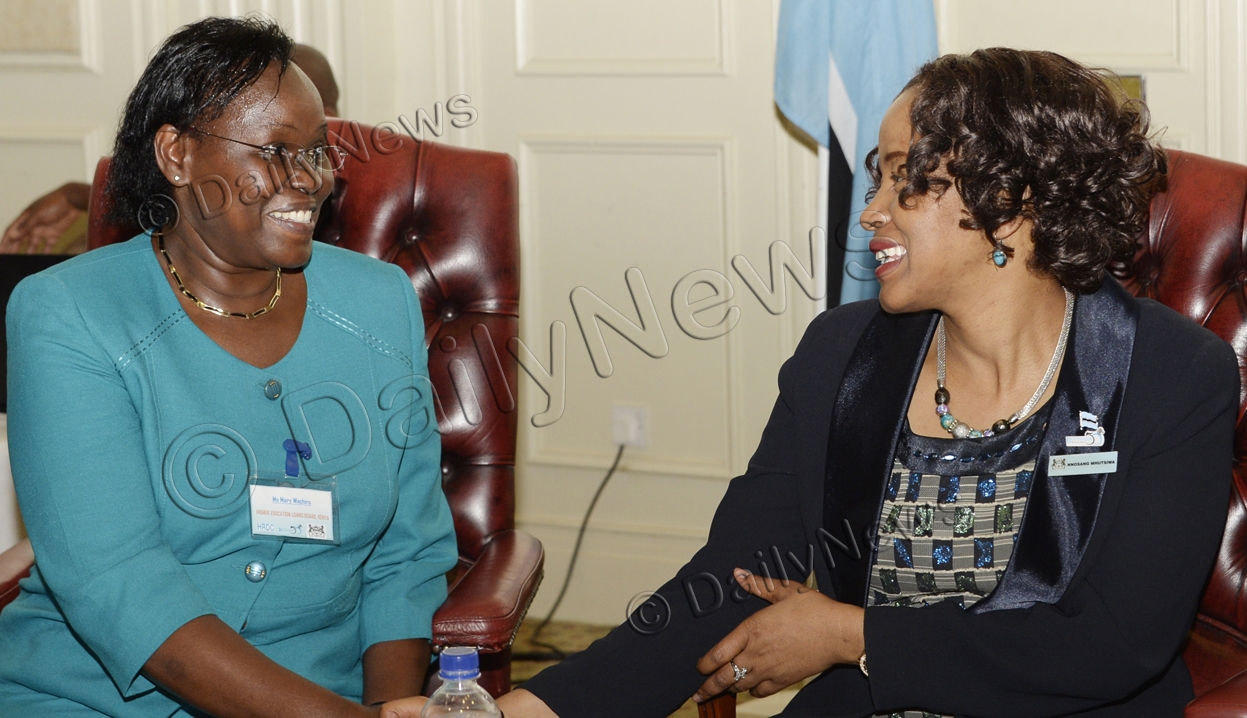
Deputy permanent secretary for corporate services in the Ministry of Tertiary Education, Research, Science and Technology, Ms Nnosang Mhutsiwa told expects in the education industry to come up with better strategies for financing tertiary education.
She said in view of ever growing numbers of secondary school graduates who sought access to tertiary education, government as the current major sponsor could no longer afford to shoulder the responsibility alone.
“The challenge we face now is to diversify our tertiary education funding sources while pursuing the goals of increased access, equity and improved quality in the country tertiary education system,” she said.
She further said in order for the tertiary education sub-sector to give impetus to realisation of the Revised National Policy on Education (1994) and Vision 2016 goals, among others The Tertiary Education Policy (TEP) 2008 and the National Human Resource Development Strategy (NHRDS) 2009 were developed.
She said the two key policy documents emphasised the need to increase access, improve quality and address equity and relevance in tertiary education.
Coupled with the aforementioned, she said the recently launched Botswana’s Vision 2036 Pillar two goes by the theme ‘’Human and Social Development, which its essence highlights education and skills as the basis for human resource development.
Thus, she said it was about time that they should engage on ways of assisting government to continue to deliver its commitment for young people to access tertiary education.
“We have done very well as a country as participation rates at tertiary level rose from 7.7 per cent in 2003/04 to 19.9 per cent in 2015/16,” she said.
This, she said was done because government made a deliberate decision to sponsor all students at public and private institutions and while numbers kept increasing substantially, it became unsustainable in view of other competing demands and in light of declining revenues over the years.
Ms Mhutsiwa further said in view of massive increase in tertiary education enrolment, the ever increasing costs, many competing priorities and dwindling financial resources, it followed then that a funding model that would result in a win-win situation was desirable for all and one such was cost sharing.
She said cost-sharing model would result in sustainability of tertiary education funding, which she said could come in many forms, targeting all the stakeholders both private, public and the business community.
The Pitso was held under the theme Transforming Tertiary Education Financing. ENDS
Source : BOPA
Author : Mmoniemang Motsamai
Location : GABORONE
Event : Pitso
Date : 10 Oct 2016
Related News
27 Aug 2026
Nature underpins economy

27 Aug 2026
Makgekgenene urges tighter workplace controls

27 Aug 2026