

Batswana should be grateful - Selepeng
04 Sep 2016
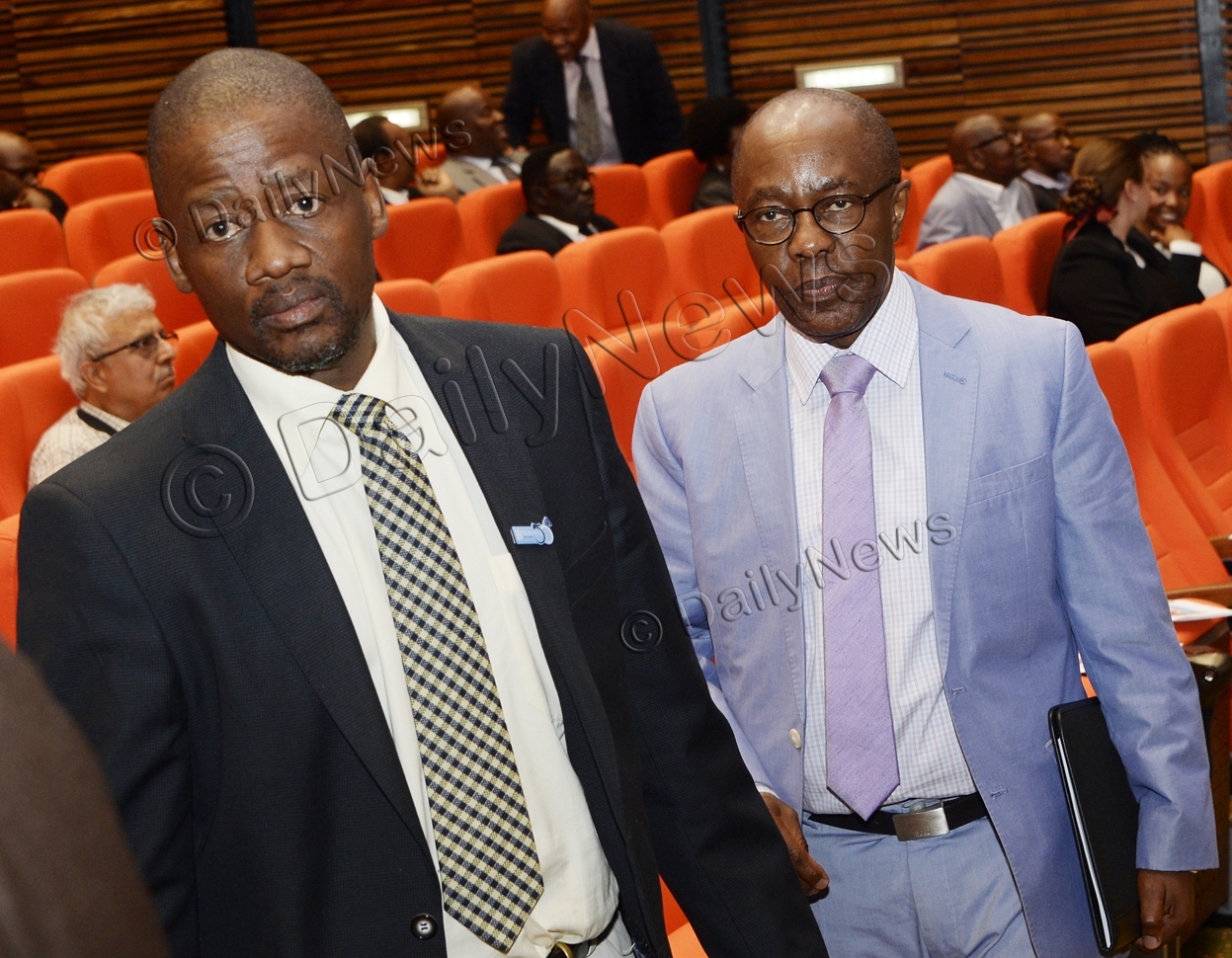
Former high commissioner to Australia, Mr Molosiwa Selepeng says Batswana should be grateful for the achievements recorded by past generations in international relations and diplomacy.
Mr Selepeng was speaking at one of the University of Botswana’s BOT50 lectures, where he presented under the topic: Botswana as a Global Player - International Relations and Diplomacy.
He said the good reputation previous diplomats earned for Botswana was crafted in the context of the international relations and diplomacy of the time, adding that times have changed since then.
“Botswana has to change and adapt accordingly, in order to move with the times and circumstances of our time,” he said.
He further said the turning point occurred in 1989 due to the demise of the Soviet Union as the bipolar world then dominated by the United States and the Soviet disappeared at the blink of an eye and a majority of countries, including those in Africa opted for a democratic system of governance.
“With the advent of such countries as Mozambique, Namibia and South Africa, for example, Botswana no longer enjoyed the singular status of being the shining example of democracy, human rights and the fastest developing country. Worse still, Botswana achieved the status of a medium-income country,” he said.
He said because of that, Bretton Woods institutions, such as the World Bank and the International Monetary Fund, as well as Western countries, shifted their focus to countries poorer than Botswana.
“This is not to say that Botswana lost friends, but rather that the world had changed.
It stands to reason that Botswana has to re-calibrate her international relations and diplomacy, in the light of changed circumstances,” he pointed out. Mr Selepeng highlighted that the United States and Western countries were no longer the largest donor countries, adding that their economies have been suffering of late, but those of Eastern countries particularly China, have been expanding in scope and scale.
“China is today the second biggest economy and is also growing in sophistication. The counterparts of the Silicon Valley in California are now well established in China and India,” he said.
Mr Selepeng expressed that the legacy of colonialism had dictated that Botswana should look west for engaging in international relations and diplomacy.
“Today, however, the ebb and flow of events call for more engagement with such Eastern countries like, China, India, Japan, Indonesia and Korea. China and Japan have already pledged billions of dollars to assist African countries.
The Chinese have set up what they call the Forum for China-Africa Cooperation and, the Japanese have the Tokyo International Conference for African Development. There is a third forum called the Asia-Africa Summit Conference, which reflects the South-South Cooperation, funded mostly by China,” he said.
He stated that as Botswana seeks to diversify her economy, it was equally important to diversify her international relations and diplomacy.
“There has been a paradigm shift in international relations. Countries, such as China, India, Indonesia and Korea, for example, represent the rising stars in terms of economic growth and technological sophistication,” he further said.
Mr Selepeng pointed out that Botswana should embrace them as friends and partners in development, adding that it was noteworthy that these countries still offer Botswana students full scholarships and are willing to invest in various sectors from software to brick and mortar projects.
“The challenge now is to build on this legacy of good governance and socio-economic development achieved by our forefathers,” he said.
He said Botswana has always been synonymous with the attributes of peace and democracy, rooted in the customs and traditions of its people, adding that, it was Botswana's ageless tradition to grant each person freedom of speech and mutual forbearance flowing from its soft power diplomacy, other countries readily accepted Botswana's proposal to cooperate in the areas of peace and security.
“Climate change and environmental degradation have been issues of concern since recorded time. And all our yesterdays have confounded sceptics and proved them wrong. Climate change and environment degradation are real,” he said.
Mr Selepeng expressed that in Botswana, climate change was a real threat to the environment biodiversity and ultimately to the economy, the health and safety of the people.
It is expected to have adverse effects on a variety of socio-economic sectors in the not so distant future, unless drastic and appropriate strategies are put in place to address it.
“We have developed a climate change policy which is at the draft stage and about to be finalised into a guiding document that will be converted into an Action Plan.
The policy will recognise and consider the involvement of government ministries, civil society organisations, academia and the private sector,” he said.
He said in the water sector, we have always experienced low rainfall and, therefore, low rates of underground water recharge.
He pointed out that water security and quality will become an even greater challenge if future climate is warmer and drier as predicted.
“To mitigate and adapt, we need to diversify sources of water supply through the development of well fields, water re-use and recycling. More significantly, we should cut, if not eliminate water loss, estimated at 30 per cent,” he said.
Mr Selepeng expressed that, Botswana took advantage of her cultural ethos of peace, mutual tolerance and respect to shape and promote regional economic and political cooperation, peace and security, climate and the environment. ENDS
Source : BOPA
Author : Thuso Kgakatsi
Location : GABORONE
Event : University of Botswana’s BOT50 lectures
Date : 04 Sep 2016
Related News

28 Aug 2026
When patriotism meant everything
28 Aug 2026
Teacher registration protects students
28 Aug 2026
