

Department expects low rain
17 Jan 2016
The deficit in rainfall is expected to continue over the remainder of the rainfall season due to the persistent strong El Nino conditions.
The Department of Meteorological Services (DMS) has concluded that during the last part of the rainfall season, the northern parts of the country (Eastern Ngamiland, Chobe and northern parts of the Central Districts) are expected to receive largely normal with a tendency to above normal rains.
The southwest and northeastern parts of the country (Kgalagadi, Northeast and southern parts of the Central Districts) are expected to receive normal with a tendency to below-normal rains while the southeastern parts as well as northwest being Southern, Southeast, Kgatleng, Kweneng, Ghanzi and western parts of Ngamiland are expected to receive below-normal with a tendency of normal rains.
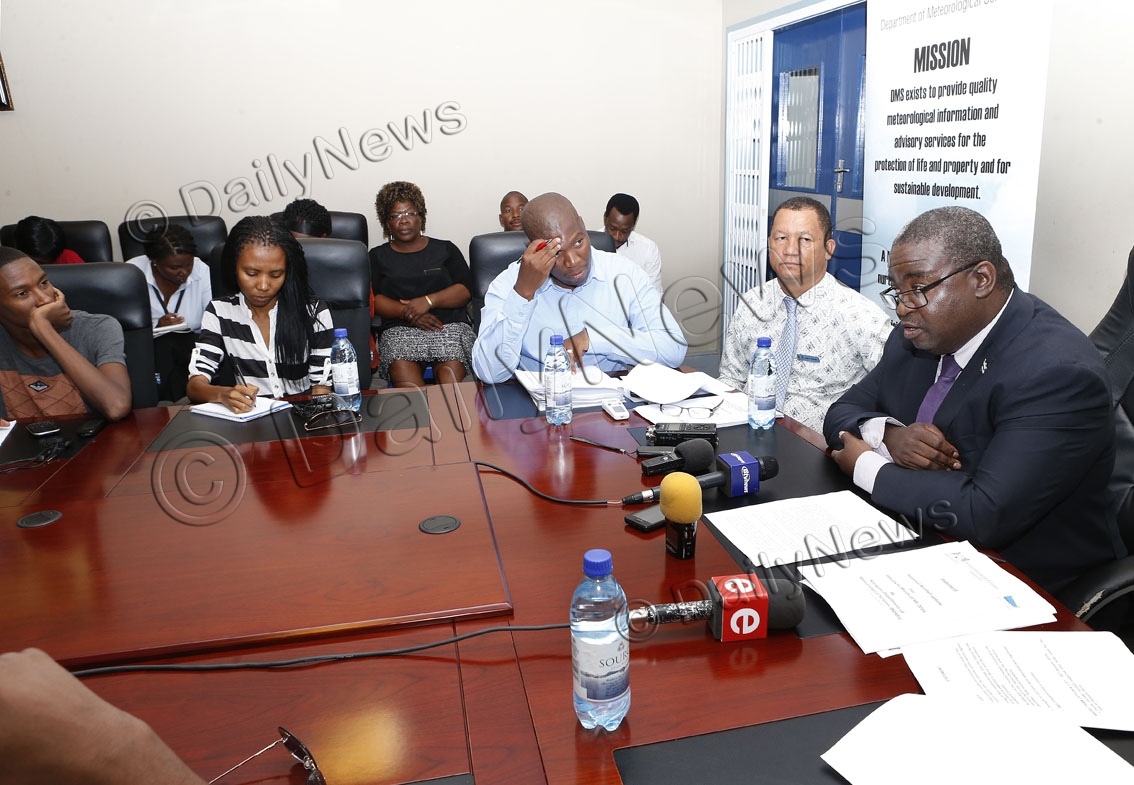
Briefing the media, DMS director, Mr Thabang Botshoma said his department has reviewed the state of the global climate systems and analysed rainfall prospects for the period of January to March.
He said the conclusions reached are based on the state of the sea surface temperatures (SSTs) over the Pacific, Indian and the Atlantic Oceans which are showing that El Nino conditions are still present.
Mr Botshoma noted that the models predicts that the current El Nino has peaked and will start to decay in the Southern Hemisphere in Autumn and the tropical Pacific will return to a neutral state in the Southern Hemisphere winter in 2016.
It is expected that the above average SSTs in the Pacific Ocean and strong El Nino conditions will continue to have a major impact on the weather and climate patterns over Botswana even though they are not the only influencing factors for rainfall.
He observed that other factors like the tropical cyclones in the Indian Ocean also contributes to the rainfall regime over the region, adding that while cyclones bring positive results in terms of rainfall in Botswana, people around Mozambique may not have the same sentiments as such cyclones bring massive flooding that is detrimental to human and animals.
The director said that it was highly likely that Botswana would continue to experience consistently dry and hot conditions towards the late summer season, that is January, February and March.
“Even though the country is expected to be generally dry and hot, it is important to take note that extreme rainfall events may occur,” he said. He said the persistently dry conditions for the remaining rainfall season may worsen the current drought conditions which the country is already experiencing.
He said DMS would continue to monitor medium and shorter range weather forecasts for the development of conditions that may alter or strengthen the expectations of the current forecast. Ends
Source : BOPA
Author : Goweditswe Kome
Location : Gaborone
Event : Press brief
Date : 17 Jan 2016
Related News

21 Jun 2026



18 Jun 2026
Commission targets youth empowerment
18 Jun 2026
Countries commit to partnership

18 Jun 2026