Kuru Dance Festival to restore vision
18 Aug 2015
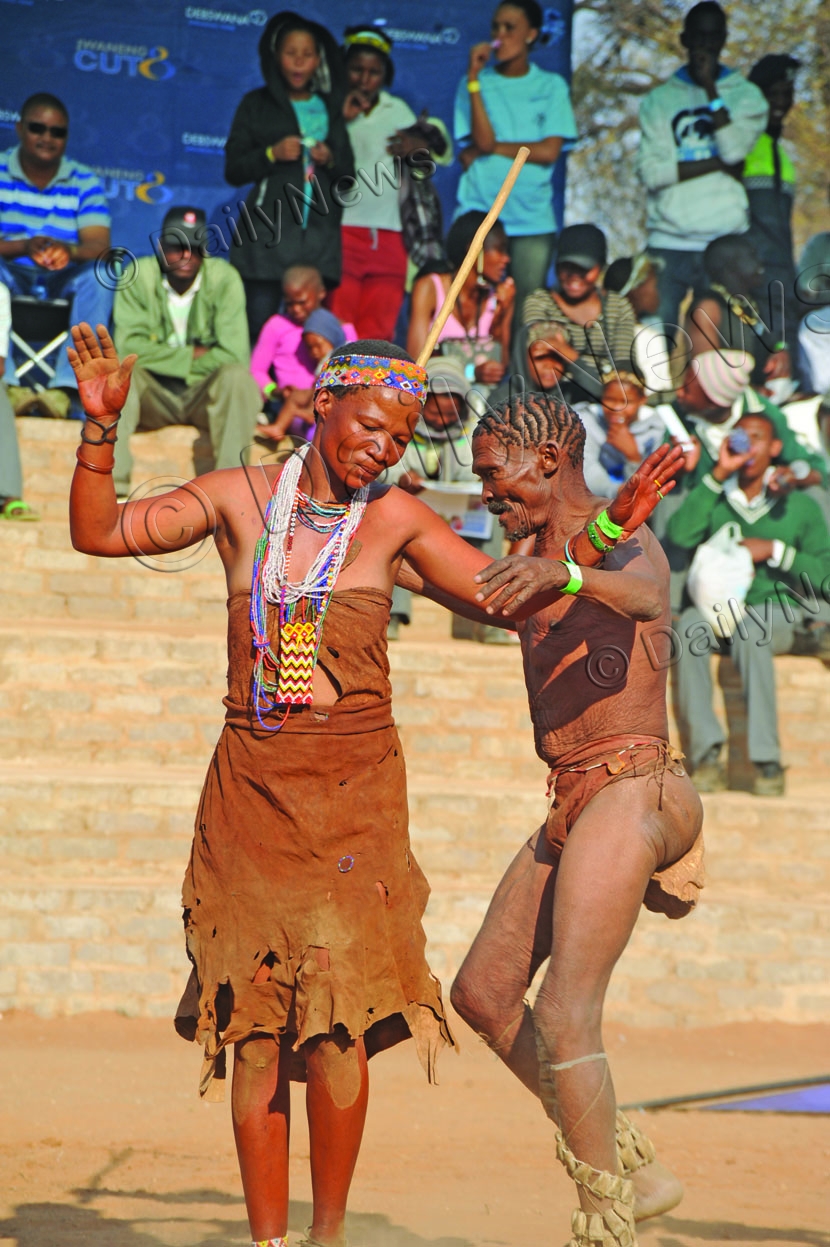
After two years absence the Kuru Dance Festival is back and determined to restore the vision and ideals of the founders of the festival.
In an interview with one of the organisers of this acclaimed cultural festival from Kuru Development Trust (KDT), Mangana Mangana said they want to bring back the dignity that Kuru bestowed upon its people and reinstate back what was almost lost two years back.
He further said by restoring the vision and ideals of the festival and celebrate it ceremoniously as was before would help them get the confidence of their supporters as well as sponsors and potential sponsors.
Kuru Dance Festival started in the 1980’s as a self-sufficient tool for the Basarwa community by way of utilising their talents for livelihood. James Morris, one of the founders of the dance festival stated that their vision as founders was for the community of Basarwa to embrace their culture, to uphold and revive their culture at all times as well as be proud of whom they were as the Basarwa community.
He explained that they had the vision way before the entity was registered; along with fellow founders some of whom were no more. Morris explained that back then the festival was held annually and donors were willing and associated with them.
This, he said, led in various projects established in the small settlement of D’Kar which were a source of income for the Basarwa. Such projects, Morris stated included tannery, sewing, fabric painting, self-screen T-shirts, art and crafts and cactus (metoroko) as well as the game farm, Dae Xgare farm.
Morris’s face clouded with sadness that some of the projects had since collapsed because of non-cooperation from organisers and participants of the Kuru Dance Festival. He also noted that some projects collapsed because of money constraints and others as a result of the downfall of the festival.
Only the game farm and the art project are the only surviving projects for Kuru Development Trust for the community of Basarwa, said Morris. Nevertheless, he was optimistic that things would get better and all that they dreamed about for the betterment of their people would be restored.
Like their predecessors, Mangana noted that their aim was to revive and promote Basarwa culture through the festival as well as tapping into the tourism market. This, Mangana explained, would not have been possible if KDT had not put a fight to stop a move by some organisations to take over and celebrate the festivities in Ghanzi township as was intended.
Mangana said had that been the case, residents of D’Kar would have suffered a blow resulting in the last surviving projects dying a slow death. Mangana explained that before the Kuru festival was moved to Dgae Xha Qare farm it did not live to the ideals of Kuru Dance Festival in D’Kar.
He further noted that one of the activities of the festival, the healing dance which was celebrated on Friday night was disturbed by activities in the village. The healing dance is a sacred activity which Mangana explained requires absolute respect and sanctity.
Therefore he stated that all the noise from night spots in D’Kar interfered with this activity, hence elders moved it to the farm. Thus, he said even in Ghanzi it would have been worse as there were all sorts of obstacles that would have interfered with this ceremony.
He added that it would not have been the Kuru Dance Festival but something else that did not align with the dance. The festival would be held on 28-29 August with the healing dance on the evening of 28 August.
Mangana warned and cautioned all those attending the Friday ceremony to be on their best behaviour as it was a sacred activity which does not tolerate imbibing or any other misconduct that might conflict with the gods. Entry to the festival is P100 which allows one to enter the healing dance as well as the official and exhibition day on Saturday 29 August. ENDS
Source : BOPA
Author : Ketshepile More
Location : D’KAR
Event : Interview
Date : 18 Aug 2015
Related News

06 Aug 2026
06 Aug 2026
Mayor implores creatives to be innovative
05 Aug 2026
Batho Ba Metsi honours Okavango Delta custodians

05 Aug 2026