Literacy key to poverty eradication
05 Aug 2015
An official from Botswana Qualifications Authority has emphasised the important role of literacy in eradicating poverty.
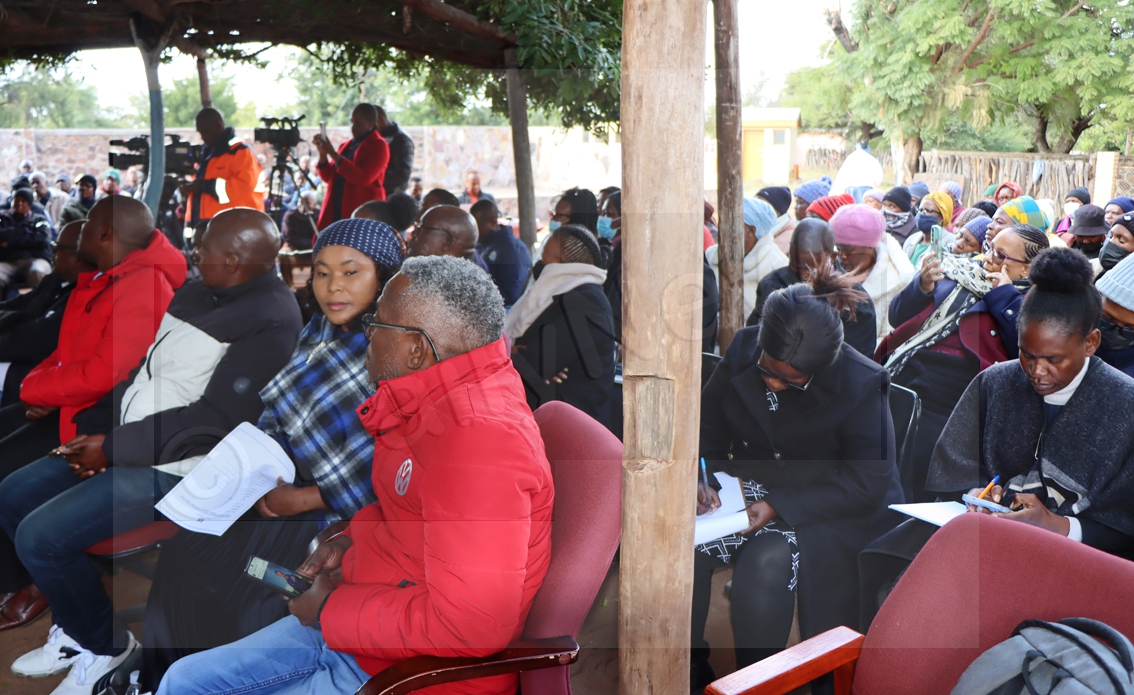
Speaking at the official opening of the Kgalagadi mini-literacy and learner’s week in Kang recently, Dr Justice Gaeonale said research has shown that there was a strong correlation between high poverty rates and illiteracy across many African countries.
Dr Gaeonale highlighted that statistical analysis reflected that illiteracy rates were rife in remote areas where poverty was also predominant hence investment in literacy programmes as a prerequisite for rural development should be considered and granted more resources.
Literacy, he said, motivates people to participate effectively and efficiently in the development of their communities and in their own social-economic, political and cultural development. He said it should be viewed as a strategy that assists human beings to understand the environment they live in and change it to benefit them.
He said the majority of the citizenry were able to use technology to deliver whatever message they have in and outside the country using English and this should be credited to the literacy programmes in place.
Batswana, he said, were in a position to manage their businesses through technological means, adding that the developments benefit those who were literate.
Therefore, he called for investment in education so that the socio-economic development of the country could be prudently achieved.
At the time of targeting 2015 in relation to literacy, Dr Gaeonale said the government, through the Ministry of Education and Skills Development, had sat a target of 95 per cent literacy and that currently 88 per cent has been achieved, adding that the government needed to be commended for the achievement.
He, however, raised oncern about the high level of illiteracy in Kgalagadi, stating that not much has been achieved as the literacy rate in Kgalagadi was estimated between 60 per cent and 65 per cent.
“This calls for holistic and multidimensional approaches because factors like geographical location, terrain and inadequate opportunities may hinders accessibility of education and other literacy programmes,” he said.
He said in view of the current low literacy rate in Kgalagadi, there was a need for various government and non-government organisation to collaborate with the Ministry of Education to develop a comprehensive plan of action to reduce illiteracy by 2030.
He said all stakeholders should engage reputable consultants to assist in developing a comprehensive literacy framework of action for inclusion into other major development plans that fall under rural development. Ends
Source : BOPA
Author : Thato Mosinyi
Location : Kang
Event : Official opening
Date : 05 Aug 2015
Related News
15 Jun 2026

15 Jun 2026
Cooperative to give members competitive edge
15 Jun 2026
Leverage neurodiversity for innovation gains
15 Jun 2026
Botswana considers diplomatic mission in Russia
15 Jun 2026