Matlhoa means of survival for Motlhatlhobi
09 Jul 2015
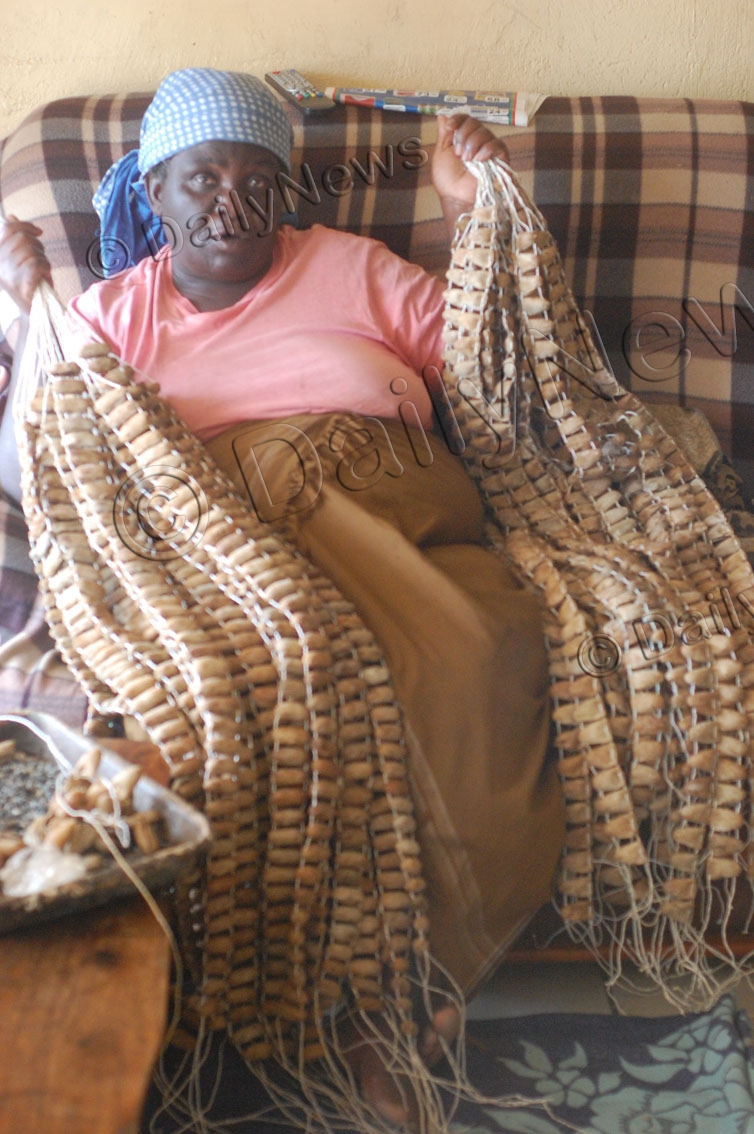
Margret Mothathobi, a resident of Leomboko ward in Tonota, plays a critical role in preserving the traditional instruments used in music.
This, she does through her craft skills of making matlhoa, an instrument made using caterpillar pupae shells and is tied on the dancer’s legs to make melodious fascination to local traditional music.
Mothathobi started her business in 1979. Then, she was selling rods at the once busy Shashe train station.
“The business of selling stuffs or rods was a break- through for my family because the objects sold like fat cakes. I bought these stuffs from an old man in Dibongwane farms in Tonota, but unfortunately my business untimely collapsed after his passing on,” said the 54 years-old woman.
Having gone through such a rough path, Mothathobi said she cannot forget the day she saw a person dancing on television and she vividly remembers the melody produced by matlhoa.
“The soothing sound of matlhoa produced by the dancer was a turning point for me and I am what I am today because of it,” she said.
When quizzed on what the collapse of her first business meant to her, the mother of seven children happily noted that it was a blessing in disguise and a learning curve.
“Indeed, it was not an easy challenge for me, but I thank God who knew the reason for its collapse.
This helped me to come up with a business that would not depend on the train station which also no longer offers any business boom,” elaborated the elated Ms Mothathobi.
However, through her undying love for the craft, she met one lady who she only remembers as Mma-Sephiwe who imparted craft skills on her.
“First, the late Mma-Sephiwe taught me and other ladies how to safely harvest the pupae of the caterpillar so as to avoid being pricked by its thorns which may cause injuries.
On learning the skills we would travel as far as Mmashoro, Dimajwe and Mabeleapudi to harvest the pupae using gloves,” she explained. After harvesting, the pupae is then put on 25 kilograms bags and filled with sand.
The bag is then shaken so that the thorns on of the pupae could come out.
She also highlighted that the pupae is harvested while dry and then put into water to soften it.
A scissor is used to cut it open before being filled up with small stones. The stone, she added are then sewn inside the pupae shells using strings of 50kg bags.
“Afterwards, I separate the sacks into strings and then braid eight of them together using a motor to make one string.
The motor I use is from a damaged radio,” explained Ms Mothathobi.
She makes matlhoa for cultural dances such as Setapa and Tsutsube.
For Setapa dance, she uses 37 pupae shells, joined by one string and for Tsutsube 42 to 44 pupae shells as it has to produce lot of sound.
Matlhoa for Tsutsube, she said, are pierced on the side so as to put the stones and sewn down whilst the one used for Setapa is pierced on the head and it is sown whilst upright.
She noted that upon learning these techniques, it becomes easier for one to be a specialist in this craft. Products prices cost P20 for Setapa and P35 for Tsutsube.
When she started her business, she operated from home, and used to sell to schools and Botswana craft, but now the demand has gone down.
However, she noted that Botswana Prisons, local artists and traditional dance groups such as Hosanna are her main clients currently.
The business, she said, puts bread on the table and has taken her family afar, as she has achieved a lot through it. “This is one job that I do with all my heart and to the best of my ability.
Even when I am asleep, when I hear a caterpillar pupae sound which it produces when it is blown about by the wind, I wake up to collect it,” she said.
She cited as challenges low prices demanded by customers, despite work load that one endures when processing such products.
The other challenge that she faced was that pupae had become rare due to low rainfall, adding that this year, the situation had worsened.
She said since there are other women engaged in the same business, they intend coming together and later apply for funding.
Papue, she said, could make a lot of things such as jerseys, towels and shirts. The strings, she added could be dyed to produce different types of clothing or crushed. The crushed material could to stuff cushions and pillows.
“This is a dynamite that come in small packages, it’s a one size fits all,” she said.
She noted that despite that the business economically supports her family; her children have shown no interest in learning the skills. So far, she has imparted the skills on eight people, she added.
She urged Batswana to utilise their talents to improve their living standards. ENDS
Source : BOPA
Author : Dimakatso Tshekedi
Location : Francistown
Event : Interview
Date : 09 Jul 2015
Related News
06 Aug 2026

06 Aug 2026
Mayor implores creatives to be innovative
05 Aug 2026
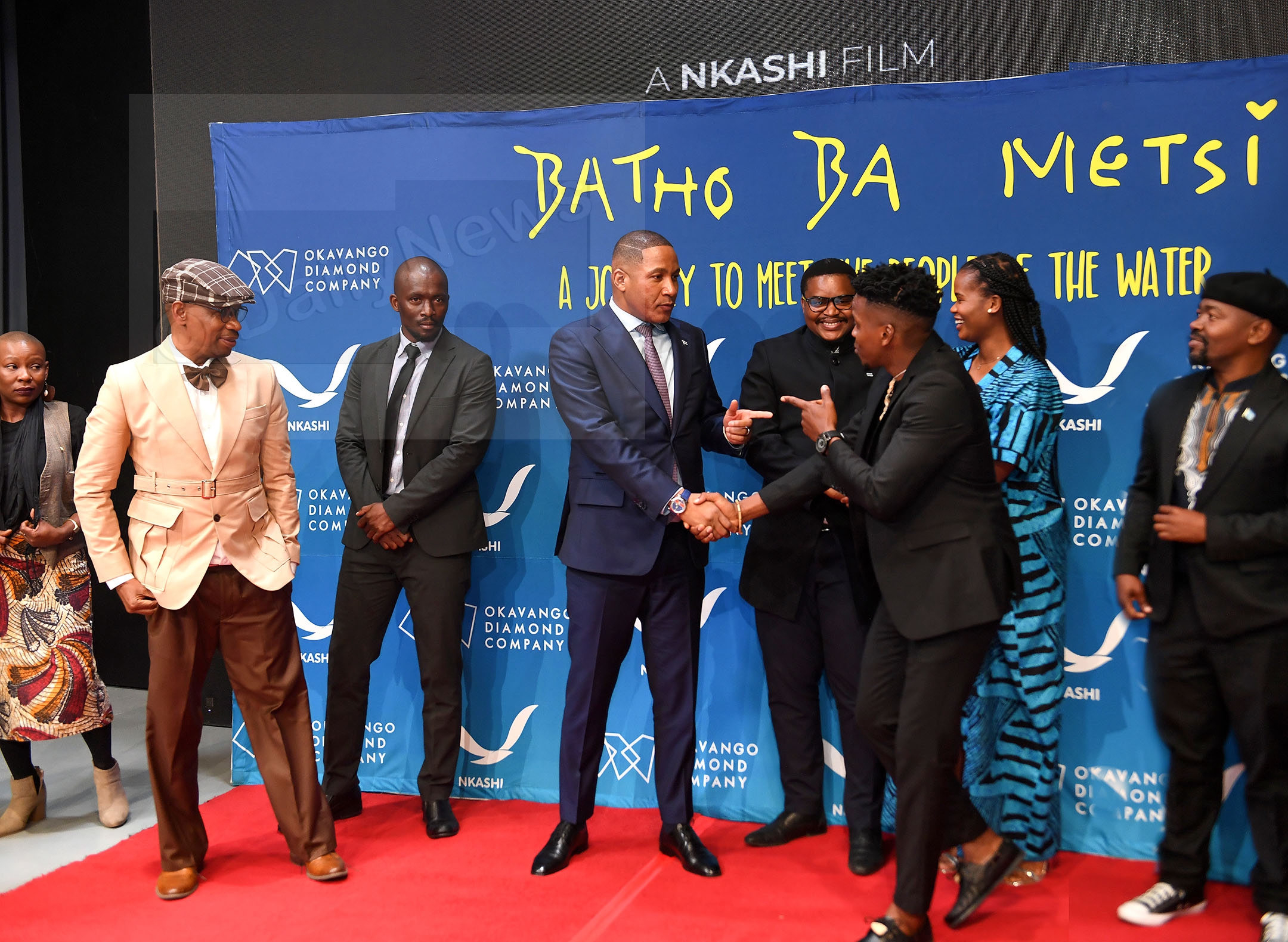
Batho Ba Metsi honours Okavango Delta custodians

05 Aug 2026