


Ngamiland farmers struggle to make ends meet
27 May 2015
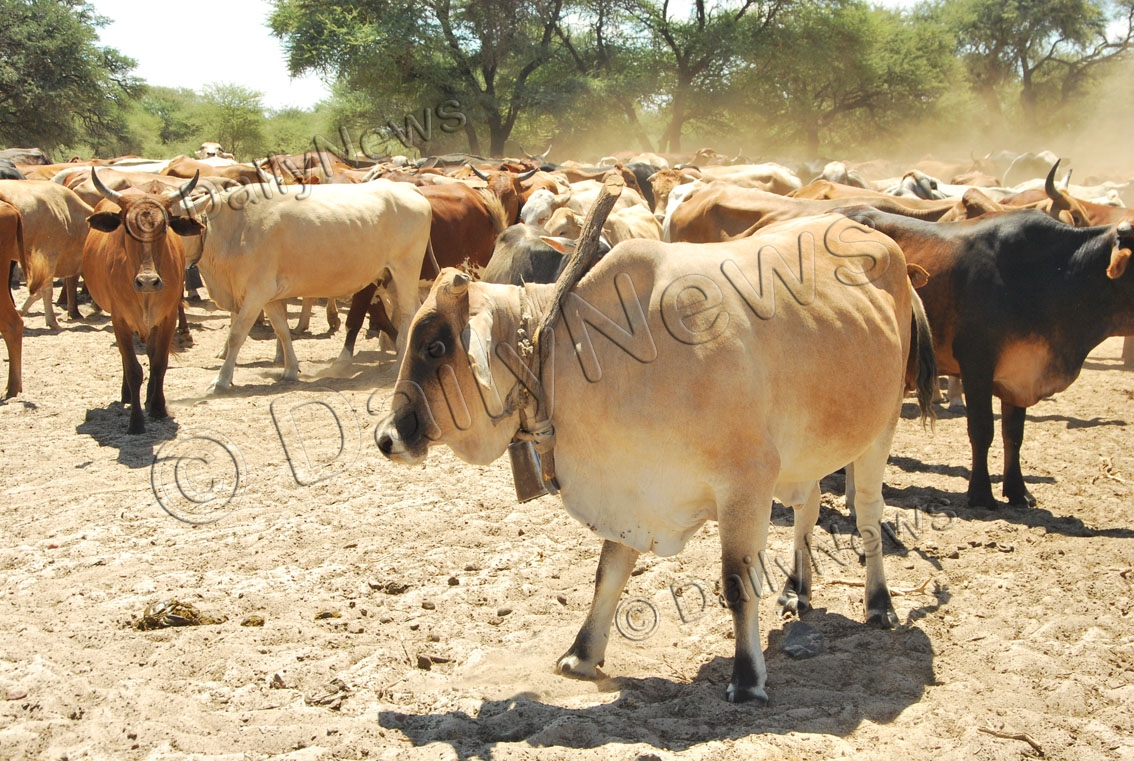
Persistent outbreaks of the Foot-and-Mouth Disease (FMD) in Ngamiland have had severe consequences for cattle farming in the area.
The real victims in the area have been thousands of people who depend on cattle for survival, and Mr Kobikoko Hange of Kareng, south-west of Maun, and Mr Vepaune Moreti of Maun, are some of them.
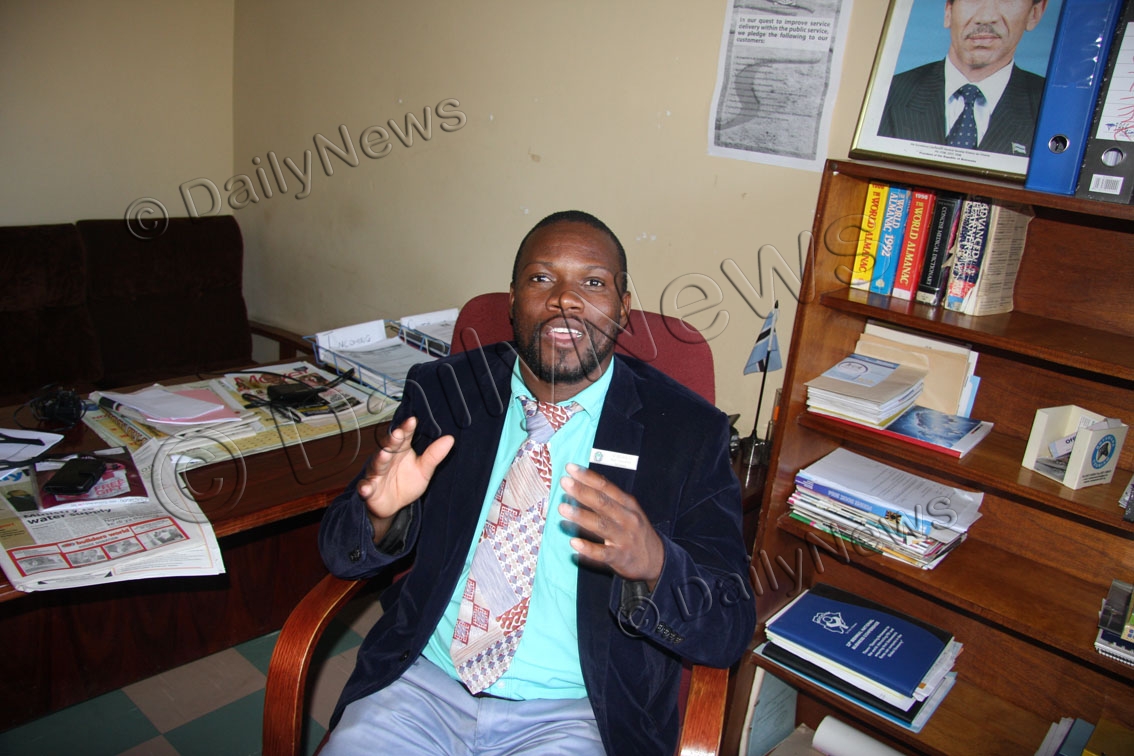
“I have never sold a cow since 2007, yet I have over 100 cattle that should be benefiting me, and what a drawback this has turned out to be,” laments Mr Hange in an interview with BOPA; he added that he had now shifted from depending on his children for a living.
The farmer said while he appreciated government’s efforts to manage FMD, he believed that not enough was being done considering that the spread of the deadly disease had taken a new dimension, which required proper and better methods of control.
“The maintenance of the buffalo and boarder fences is inadequate; the fence has not been maintained for a very long time now,” he complains, adding that even the desired 100 per-cent cattle vaccination was not feasible because the cattle population was too high, and that most of the caretakers were elders who had little energy to run after the animals.
Mr Moreti’s view was that government must intervene because FMD had impoverished people in the area, and that farming was their lifestyle which must be sustained by all means.
“Our boreholes have now collapsed because we can no longer afford to maintain them because we can’t sell our cattle anymore,” he adds.
Usually the containment of contagious cattle diseases demands considerable efforts in quarantining cattle, vaccination, strict monitoring, trade restrictions, and the possible killing of animals in the infected area.
That the Ngamiland community is one of the tribes that still values the rearing of cattle in Botswana, not only for their economic importance, but also as a symbol of culture and status, cannot be overemphasised.
Besides selling them, cattle are reared for a number of purposes including bride price (lobola), inheritance, slaughtering them for their meat during family functions, and, of cause, milk.
The main cattle rearing areas in Ngamiland stretch extensively from Maun in the east, throughout the major villages of Sehithwa, Nokaneng, Gumare, Sepopa Shakawe, up to Seronga on the northern banks of the Okavango River.
Although there are other activities of economic importance, such as arable farming, fishing, and hunting, the livestock industry has remained a major factor in the lives of the Ngamiland community for ages.
The only problem with their cattle is that the area is prone to animal disease outbreaks including the contagious bovine pleuro-pneumonia (CBPP) or lung disease and foot and mouth disease (FMD).
Some of these diseases are by nature able to spread so extensively that the livestock industry in the entire Ngamiland is devastated because usually during these outbreaks control measures demand for restrictions on animal movement, cattle trade, quarantining, vaccinations, and possible killing of animals in the affected areas.
In February 1995, for instance, farmers in the district were hit by the contagious CBPP which culminated in the government taking a decision to kill the entire cattle population in the area in 1996 to eradicate the disease.
That was after efforts to contain the spread of the disease by erecting three emergency cordon fences at areas such as Samochima, Ikoga, and Setata, to restrict livestock movements had proved futile.
After the culling, the government offered a range of compensation options to the affected farmers, and, since the return of the cattle in 1997, the numbers have rapidly grown to reach the current estimated 500 000, according to official statistics.
However, just as the communities in the area had begun to enjoy their new and improved livestock benefits, the district suffered a series of brief livestock disease outbreaks, especially the Foot and Mouth (FMD) since 2007 until 2013.
The recent outbreak of FMD at Kareng in March this year, as usual, prompted the department of Veterinary Services to place an immediate moratorium on the ‘movement of cloven-hoofed animals out of, within, and into Kareng, Semboyo, Makakung, Bodibeng and Sehitwa extension areas.’
Once again the local farmers were at a loss after hoping to utilise the cattle market afforded by the reopening of BMC’s Maun Abattoir.
The moratorium means that the herders will once again neither be able to sell their beasts commercially nor to the local butcheries, particularly because the off take of cattle at BMC is too little considering that the abattoir slaughters only 95 cattle per day.
In a recent interview, the plant manager, Mr Mothobi Mothobi said their target this year was to slaughter 24 000 cattle and they had engaged farmers’ associations to ensure consistency in cattle coverage.
He said Maun abattoir was growing and currently plans were underway to shut down and refurbish the abattoir to make it an automated one. He said the upgrading of the plant would increase efficiency and allow them to slaughter 120 cattle per day. .
Although farmers appreciate government’s efforts to deal with the deadly disease, they feel more could be done considering that there is still a lot of free cattle movement around.
In another recent interview, Dr Obakeng Kemolatlhe from the department of Veterinary Services said FMD was under control.
“Things are going in the right direction as the department has done its best to control and contain FMD in the affected areas,” he said, appealing to farmers to join hands with the government so that all cattle in the affected area are vaccinated.
He revealed that vaccination remained the only best option to control and contain the disease; hence the need to conduct an effective exercise in which challenges such as leaving cattle to wonder freely in search of pastures and water must be avoided.
He said poor vaccination coverage was recorded in zone 2d around the Lake Ngami catchment which poses a threat of FMD resurgence. He also noted that efforts are being made to the maintain buffalo fence despite the shortage of transport which frustrates their efforts. Ends
Source : BOPA
Author : Esther Mmmolai
Location : Maun
Event : Interview
Date : 27 May 2015
Related News

16 Jun 2026


15 Jun 2026