


Behavioural change remains challenge
23 Apr 2015
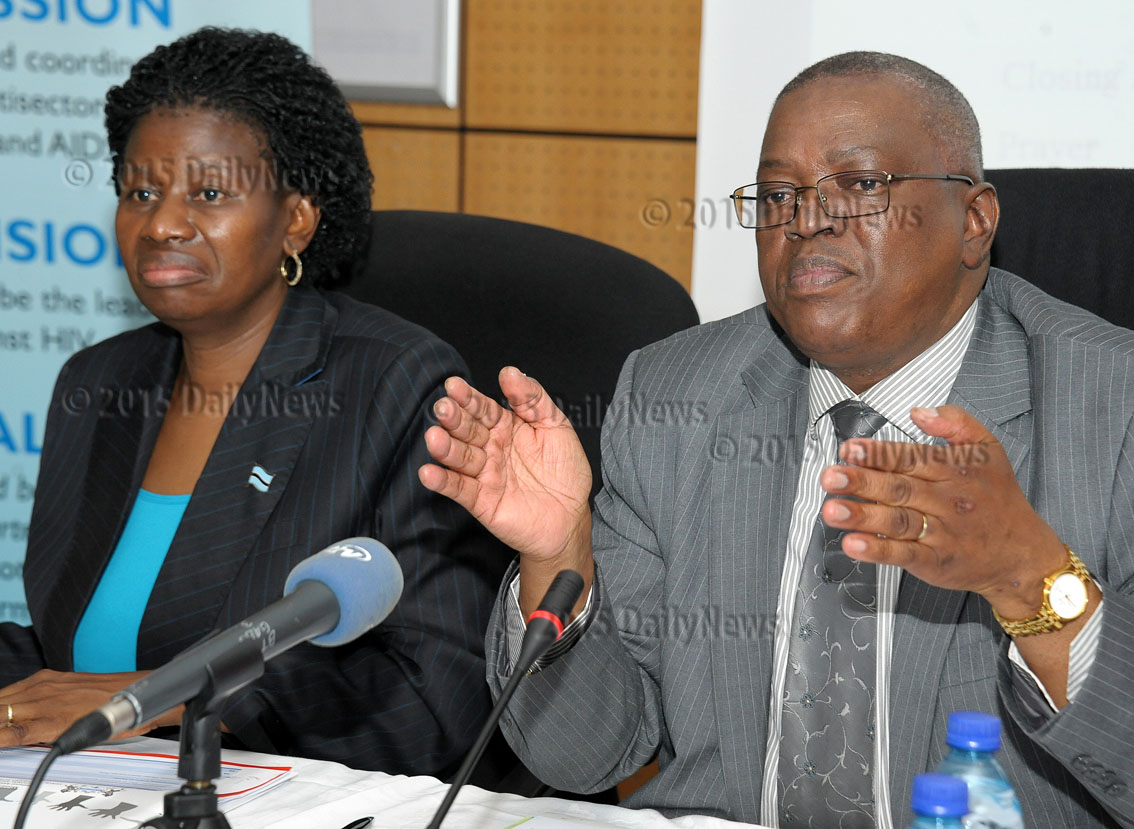
Progress made with regards to addressing issues of HIV/AIDS is impressive, but the nation is still faced with a challenge of behavioural change, the Vice President, Mr Mokgweetsi Masisi has said.
In his opening remarks at the National AIDS Council (NAC) meeting on Thursday (April 23), Mr Masisi raised a concern that issues of multiple concurrent partners, inconsistent condom usage and intergenerational sex still continued and he appealed to all Batswana to desist from such behaviour.
To sustain the achievements and make further gains against HIV in the immediate future, he said Botswana finalised an Investment Case to provide strategic direction not only to revitalise and integrate an overwhelmed and overburdened health care system, but also to refocus HIV prevention efforts and increase access to Anti-Retroviral Treatment (ART).
For Botswana, he said, sustaining a quality health care system, increasing access to ART and successfully addressing HIV prevention was as critical now as it was when the original decision to launch the National ART Programme was made in 2001.
The Vice President said in order to address HIV Testing and Counseling coverage gap, the National AIDS Coordinating Agency, Ministry of Health, North West District Administrative Authority, in collaboration with UNAIDS, World Health Organisation, Swedish International Development Cooperation Agency, Ministry of Local Government and Rural Development and other Implementing Partners, conducted an eight-hour HIV Testing and Counseling Campaign in Maun on November 29, 2014.
The campaign, he said, was aimed at mobilising individuals and their families to know their HIV status and seek HIV prevention and treatment services. During the eight hours, he stated that 2 419 people were tested for HIV in Maun.
“Botswana, along with South Africa and Tanzania, won the title of Guinness World of Records for Most People Tested for HIV in Multiple Venues,” he said.
To boost momentum, Mr Masisi said mayors from around the world came together in Paris on December 1, 2014 to sign a declaration to end AIDS in their cities and commit to the Fast-Track campaign.
In singing the Paris Declaration, Mr Masisi said mayors vowed to abide by a set of targets to achieve the 90-90-90 targets in their respective cities by 2020.
“In this respect, we have been challenged as Botswana, through our mayors to play a leading role to achieve these outcomes. A programme of events for Gaborone City will be unveiled in the coming weeks,” he said.
Furthermore, the Vice President said Botswana was making impressive progress on provision of ARVs and eliminating mother to child transmission.
He said currently, about all health facilities in the country were dispensing ART (561 out of 565 clinics and all hospitals), with coverage levels estimated at 94.8 per cent of those eligible for ART.
Although modest global economic growth is beginning to be seen, Mr Masisi said global economic downturn had not made life any easier as tough choices still had to be made in resource allocation at all levels of the development agenda.
“This calls for us to prioritise and contain cost, make the most of every Pula and ensure that only those projects with clear returns are implemented,” he said.
“We must ensure efficiencies in implementation of interventions in light of the current resources constraints in the face of diminishing external donor support. This, further calls for innovation and renewed approaches to our interventions,” he added.
The NAC meeting focused on progress regarding the review of the Second National Strategic Framework (NSF), briefing on the Global Fund Concept Note and an implementation approach called Communities Acting Together to Control HIV. ENDS
Source : BOPA
Author : Lorato Gaofise
Location : GABORONE
Event : National AIDS Council meeting
Date : 23 Apr 2015
Related News
16 Jun 2026
15 Jun 2026