


Botswana will meet digital migration deadline
07 Apr 2015
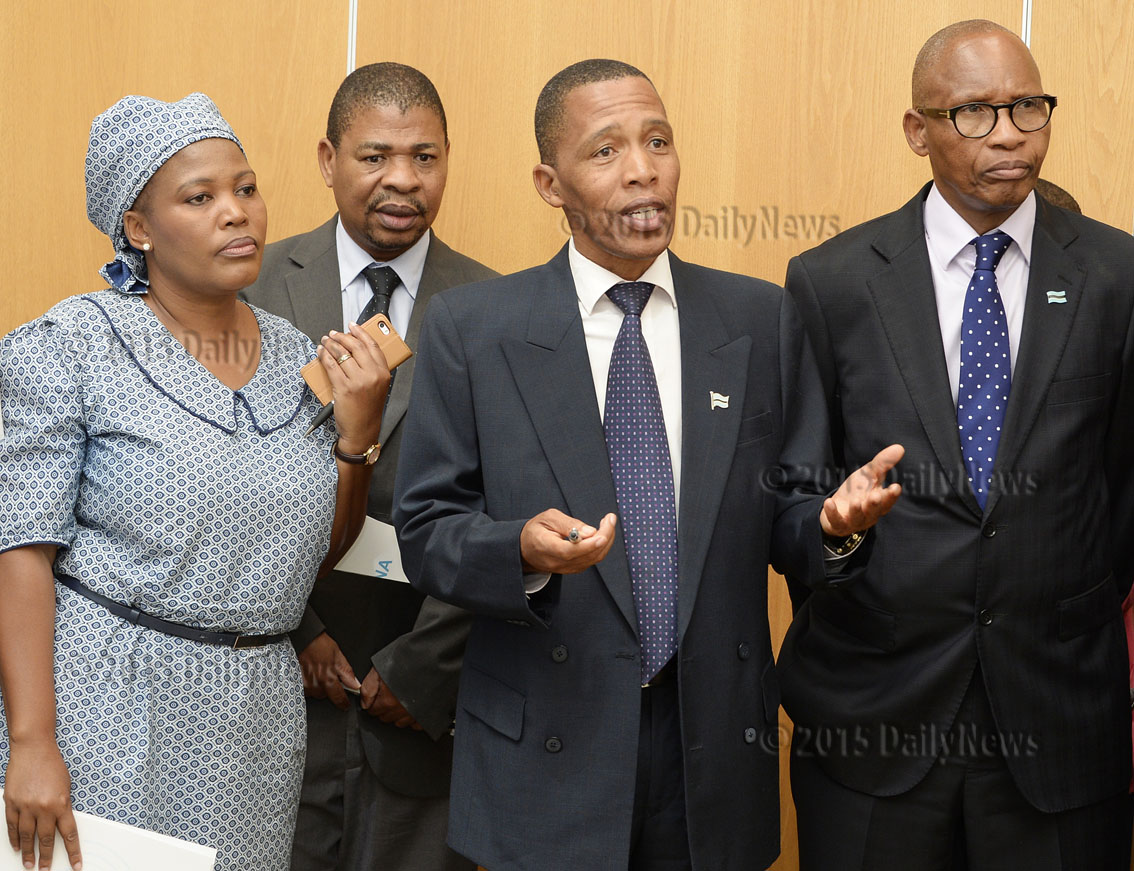
Botswana will meet the June 2015 deadline of migrating from analogue to digital terrestrial television (TV) broadcasting, deputy permanent secretary-information and broadcasting, Mr Mogomotsi Kaboeamodimo has said.
Mr Kaboeamodimo was briefing the media recently about what was being done to meet the deadline. He indicated that he was also optimistic that Botswana would meet the set deadline because digital migration was a national project that was set to transform Botswana.
The basis for migration, he said, was born out of recognition of the need to free up space in the frequency spectrum to enable achievement of the information and technology communication (ICT) service and for more television channels that could not be done in the analogue environment.
“Obviously for Botswana, this provided a consistent approach and intervention with the National ICT policy (Maitlamo), which has sought to position Botswana for sustained growth in the digital age by serving as a key catalyst in achieving economic and social transformation, among other benefits,” he said.
Also, he said it presented opportunity for the country to strengthen Botswana Television (BTV) viewership through additional services and content for both local and international viewers, going forward.
He also indicated that to be able to implement digital transformation, countries had to make choices with respect to technical standards that were recommended by the International Telecommunications Union (ITU).
Therefore, in 2010, he added, SADC countries considered the adoption of standards that could be agreed and were free to make a determination of a technology that they believed would best suite their interests, as long as it complied with the provisions of the ITU broadcasting plan.
That, he said was when Botswana chose the Japanese originated Integrated Services Digital Broadcasting-Terrestrial (ISDB-T) standard, for implementing digital TV, amongst others.
Botswana’s choice for the ISDB-T system, Mr Kaboeamodimo said, was made after extensive research and comparative tests with DVB-T2 by the government and non-government engineers with assistance of reputable institutions.
Meanwhile, Botswana’s digital migration programme was launched back in 2013 by former vice president, Dr Ponatshego Kedikilwe, after which a Memorandum of Understanding was also signed with Japan for technical cooperation for implementing digital TV.
That, he explained was because Botswana was using a technology originated in Japan and for the superior experience that Japanese technology brought in the wider field of broadcasting.
To effect such transformation, Mr Kaboeamodimo said government had committed successive budget provision of P130 million this financial year to enable implementation of digital TV.
Such budget, he said was meant to cater for the upgrading of studios to high definition (HD) and acquisition and deployment of additional digital transmitters.
Further, he noted that Botswana already had advanced terrestrial transmission network, hence the budget would enhance the network to ready it to for digital TV broadcasting.
It would also, going forward, help to fill the gaps that currently existed with respect to accessing reception of TV services around the country.
The digital migration process, he said also presented both economic and social benefits for the country, among many, in terms of facilitating employment creation opportunities for manufacturing and design of relative related gadgets meant to deliver digital TV.
Currently, he said the team was working towards meeting the June 2015 deadline “which we believe we should be ready to begin to migrate and to begin to switch off analogue services where appropriate. We are implementing this project by a way of working groups that handle issues like technology and licensing, public education and content generation, among others.”
So far, he said a meeting had already been held with the joint coordinating committee, which is composed of officials from Botswana and Japan.
The purpose of the committee, he said was to monitor progress on implementation of the digital migration for Botswana.
Additionally, he said a joint task force meeting of senior officials, technological experts and other officers would follow in Gaborone on April 15 where the project would be evaluated in the context of the Botswana/Japan MoU.
“We are at the phase of manufacturing and delivering the related equipment, such as transmitters, which beginning of this month into May will begin to arrive and then we will implement digital TV from there,” he added.
Migration from analogue to digital terrestrial television was set in motion in 2000 by the ITU; an international body mandated to do such.
Out of that, an international deadline of June 2015 for the migration for regions was agreed, which was to switch over from analogue to digital terrestrial television.
In June 2009, SADC countries came together and agreed to set in motion the processes of getting ready for the digital switch over.
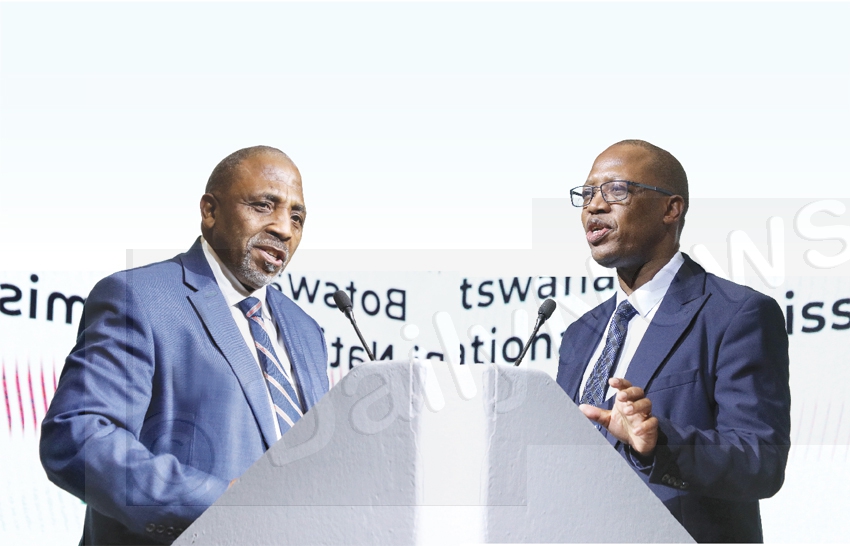
In his welcome remarks, Deputy Permanent Secretary-BGCIS, Dr Jeff Ramsay said after an evaluation of recommended standards, Botswana adopted the ISDB-T, which originated in Japan after conducting tests and trials to determine the most appropriate and beneficial mode for the country.
On the other hand, Botswana Communications Regulatory Authority (BOCRA) chief executive officer, Mr Thari Pheko said digital broadcasting was bringing along many benefits over the traditional broadcasting, as it was better quality TV, data services and more efficient spectrum usage.
“It would also enhance services, like mobile and portable TV, as well as opportunities for participation in the broadcasting ecosystems,” he added.
Therefore, digital migration, he said presented opportunity for Botswana to transform itself from an infant terrestrial TV and bring it par to the rest of the world.
“For the first time, in living memory, in this country everybody is given opportunity to literally become innovative and be seen around the world to be a better country where innovation can take place. Collaboration among the policy maker, regulator, service provider and consumer is key to provide migration process,” he said.
As a regulator, he said BOCRA had to provide an enabling environment for all to participate, adding that digital migration would make it easy to share broadcasting and network components.
He added that BOCRA had thus far enabled sharing through the infrastructure share, adding that sharing of resources would also enable faster roll out of the project.
The press brief was attended by key stakeholders from BOCRA, Departments of Information Services and Broadcasting Services and also partners from Japan and Japan International Cooperation Agency. ENDS
Source : BOPA
Author : Lorato Gaofise
Location : GABORONE
Event : Press conference
Date : 07 Apr 2015
Related News

16 Jun 2026

15 Jun 2026