


Extinction of species real
25 Mar 2015
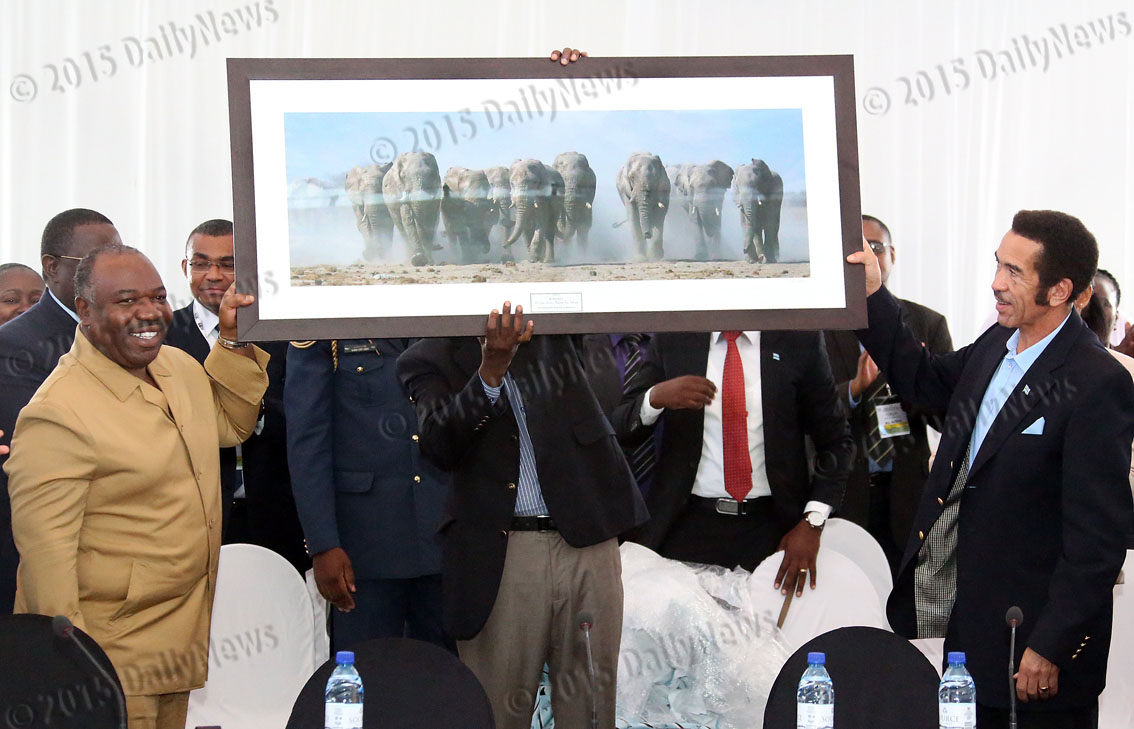
Some wildlife species could face extinction if no decisive action to combat wildlife trafficking is taken.
Officiating at the Illegal Wildlife Trade conference in Kasane on March 25, President Lt Gen. Seretse Khama Ian Khama said, “extinction of some wildlife species might become a real possibility in our lifetime. In Botswana, we have resolved that no species will ever become extinct in our country.”
Illegal wildlife trade, he said, was estimated to be worth US$10 billion per annum. “Proceeds of trafficking are used to fund other crimes such as terrorism, arms and drugs trafficking,” he noted. The latter, he said, undermined the rule of law and fueled corruption.
President Khama said while significant strides had been made to combat the illegal international trade through important instruments such as the Convention on International Trade in Endangered Species of wild fauna and flora (CITES) and other regional and international agreements, enforcement of their provisions remained a challenge to many parties due to weak institutional capacity and inadequate enforcement of legislation.
Commitment from the international community particularly the leadership of those countries along the illegal wildlife trafficking chain was vital to combating the threat of wildlife trafficking, he added.
“Improved intelligence sharing, appropriate national legislation and stricter penalties for wildlife crime will go a long way to counter the transnational wildlife crime more effectively,” President Khama explained.
President Khama thanked the United Kingdom government for the partnership in working with all concerned governments in this regard. “Illegal wildlife trade is not a challenge for Africa alone, it is a global problem that needs a global response from developed and developing nations,” he said.
United Kingdom's Minister of Environment Lord de Mauley also emphasised that illegal wildlife trade was a global issue as the organised criminal networks behind the trade did not respect borders. He added that the London conference on illegal wildlife trade sent an unequivocal message to poachers and traffickers around the world.
“It was that this abhorrent trade will not be tolerated, that together we can turn the tide,” he said. Progress was made after last year’s conference, Lord de Mauley said. “Countries around the world are strengthening their legal frameworks against the trade,” he noted.
He added that the first ever UN resolution on illegal wildlife trade was adopted by the UN Environment assembly; a clear signal of international commitment. “Today is an opportunity to maintain and build on the high level of political commitment we saw in London a year ago,” he said.
This conference follows the London conference in 2014, which brought together various stakeholders who noted the rise in illicit trade in wildlife with its consequent social, environmental and economic impacts.
As a result, the London declaration called for political commitment to combat this scourge and agreed to a number of actions to achieve this end, including eradicating the market for illegal wildlife products. The Kasane conference therefore was a follow up to review status of implementation of the actions agreed as part of the London Declaration. ENDS
Source : BOPA
Author : Ludo Chube
Location : Kasane
Event : Conference
Date : 25 Mar 2015
Related News

16 Jun 2026
First Lady courts Bahumagadi for support Mpepu


15 Jun 2026