


Diamonds cannot solely sustain Botswana
16 Nov 2014
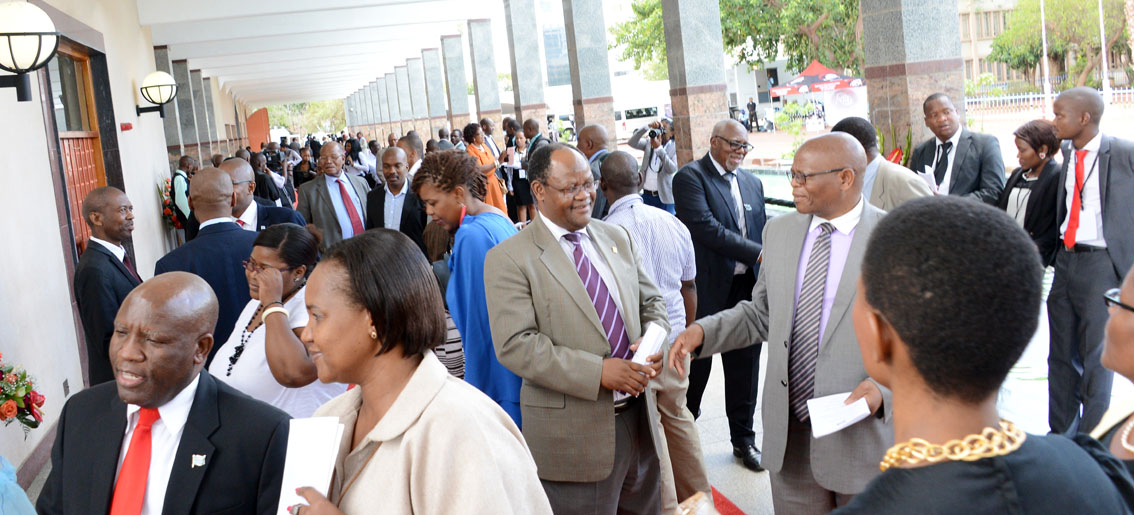
President Lt Gen. Seretse Khama Ian Khama says diamonds alone cannot carry Botswana forward.
Delivering his 2014 State-of-the Nation Address on Thursday, November 13, President Khama said to achieve greater economic diversification, the country should continue promoting further beneficiation within the minerals sector.
He said growing global demand for gem diamonds had dovetailed with upward estimates of domestic production based on both the ongoing and anticipated opening of new mines and an extension in the life spans of existing mines through new recovery methods.
Together, he said these developments should ensure that “we will remain a leading global producer over the next three decades until at least 2050.”
With the successful migration of the De Beers Global Sight-holder Sales from London to Gaborone, which was completed ahead of schedule, he said Botswana was already realising its goal of becoming a global ‘mines to market’ hub in the case of diamonds.
To date, he said ten sight-holder sales had been successfully held in Botswana, after the first round of local Diamond Trading Company (DTC) sales that took place in November 2013.
He said included in the DTC turnover had been diamonds supplied to local industry, which strengthened the country’s diamond cutting and polishing industry employing 3,781 as of July 2014.
In addition, President Khama said the Government-owned Okavango Diamond Company had also successfully conducted eight tenders to date, which attracted over 400 customers from all over the world, whilst Boteti Mining Company (Karowe Mine) had also been conducting sales.
Furthermore, to better manage the emerging opportunities for beneficiation, as well as expanded mining of iron ore, copper, nickel and silver, coal and coal bed methane, he said the government had established a state owned Mineral Development Company
At the same time, he said government had also worked to maintain Botswana’s status as a welcoming environment for international investors.
Botswana, he said was ranked first in Africa and 25th in the world in the 2014 Fraser Institute Mining Policy Perception Index, which annually assesses the competitiveness of global mining jurisdictions, whilst for diamond industry investment the country was rated first in the world.
In terms of further mineral beneficiation, President Khama said: “We are especially encouraged by the efforts of Bamangwato Concession Limited (BCL) through its Polaris II programme to establish Selebi-Phikwe as a regional metallurgical hub for the refinement of base metal concentrates.”
This initiative, he said further provided for additional investments in downstream activities as was reflected in the ongoing construction of the Pula Steel plant.
Just this past month the Polaris II project took another giant step forward with BCL’s acquisition of Norlisk Nickel’s Southern Africa assets, which notably included its controlling stake in South African based Nkomati Nickel, as well as the local Tati Nickel Mine.
Output from these mines was now expected to be serviced by the BCL smelter, he said, adding that all of these positive developments were made possible through government’s decision to empower BCL to expand its commercial activities, whilst releasing the company from its debt burden.
“In the context of our ‘Coal Roadmap’ we are also finding opportunities through which our vast coal reserves can become an additional source of export revenues, while being further utilised to fuel local power plants,” he added.
President Khama said that had in turn served as a catalyst for the Trans-Kalahari and Ponto Techobanine railway projects, as well as further expansion in the energy sector.
“We have signed a bilateral agreement with Namibia on the Trans-Kalahari Railway Project, which paves the way for the construction of a heavy haul railway line stretching 1,500 kilometres from Mmamabula coal fields to Walvis Bay,” he said
The government, he said was also engaged in a joint project with Zambia for the construction of the Kazungula Bridge across the Chobe and Zambezi Rivers, which included a railroad component, one stop border facility and access roads.
Additionally, he said the government had also signed an agreement on road and bridge infrastructure with South Africa, which had resulted in the already ongoing construction of bridges and infrastructure at Notwane and Platjaan. ENDS
Source : BOPA
Author : BOPA
Location : GABORONE
Event : State of the Nation Address
Date : 16 Nov 2014
Related News

25 Aug 2026
Forensic audit generates 90 priority actions
25 Aug 2026