

Govt keeps close eye on visitors
14 Sep 2014
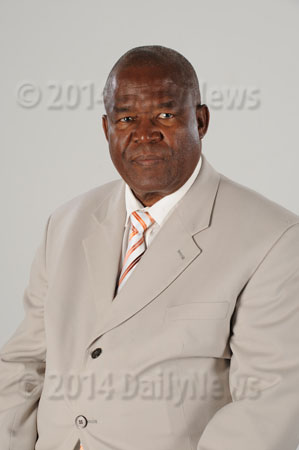
In an effort to contain the possible outbreak of the Ebola disease in the Botswana, the government has reiterated its position not to welcome all people coming from Ebola affected countries, the minister of Health, Dr John Seakgosing has said.
Dr Seakgosing told media practitioners during a media briefing in Gaborone on Wednesday, September 10 that people coming from the affected countries would go through surveillance and testing, and if they show symptoms, they will be isolated and be treated accordingly.
This comes in the wake of the recent African Union (AU) meeting in Ethiopia which resolved that countries should lift travel ban over the Ebola outbreak to allow people to move between AU member states.
At that meeting, the AU also underlined the need to put appropriate measures to protect and contain the spread of the Ebola virus when lifting the travel ban.
Dr Seakgosing said people coming from Ebola affected countries being Nigeria, Guinea-Conakry, Sierra Leone, Democratic Republic of Congo (DRC), and Liberia shall be returned.
He said the ministry was aware of the position taken by the AU because the minister of Foreign Affairs and International Cooperation attended the meeting, but noted that it did not change Botswana’s stand.
“We are steadfast in taking precautions. We do not want to take anything for granted. Ebola is a very serious disease and needs to be treated as such,” he said.
He said all SADC countries were of the same stand, that people must be screened and those with suspected symptoms must be screened, and those coming from those countries will be returned back home.
World Health Organisation (WHO) representative, Dr Felicitas Zawaira said, as part of the preparedness plan, they had identified ports of entry where people pass through and that screening was taking place at such entry points.
She said some health workers had been orientated as to how to deal with Ebola and ensure that the health workers know how to identify a case of Ebola because its initial symptoms were close to those of other common diseases.
She said some health workers from Botswana had been sent to WHO regional office to be trained so that they could cascade training to all health workers.
Dr Zawaira said WHO had also advised member states to source protective equipment in case there was Ebola.
She said the preparedness plan should be tested and that this might include a simulation exercise. She said to get the plan fully ready, other things should be in place and these include an isolation center, protective clothing and a laboratory.
“In the meantime the prevention mechanisms are the same. Hand washing will still be the issue to manage the virus,” she said.
MoH Permanent Secretary, Dr Kolaatamo Malefho said screening of patients included checking temperatures, assessing if there were any symptoms and signs of Ebola such as internal bleeding from sputum, nose, and ears, as well as answering questions that include verifying a client’s travel routes.
Mr Malefho further said at the moment there was no risk of Ebola in the country that may cause people to avoid public gatherings. ENDS
Source : BOPA
Author : Mmoniemang Motsamai
Location : GABORONE
Event : Media briefing
Date : 14 Sep 2014
Related News
08 May 2026
07 May 2026
Kagame wraps visit with DTCB tour
07 May 2026
BURS donates nine chain saws
07 May 2026
Donation boosts primary schools in Gaborone
07 May 2026