

Botswana makes strides in MDGs implementation8232
04 Sep 2014
As the clock ticks towards the end of 15 years framework of the Millennium Development Goals (MDGs), Botswana has made progress in the implementation of MDG targets and indicators.
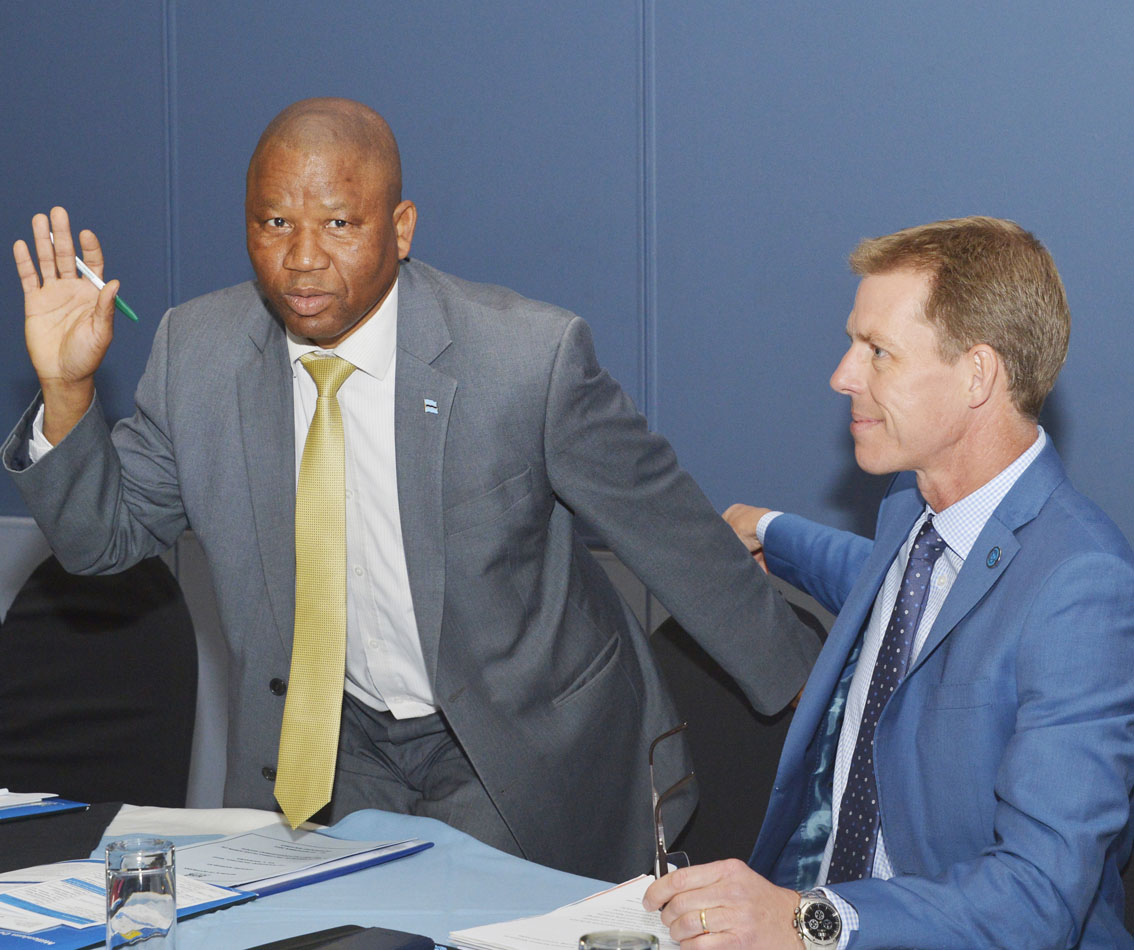
Permanent secretary in the Ministry of Finance and Development Planning, Mr Solomon Sekwakwa said at the Post 2015 Development Agenda stakeholders meeting in Gaborone on September 2 that extreme poverty had been reduced by more than halve from 23 per cent in 2002/03 to 6.5 per cent in 2009/10.
He said primary school enrolments consistently remained high, around 90 per cent for the past 15 years and improved further to the current 93 per cent in 2012.
“More importantly was the gender balance achieved in the enrolment of girls and boys at all levels of our education system,” he said.
He said good progress had also been made in reducing the HIV prevalence among women of child-bearing ages (15-49 years) and children born to HIV positive mothers as well as among the young people aged 15-19 years.
Mr Sekwakwa said more than 90 per cent of Batswana had access to drinking water, which was above the average of all middle income countries.
He said the country had also made strides in attaining the information and communication technology (ICT) targets as witnessed in the roll out of the broadband internet service to reach even the remotest parts of Botswana.
“Recently, the ICT industry extended connectivity to government schools in order to facilitate learning,” he said. However, Mr Sekwakwa said despite the level of progress made in the past 15 years, a lot needed to be done in order to improve the quality of life.
He said as the country prioritise on Botswana’s post 2015 development agenda, the fight against poverty and inequality should continue as well as the challenges within the health sector, particularly with regards to reducing child and maternal mortality that stagnated over the MDG period before substantial progress was recorded in 2011 Population and Housing Census.
Mr Sekwakwa said as 2015 approaches, innovative ways to address high cost of anti-retroviral treatment anticipated to escalate with the increasing number of HIV positive patients enrolled on treatment.
The spread of communicable and non-communicable diseases should also be countered, he added. Mr Sekwakwa further informed the meeting that substantial progress has been made globally in order to guide the finalisation of the MDG successor development framework.
Additionally, he said high level meeting of the General Assembly on the programme of action of the International Conference on the Population and Development (ICPD) scheduled for September 22 will concretise important aspects for integrating population factors into the development agenda for the period beyond 2015. ENDS
Source : BOPA
Author : Mmoniemang Motsamai
Location : GABORONE
Event : Stakeholders meeting
Date : 04 Sep 2014
Related News

21 Jun 2026


18 Jun 2026
Commission targets youth empowerment

18 Jun 2026
Countries commit to partnership
18 Jun 2026