Partnership vital for base metals beneficiation
03 Aug 2014
Mining companies have been urged to collaborate and pave way for the development of a base metals beneficiary strategy.
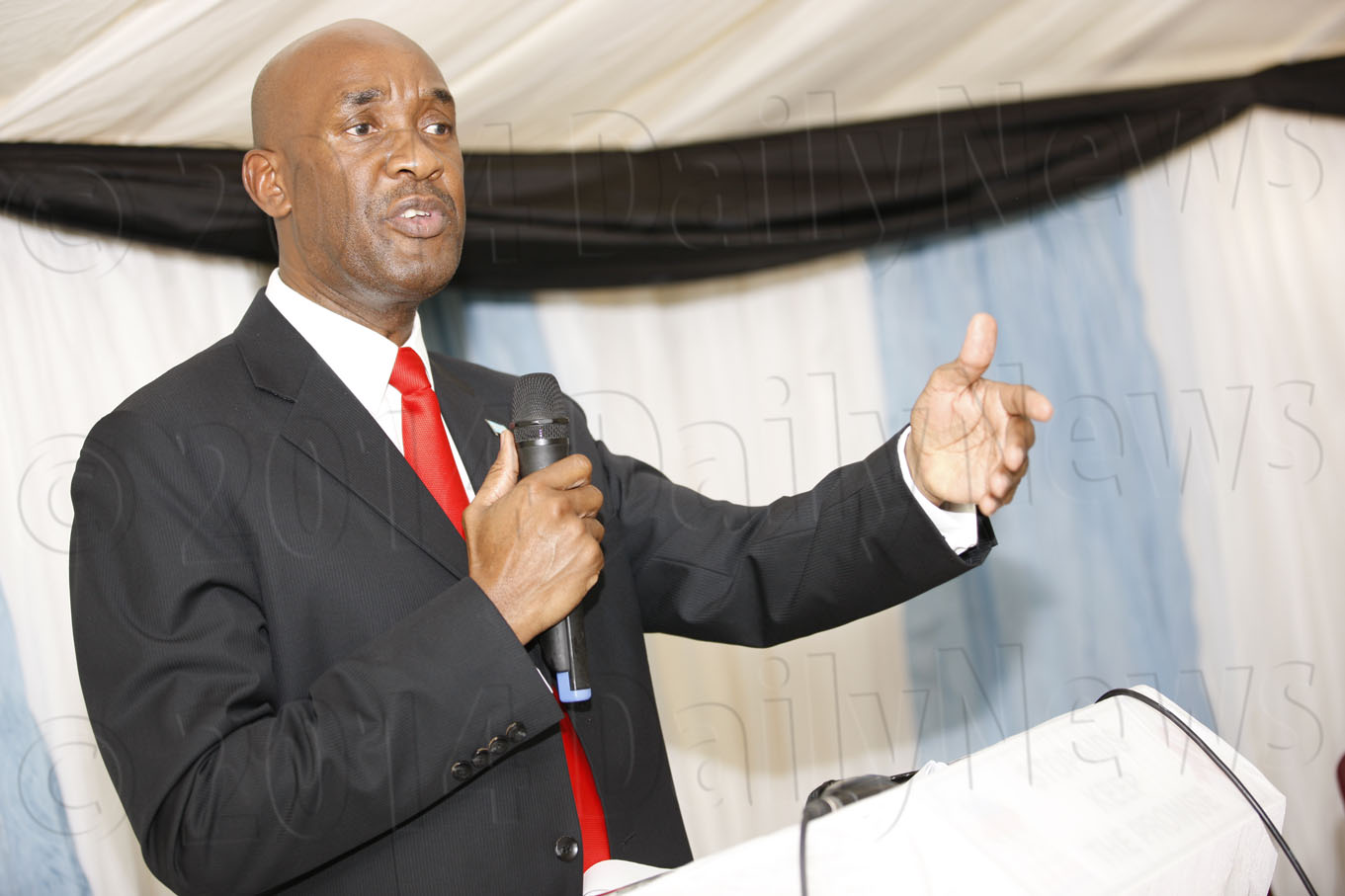
Speaking during the base metals beneficiation workshop in Maun, the Minister of Minerals, Energy and Water Resources (MMEWR), Mr Kitso Mokaila said there was a need for a partnership between the government, academia and the private sector.
Mr Mokaila said once the strategy had been agreed, they could then look into the feasibility of base metals beneficiation.
He said to support sustainable beneficiation, the government was committed to providing the necessary environment and infrastructure such as power, roads and water.
Mr Mokaila cited the commissioning of the Morupule B Power Station and the refurbished of Morupule A, complemented by the new brownfield expansion of Morupule B units 5 and 6.
He said the IPP of greenfield power station would ensure self-sufficiency in power generation.
The expansion of transmission lines to other economic centres such as the construction of a new line from Morupule to Maun, which was expected to be completed by 2018 and the ZIZABONA project, would facilitate regional inter connection and ease electricity trading in the northern part of the country.
With respect to water, Mr Mokaila noted that the country continued to face challenges of water deficits, particularly in the south eastern part of the country due to poor rainfall patterns and insufficient conveyance systems.
However, he noted that there was sufficient water to supply the mining sector and other sectors.
The minister added that to achieve self-sufficiency, there was a need for the development of appropriate backbone infrastructure required for distribution, improvement of efficiency and demand management to ensure the right quality of water was used for the right purposes.
Mr Mokaila also noted that groundwater aquifers had been studied and well fields developed, three dams had been completed and that the North South Carrier 2 (NSC2) pipeline project was ongoing.
He also pointed out that plans were in place to draw water from the Chobe/Zambezi river system for agro-commercial use, mining, energy, domestic and other uses.
“As we develop strategies around mineral beneficiation, we would also look at smarter ways of using water, including the use of technology requiring less water, recycling of water from effluent and exploitation of other water sources, which are not portable such as saline water,” he said.
The minister also indicated that Botswana was collaborating with neighbouring countries to improve the heavy haul transportation through rail.
Furthermore, the approved projects include the upgrading of the existing railway line to Mozambique through Zimbabwe, co-developing with the Namibian government the Trans-Kgalagadi railway line to connect to Walvis Bay in Namibia and consideration to access rail and port capacity to Richards Bay in South Africa.
Mr Mokaila observed that Botswana was rich in minerals resources like many of the African countries and its economy revolves around the mining sector. He said the key role of government was to facilitate the industry for further development of the mineral sector in the country.
He said to date, the country had five base metal mines and a number of advanced prospecting projects, which he was positive would come on stream soon.
The minister also said prospective licences for base metals grew from 11 in 1975 to 453 licences in 2014, noting that the biggest driver of the growth in licences was increased activities in the North West of Botswana. ENDS
Source : BOPA
Author : Esther Mmolai
Location : MAUN
Event : Beneficiation Workshop
Date : 03 Aug 2014
Related News
18 Jun 2026
18 Jun 2026
Learners commemorate Day of the African Child
18 Jun 2026
LESABO project to address water scarcity

18 Jun 2026