Study shows low exclusive breastfeeding rate
14 Jul 2014
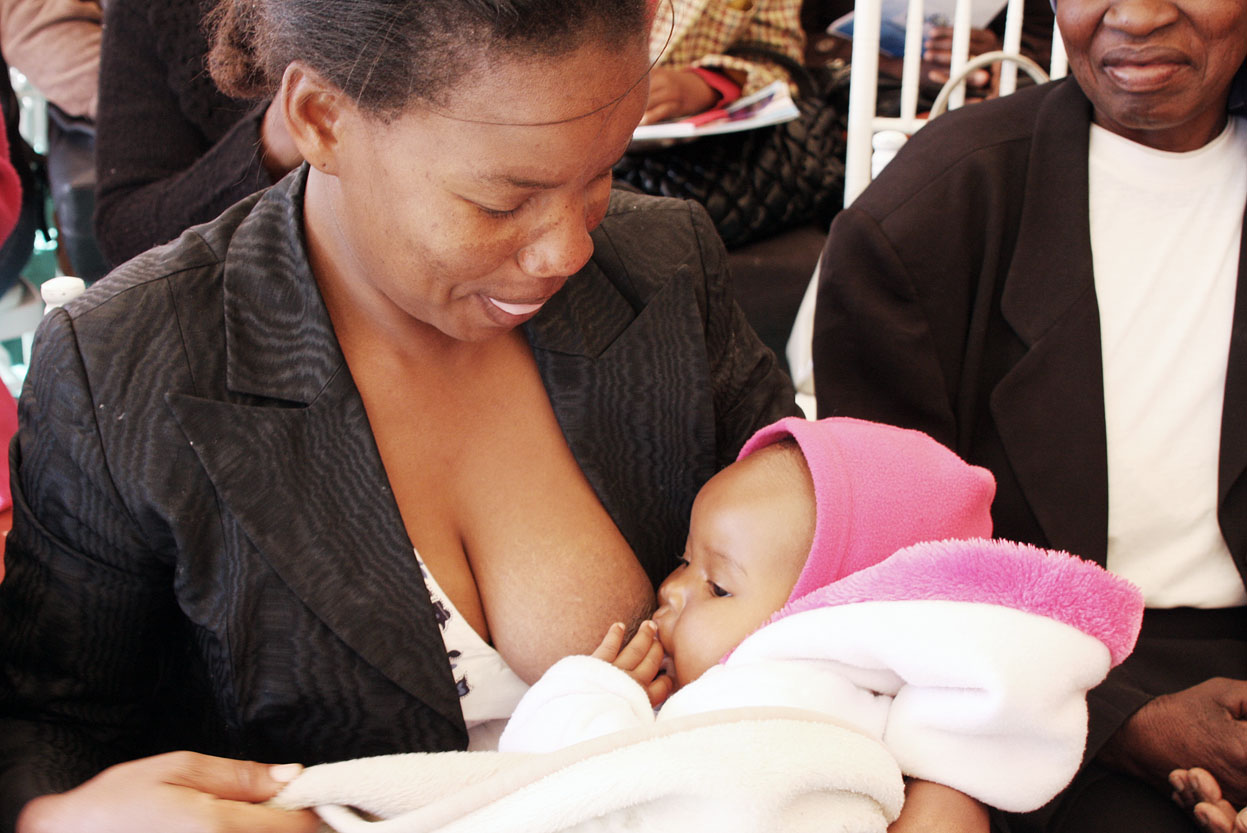
A study undertaken by the National Food Technology Research Centre (NFTRC) has shown low exclusive breast feeding amongst mothers.
The study used isotopes in assessing the exclusivity of breast feeding and its impact on the nutritional status of women in Botswana. Exclusive breast feeding is the intake of human milk by the baby and nothing else for six months.
Giving the findings of the study during the infant and young child feeding workshop hosted by NFTRC in Palapye on July 11, NFTRC’s Dr Boitumelo Motswagole said the study conducted in Kanye showed a decline in exclusive breastfeeding between 0-six months due to early termination of exclusive breast feeding.
She said the study was done amongst 57 exclusive breast feeding mothers in Kanye for a period of six months. She said at six weeks and three months after birth all the 57 mothers claimed to be exclusively breast feeding.
She said at six months only 80 per cent said they were still exclusively breast feeding. However after the tests were taken, the results proved otherwise.
Dr Motswagole said the isotope technique showed that at six weeks only 96 per cent of mothers were breast feeding.
The number, she added, declined to 61 per cent at three months and zero at six months. She said the isotope techniques is a very good accurate technique which showed what was actually happening as opposed to what the mothers told the researchers.
The mothers, she said, stop breast feeding earlier contributing to poor nutrition amongst infants and children. Dr Motswagole noted that stopping exclusive breast feeding earlier also contributes to decline in the mothers’ nutritional status, adding that at nine months they start becoming obese.
For her part, Dr Yvonne Chinyanga from Nutrition and Food Control Unit said the country is faced with challenges of underweight, stunting and wasting amongst children.
She said 31 per cent of children under the age of five were too short for their age, whilst almost nine per cent were too thin due to poor infant feeding practices including early termination of exclusive breast feeding.
For his part, the executive director of Population Health, Health Systems and Innovation from South Africa Prof. Demitri Labadarios said malnutrition is associated with 45 per cent of child death resulting in 3.1 million deaths annually.
He said worldwide stunting affected at least 165 million children younger than five years in 2011. He said poor fetal growth or stunting in the first two years of life leads to irreversible damage, including shorter adult height.
“The prevention of maternal and child under nutrition is a long term investment that will benefit this country,” he said.
He said underweight is not much of a problem in Botswana compared to stunting, therefore he advised that health workers should monitor the height instead of weight as it is the case. Ends
Source : BOPA
Author : Kgotsofalang Botsang
Location : PALAPYE
Event : Workshop
Date : 14 Jul 2014
Related News

18 Jun 2026

18 Jun 2026
Learners commemorate Day of the African Child

18 Jun 2026
LESABO project to address water scarcity

18 Jun 2026