Mawila masters art of seragantswane
26 Jun 2014
Ngwao boswa is a Setswana phrase used to imply that a nation without culture is a lost nation. With the advent of modernity, which has brought about both positive and negative impact among people, many people believe that culture is slowly diminishing.
That being the case, some people have taken it among themselves to enhance and tighten cultural values. Oabona Mawila is one of them. Mawila, a 52-year-old from Tonota said in an interview that he took it upon himself to do the little he can to revive culture.
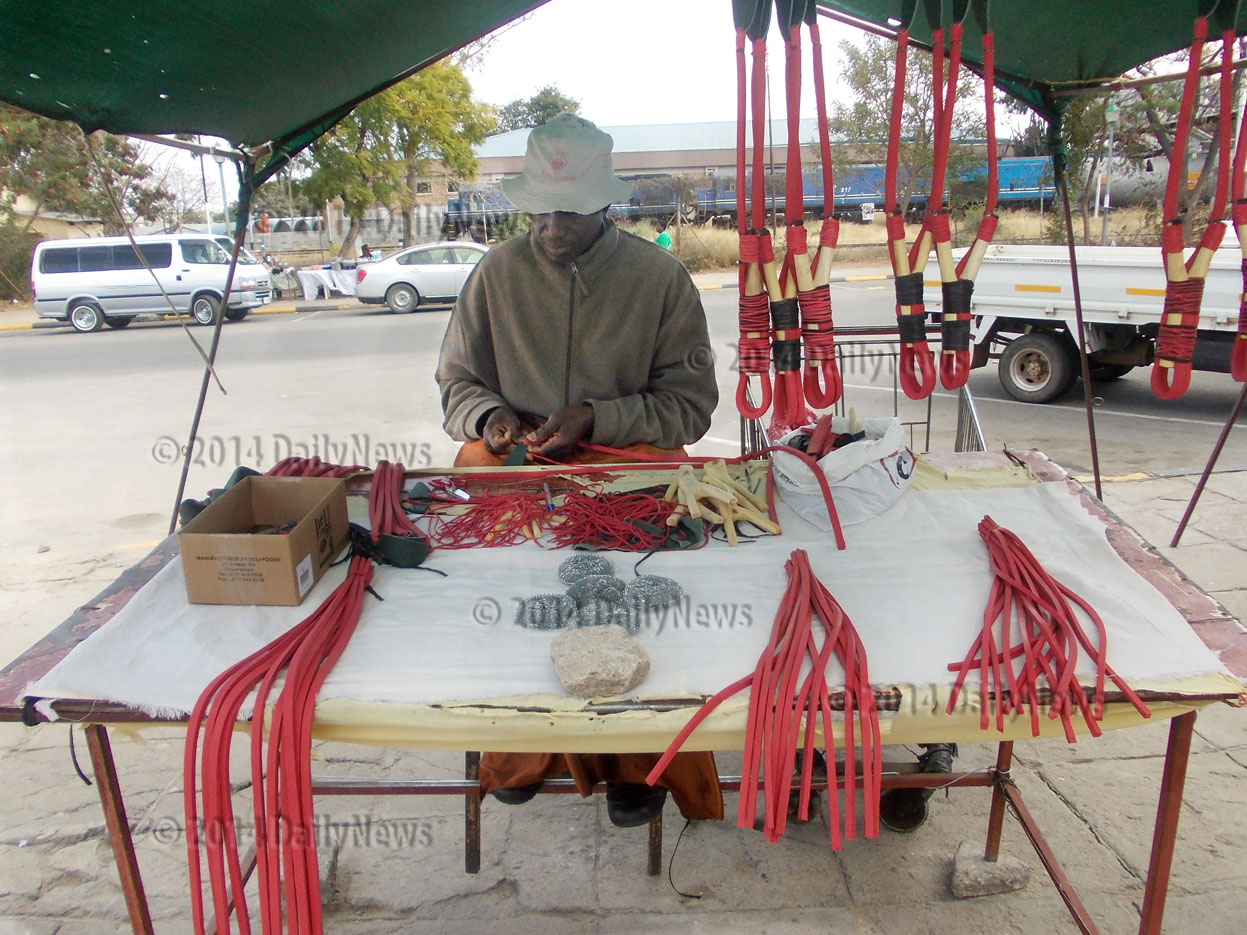
His line of craft is that of cultural objects such as wooden spoons and the traditional whisk mostly used for cooking maize meal. He also prides himself with the ability to make a seragantswane, that is, a catapult.
The father of four said he got to know how to make a seragantswane when he was eight years old, especially that it was used to chase away birds from sorghum fields. Over the years, Mawila mastered the art of making the object and it has become something he can do in a blink of an eye provided the wood is there.
He said although he had stayed for many years without carving, he has since started again prompted by his concern of the seemingly diminishing culture. He displays his artwork in the city centre in Francistown, at a spot where he started selling music CDs and DVDs.
Many of the people who show interest are foreigners. However, Batswana, who see seragantswane for the first time, also take keen interest in it. He suddenly realised that he had turned his business into a niche market of art, with seragantswane being a fast-moving commodity that is made of wood, rubber and leather.
“The kind of wood I use must be strong. Usually mophane, mogwana and mohudiri trees are preferable,” he said. He said he then boils the wood and then scrapes off the bark, then leaves the wood to dry and afterwards, it is then that he would carve the wood into the desired shape.
“When I am done with the wood, the rest of the work takes about 10 minutes to make one complete seragantswane,” he noted. He said he usually takes the rubber offcuts that are left in garages, which he washes and cuts into the required length and size.
The leather is obtained from a friend who designs sofas and usually takes the left overs to do his work. His products range from P20 to P35 depending on the size. “I appreciate the fact that I do not buy my raw materials and so I am able to make money,” he said. “But what really motivates me to do this is more on the cultural side than business.”
He said he was greatly inspired recently when he heard on radio that the Vice President (VP) Dr Ponatshego Kedikilwe emphasised the importance of culture during celebrations of culture day in Kgagodi in his Mmadinare constituency.
“When I hear that our elders still regard our culture highly, I am more than inspired and realise that there is still hope,” he said. Mawila said one of the challenges he faces is that the resources are not always available but the demand is high.
He said usually the demand is high from December to March as small farmers use seragantswane to chase birds from their fields. Other customers for him include traditional dance groups who use it during their performance to showcase culture in different events. Ends
Source : BOPA
Author : Terry Makgoeng
Location : FRANCISTOWN
Event : Interview
Date : 26 Jun 2014
Related News
06 Aug 2026
06 Aug 2026
Mayor implores creatives to be innovative
05 Aug 2026
Batho Ba Metsi honours Okavango Delta custodians

05 Aug 2026