

Political will key to anti-poaching
04 Jun 2014
The Minister of Environment, Wildlife and Tourism, Mr Tshekedi Khama has appealed to African states to combat wildlife poaching and forestry crimes.
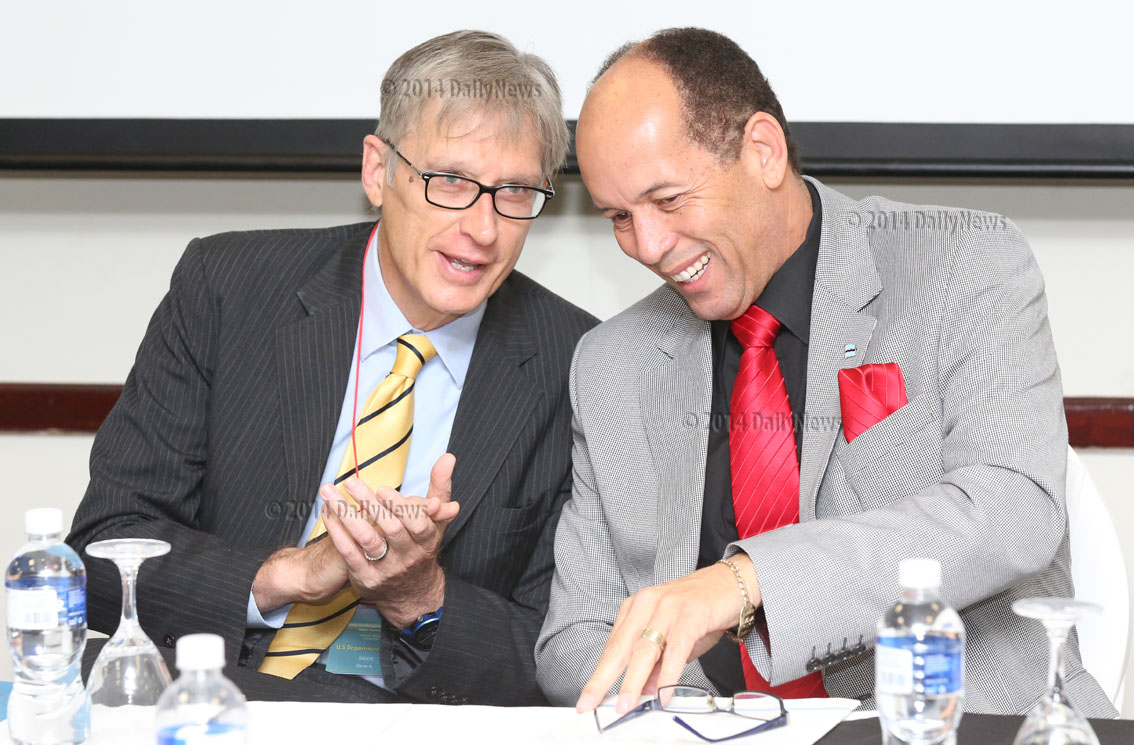
Giving a keynote address at the first ever wildlife poaching and timber crimes conference organised by the United Nations Office on Drugs and Crime (UNODC) in Gaborone on June 3, Minister Khama said there was need for a clear commitment at political level in order to combat the scourge.
“I must stress that without high level political will, across range states, transit and consumers states, we will not combat this alarming situation,” he said. Minister Khama said it was imperative that high-level political support was harnessed and that the necessary resources to combat the scourge were allocated.
He said poaching, illegal logging and trafficking was on the rise throughout Africa and it was apparent that as the problem became increasingly entrenched in networks of organised crime, wildlife authorities needed the collaboration, cooperation and commitment of other sectors of government, such as the police, defence, finance, customs, amongst others.
Minister Khama explained that available statistics from reputable sources such as TRAFFIC and the Convention on International Trade in Endangered Species indicated that Central and Eastern Africa were the major supply regions for several of the largest illicit animal markets, including elephant ivory and rhino horn.
He explained that in the southern region, the poaching of the rhino had reached epidemic proportions threatening some of the most important rhino populations on the continent.
Minister Khama further explained that the illegal trade in the rhino horn was fueled by demand in East Asia where the alleged medical properties of consuming rhino horn products is driving supply and demand.
He said the so called black markets were imposing exorbitant prices on these animal body parts with an estimated value of wildlife trafficking alone was between US$10 to 20 billion. Regarding timber, Minister Khama said timber related crimes were spreading at an alarming rate with huge tracks of land being decimated annually.
He said the illegal logging was estimated to account for 15-30 per cent of forestry products in trade globally adding that though there are attempts to strengthen the legal framework for wildlife and timber crimes, it is evident that much more need to be done.
He explained that looking beyond the poacher or illegal logger and exposing the financial flows of the networks or organised crime gangs will assist in identifying the criminal syndicates involved, help locate and seize the proceeds of crime.
He said this would prevent the re-investment of these proceeds in these crimes and it would also remove profits from criminals.
The three-day workshop will discuss issues of better understanding of ‘following the money’, building operational relationships to facilitate the speedy exchange of intelligence and information between continents, and setting up priorities for regional and country specific activities to build the capacity in locating and seizing proceeds of wildlife and timber trafficking.
The conference brought together all relevant agencies across the Africa to raising awareness of the importance of using financial investigation and anti-money laundering techniques to tackle transnational organised crime involved in the trafficking of protected wild fauna and flora as well. ENDS
Source : BOPA
Author : Thamani Shabani
Location : GABORONE
Event : Conference
Date : 04 Jun 2014
Related News

21 Jun 2026



18 Jun 2026
Commission targets youth empowerment

18 Jun 2026
Countries commit to partnership

18 Jun 2026