Lack of policy formulation skills challenge in Africa
27 May 2014
For too long Africa has been constrained in participating meaningfully in international trade negotiations at all levels due to lack of policy formulation skills and knowledge.
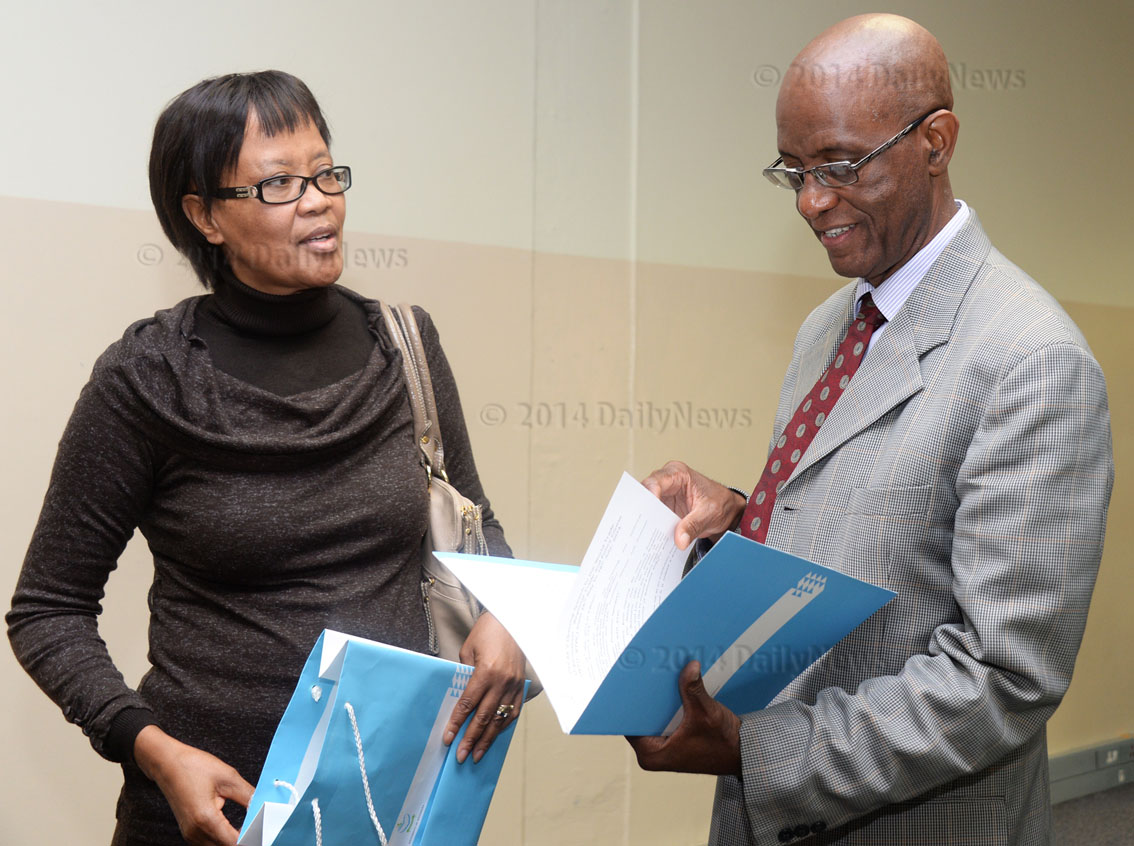
This was said by Ministry of Trade and Industry’s chief negotiator, Mr Phadza Butale, when officiating at the World Trade Organisation’s 2014 Regional Trade and Policy Course (WTO-RTPC) for English speaking African countries.
Other challenges, Mr Butale said, included inadequate information and articulation of trade issues, as well as insufficient technical expertise in the negotiations.
As such, he said “one cannot over-emphasise the importance of this RTPC in producing the right caliber human resource to help address this problem.”
In his welcome address, Prof. Peter Mwikisa of University of Botswana’s faculty of humanities said RTPCs were an integral part of the WTO Trade Related Technical Assistance (TRTA) activities.
The objectives of the WTO’s TRTA programme are to enhance human and institutional capacity of members to take full advantage of their participation in the rule-based Multilateral Trading System and enable members to enforce their rights and obligations associated with their participation.
Key to the WTO’s TRTA, Prof. Mwikisa said was the Progressive Learning Strategy (PLS) which aimed to promote higher levels of learning in order to build long lasting human and institutional capacity for the participants.
The training provided by WTO, is in three levels, with level 1 being basic, level 2 intermediate and level 3 advanced.
Therefore, the RTPC is an intermediate level activity and its objectives are to; deepen participants’ understanding of the functioning of the WTO and its rules and procedures, enhance participants’ understanding of regional economic perspectives on trade policy and development and develop participants’ capacity to find information and documents on WTO related issues such as, the use of the WTO legal texts.
Prof. Mwikisa said the current RTPC for English Speaking African countries was beneficial and relevant to the participants since they were government officials who regularly dealt with WTO issues in their day to day work.
The course, he said aimed to deepen and broaden their knowledge of the Multilateral Training System.
Having gone through the course, he said “it is expected that the participants will be empowered to facilitate the implementation of the Doha Development Agenda.
The Doha Ministerial Declaration seeks to place the needs and interests of developing countries and the least developed amongst them at the heart of the work programme of the WTO.”
Therefore, he said this objective could only be achieved if participants understood the Multilateral Trading System.
At the end of the course, he said it would be beneficial to UB as a host partner of the RTPC since its profile as an institution of higher learning would be internationally marketed.
For the Botswana economy, Prof. Mwikisa said the private sector would also benefit through the provision of accommodation to participants.
The course draws some of UB academic staff members from Departments of Economics and Law as resource persons and course managers. ENDS
Source : BOPA
Author : Lorato Gaofise
Location : GABORONE
Event : Trade and policy course
Date : 27 May 2014
Related News

04 Aug 2026


03 Aug 2026
De Beers output surges in 2026 first-half

03 Aug 2026